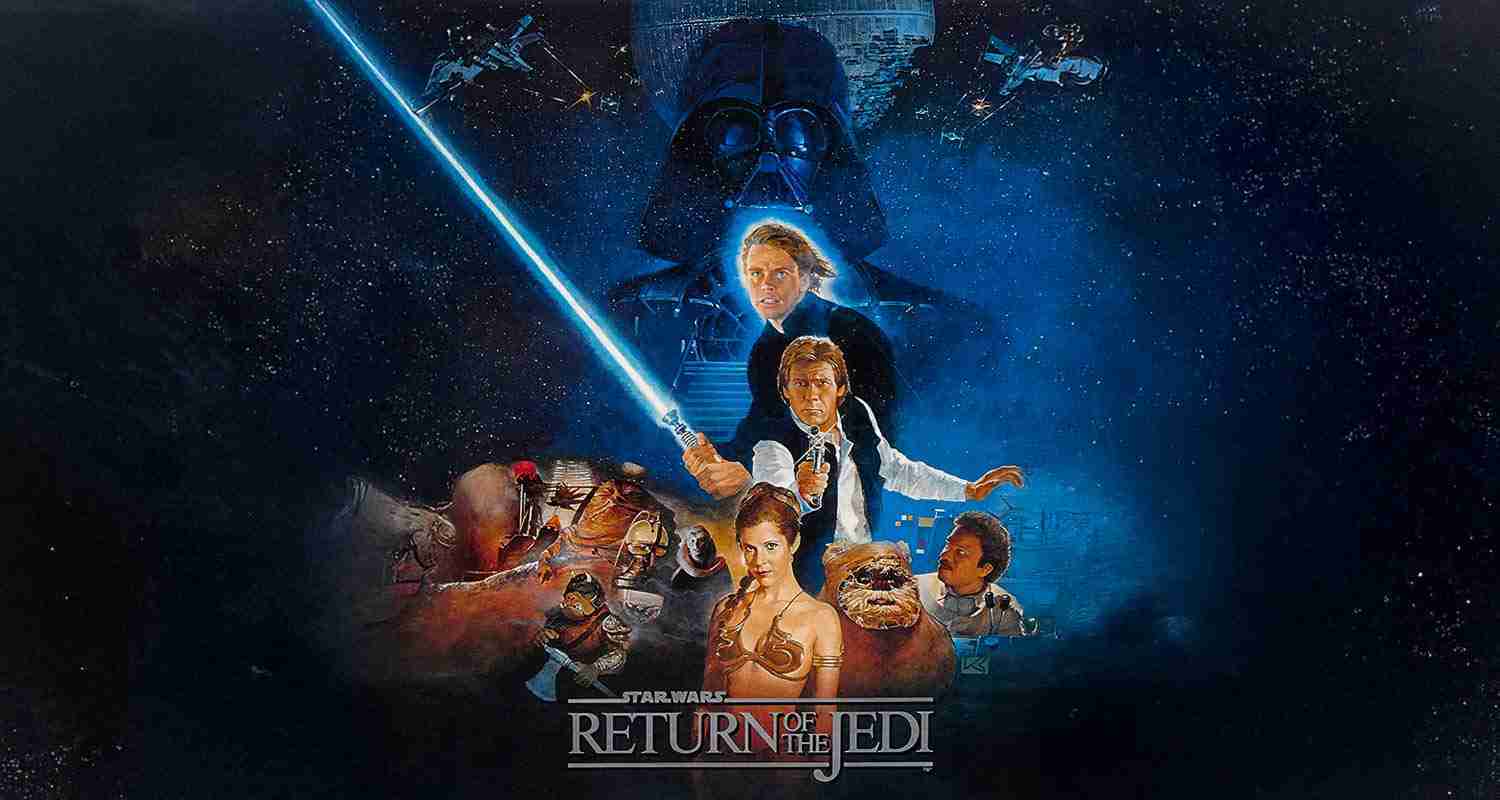

Why Return of the Jedi Masterfully Closes the Original Trilogy (And Challenges Modern Screenwriters)
This Return of the Jedi analysis reveals a satisfying, high-stakes conclusion to the original Star Wars trilogy. Released in 1983, this film delivers emotional payoff, epic battles, and profound character growth while tying up loose ends from A New Hope and The Empire Strikes Back. For aspiring screenwriters, it stands as a masterclass in balancing multiple plotlines, earning redemption arcs, and building to a cathartic finale—yet it also highlights the risks of juggling too many threads under immense pressure.
Building Unforgettable Tension and Conflict
Great screenplays thrive on escalating stakes, and Return of the Jedi excels here through layered deception, personal confrontations, and massive set pieces.
The Multi-Layered Trap: From Jabba’s Palace to the Emperor’s Throne Room
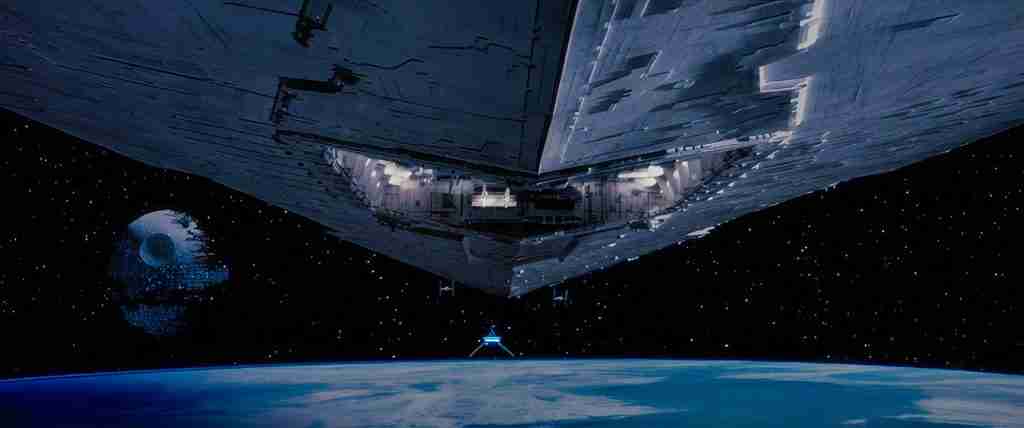
The film’s opening act hooks viewers with the daring rescue of Han Solo, culminating in the Great Pit of Carkoon battle (around 33m). This mini-adventure showcases clever misdirection—Leia as Boushh, Luke’s hidden lightsaber—while raising tension for the larger conflict. Later, Admiral Ackbar’s iconic “It’s a trap!” (92m) shatters Rebel confidence when the Death Star proves fully operational (97m). Consequently, the audience feels the same dread as the characters.
Father-Son Duel: Emotional Stakes Over Spectacle
The throne room showdown (108m onward) shifts from lightsaber clashes to psychological warfare. Luke’s refusal to kill Vader despite provocation builds unbearable tension, leading to his “I am a Jedi, like my father before me” declaration (116m). This moment proves internal conflict can outshine external action.
The Emperor’s Manipulation: Villain as Catalyst
Palpatine’s taunts and Force lightning force Luke to the brink, making Vader’s redemption feel earned rather than rushed. Thus, the Emperor serves as the ultimate moral test, amplifying the family’s legacy theme.
Core Themes That Elevate Return of the Jedi
Return of the Jedi screenplay analysis showcases timeless ideas that shine through, expertly blended into the film’s dynamic action sequences.
Redemption and the Power of Family
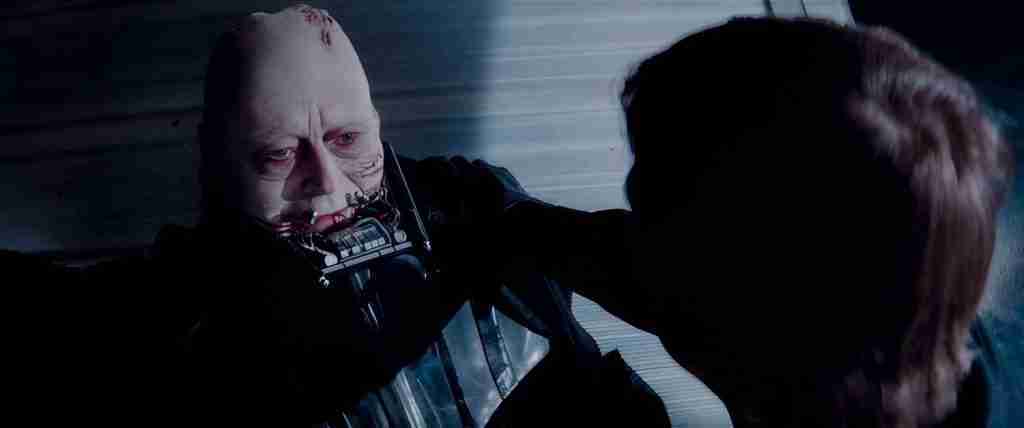
No one is beyond saving if love persists. Vader’s sacrifice—killing the Emperor to save Luke (117m)—validates Luke’s belief in his father’s goodness. His dying words, “Tell your sister… you were right” (125m), deliver profound closure.
Nature vs. Technology and Collective Resistance
Ewoks—adorable teddy bears with sticks and rocks—pull off a classic guerrilla warfare upset against the Empire’s sophisticated walkers and blasters (104m onward), channeling Vietnam-style tactics with a furry twist. Meanwhile, victory hinges on perfect coordination: the space battle, the ground assault, and Luke’s spiritual stand all converge for an epic, galaxy-saving triumph.
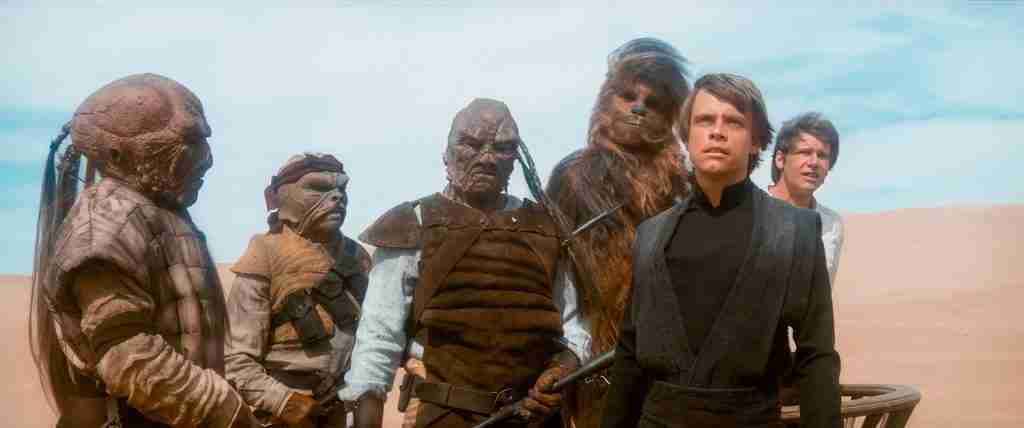
MEET THE CAST: WHAT EACH CHARACTER TEACHES US ABOUT SCREENWRITING
| Character | Arc Summary | Key Lesson for Writers |
|---|---|---|
| Luke Skywalker | From tempted warrior to peaceful Jedi who refuses violence. | True heroism lies in restraint; build protagonists who evolve through moral choices. |
| Darth Vader/Anakin | Tragic villain redeemed through ultimate sacrifice for his son. | Redemption must be earned—use sacrifice to make it believable and emotionally resonant. |
| Han Solo | Cynical rogue becomes selfless leader willing to risk everything. | Growth shows in actions; transform rogues by giving them high-stakes loyalty. |
| Leia Organa | Diplomat evolves into warrior-sister who delivers justice. | Subvert “damsel” tropes—let her kill her captor (Jabba) for empowerment. |
| Lando Calrissian | Traitor seeks atonement via the riskiest mission. | Redemption arcs thrive on maximum stakes; force characters to prove change. |
| The Emperor | Static embodiment of pure evil. | Use unchanging villains as moral mirrors to test and transform heroes. |
| C-3PO | Comic relief becomes tactical asset (Ewok “god”). | Even side characters should advance plot—give them surprising utility. |
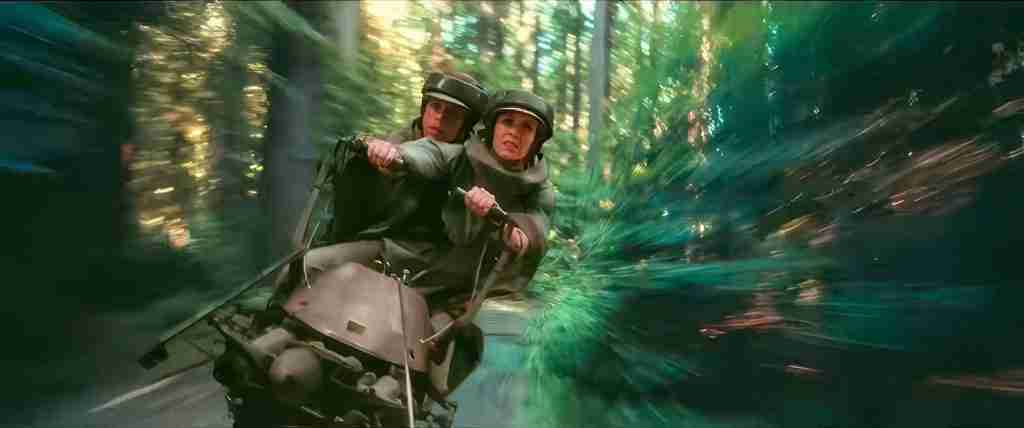
Plot Details and Behind-the-Scenes Insights
Concise Plot Summary
Luke Skywalker returns to complete his Jedi training and redeem his father, Darth Vader, while the Rebel Alliance launches a daring assault on the second Death Star. The story interweaves a daring rescue on Tatooine, revelations on Dagobah, and converging battles on Endor and in space, culminating in redemption, sacrifice, and victory.
Behind-the-Scenes Writing Insights
The screenplay, co-written by Lawrence Kasdan and George Lucas (story by Lucas), faced unusual challenges: the script wasn’t finalized until late pre-production, relying on story conferences and transcripts. Early drafts considered killing Han Solo for tension, but Lucas rejected it. The title shifted from Revenge of the Jedi to Return because Jedi don’t seek revenge. Yoda’s death scene was added to confirm Vader as Luke’s father, addressing potential confusion for young viewers. These decisions highlight the importance of audience clarity and emotional payoff in franchise finales.
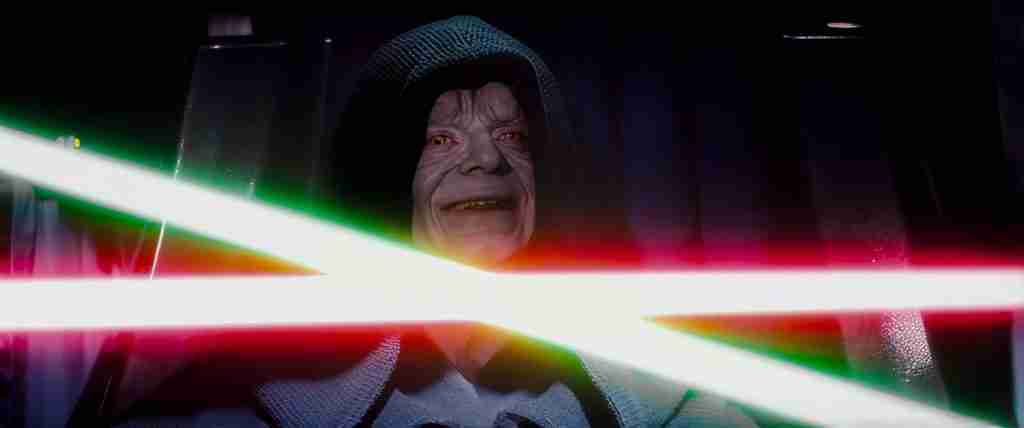
SAVE THE CAT BEAT SHEET: RETURN OF THE JEDI STRUCTURE
Return of the Jedi analysis demonstrates tight, converging pacing across its 131-minute runtime. The film expertly balances intimate family drama with galaxy-spanning action, making it a prime study in trilogy-ending structure—where multiple threads (rescue, training, space/ground battles) build to unified emotional and physical climax.
ACT I
This opening act establishes Luke’s maturity as a Jedi, launches the high-stakes rescue of Han Solo, and transitions the heroes into the larger Rebel mission against the new Death Star.
| Beat | Key Event / Description |
|---|---|
| Opening Image | Vader’s shuttle arrives at the Death Star [1m] |
| Theme Stated | Luke’s message to Jabba: “Return the prisoner or be destroyed” [6m] |
| Set-up | The rescue mission for Han Solo on Tatooine [4m-20m] |
| Catalyst | Luke is captured and sentenced to the Sarlacc pit [30m] |
| Debate | Luke visits Yoda; must face Vader to be a Jedi [40m] |
| Break Into Two | The strike team departs for the forest moon of Endor [54m] |
ACT II
The middle act deepens family revelations, introduces new allies, and tightens the Emperor’s trap—pushing characters toward surrender, ambush, and their lowest point.
| Beat | Key Event / Description |
|---|---|
| B Story | Luke and Leia’s conversation about their lineage [78m] |
| Fun and Games | Meeting the Ewoks and the speeder bike chase [60m-70m] |
| Midpoint | Luke surrenders to Vader; the “trap” is set in motion [81m] |
| Bad Guys Close In | The Rebel fleet is ambushed in space [91m] |
| All Is Lost | The Emperor begins torturing Luke with Force lightning [116m] |
| Dark Night of the Soul | Vader watches his son die, torn between duty and love [117m] |
| Break Into Three | Han’s team successfully deactivates the shield [119m] |
ACT III
The finale delivers cathartic convergence: redemption, sacrifice, destruction of the Death Star, and hopeful celebration—closing the saga with earned triumph.
| Beat | Key Event / Description |
|---|---|
| Finale | Vader kills the Emperor; the Death Star core is destroyed [118m-127m] |
| Final Image | The Force spirits of Anakin, Yoda, and Obi-Wan watch the party [131m] |
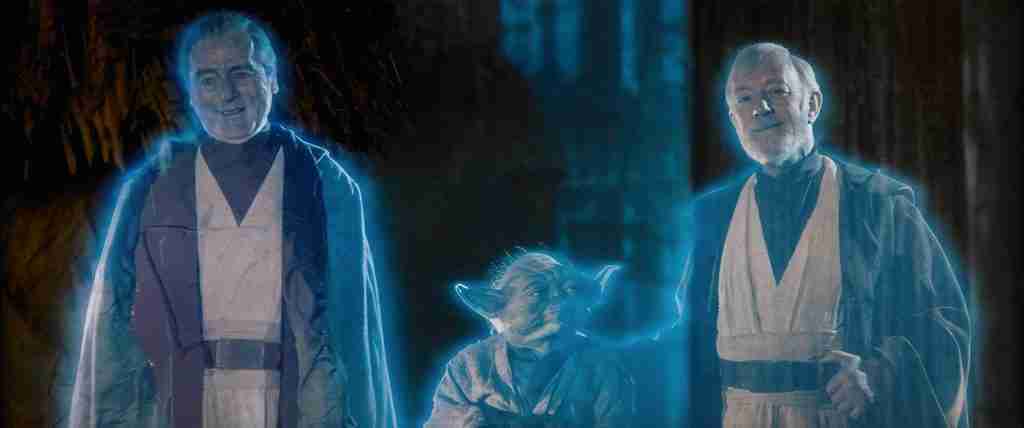
CONCLUSION: WHY RETURN OF THE JEDI STILL TEACHES SCREENWRITERS
Key Strengths and Lessons
The film excels at emotional catharsis through earned redemption and multi-thread convergence. It proves spectacle works best when anchored in character—Luke’s refusal to kill and Vader’s turn remain iconic.
Practical Applications
Study how to interweave subplots without losing focus. Use family legacy for depth, build villains as tests, and end trilogies with hope. For writers tackling sequels, remember: payoff trumps surprise—make revelations feel inevitable yet surprising.