Why the Star Wars 1977 Screenplay Analysis Matters for Modern Writers
This Star Wars 1977 screenplay analysis reveals how George Lucas crafted a mythic space opera that still captivates audiences nearly fifty years later. Released simply as Star Wars (later subtitled A New Hope), the script masterfully balances grand spectacle with intimate character arcs. For screenwriters today, this Star Wars 1977 screenplay analysis demonstrates the power of clear structure, memorable dialogue, and a hero’s journey that feels timeless yet personal. Lucas’s four major drafts refined a complex early concept into one of the most influential screenplays ever written.

Building Tension and Conflict in A New Hope
Tension in A New Hope is relentless, escalating from galactic pursuit to personal tragedy to a do-or-die trench assault. Lucas layers immediate danger with emotional stakes, creating unstoppable narrative momentum.
Escalating Galactic Threats
The film opens at 4m with a Star Destroyer attacking Leia’s consular ship, instantly establishing the Empire’s overwhelming dominance. Tarkin’s destruction of Alderaan at 57m proves the Empire will annihilate entire worlds to maintain control. These massive stakes show writers how to introduce existential threats early while preserving space for character-driven drama.
Personal Confrontations and Losses
Luke’s discovery of his murdered aunt and uncle at 41m forces him to abandon his former life in one crushing moment. Obi-Wan’s death at 105m removes the mentor figure and leaves Luke emotionally vulnerable. These intimate, irreversible losses illustrate how to anchor epic conflicts in genuine grief and transformation.
Climactic Resolutions and Twists
The trench run sequence (153–157m) delivers peak suspense: Luke disables his targeting computer after hearing Obi-Wan’s voice, and fires the decisive shot—then Han returns at the last possible second. This blend of faith, teamwork, and surprise reversal demonstrates how to deliver emotionally earned catharsis after sustained tension.
Key Themes in A New Hope: Faith, Technology, and Destiny
Through this Star Wars 1977 screenplay analysis, we see how Lucas embedded profound philosophical ideas within an accessible adventure.
The Nature of Faith and Spirituality vs. Technology
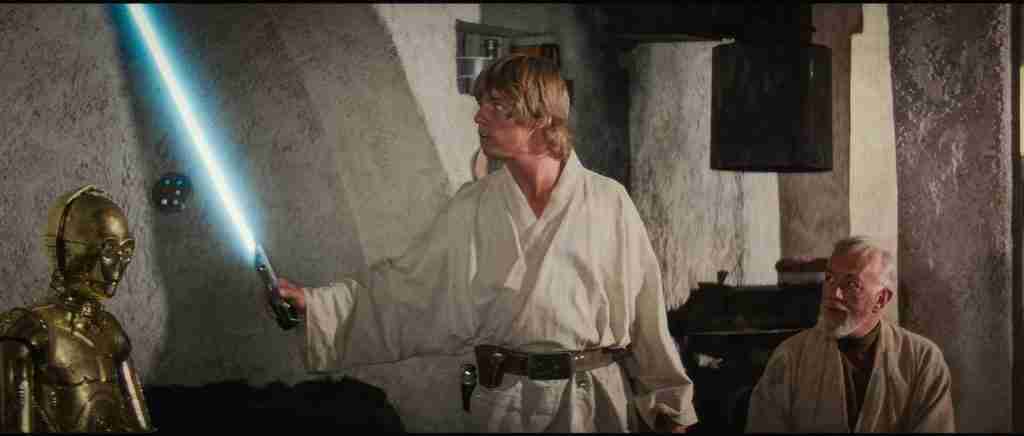
Luke’s choice to trust the Force over technology at 156m (“Use the Force, Luke”) forms the story’s spiritual pinnacle. Earlier, Vader’s chilling line at 39m—“I find your lack of faith disturbing”—while force-choking Motti, sharply contrasts the Empire’s mechanical arrogance with the Jedi path of inner power.
The Hero’s Responsibility and Corruption of Power
The murder of Luke’s family at 41m crystallizes his realization that neutrality is no longer possible. Tarkin’s casual destruction of Alderaan at 58m reveals institutional evil at its most ruthless. Together, these moments compel the hero—and the audience—to confront personal responsibility in the face of systemic corruption.
MEET THE CAST: WHAT EACH CHARACTER TEACHES US ABOUT SCREENWRITING
| Character | Arc | Screenwriting Lesson |
|---|---|---|
| Luke Skywalker | Restless farm boy to spiritual warrior | Ground the “Refusal of the Call” in authentic internal conflict. |
| Han Solo | Selfish mercenary to selfless hero | Use a foil character to express audience skepticism and provide contrast. |
| Princess Leia | Captured diplomat to decisive military leader | Grant agency to supporting characters; let them rescue the rescuers. |
| Obi-Wan Kenobi | Reclusive hermit to transcendent guide | The mentor must die (structurally) so the hero can stand on their own. |
| Darth Vader | Relentless physical enforcer | Give the antagonist a personal, historical tie to the protagonist. |
| Grand Moff Tarkin | Bureaucratic, detached authority | Contrast “physical evil” (Vader) with “institutional evil” (Tarkin). |
| R2-D2 / C-3PO | Observers / comic relief | Employ sidekicks for efficient exposition and a relatable lens on grand events. |

Unraveling the Plot of A New Hope: Details and Writing Nuggets
Plot Summary
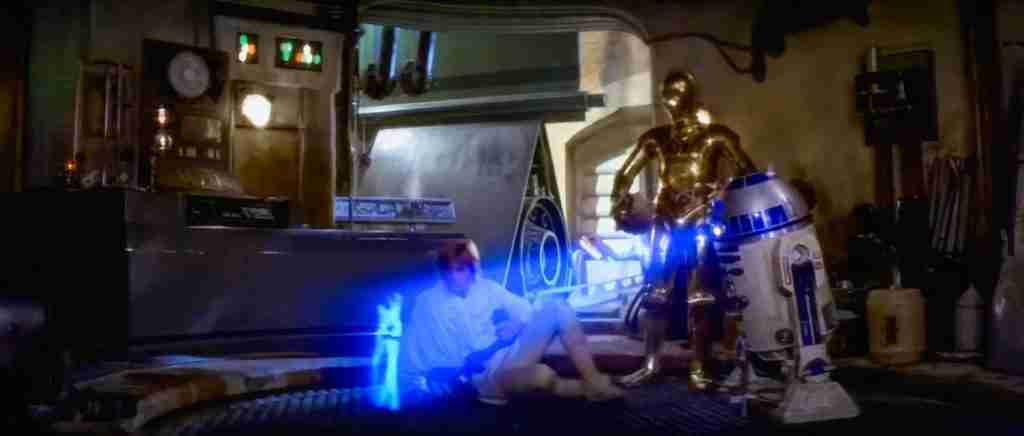
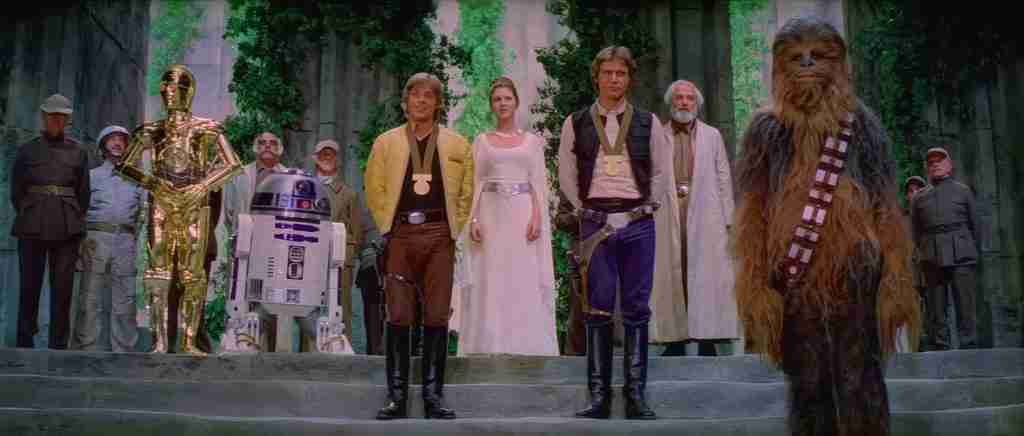
Rebel spies steal Death Star plans; Leia’s ship is attacked at 4m and boarded at 8m. The droids escape to Tatooine, where Luke purchases them at 18m and discovers Leia’s desperate hologram at 21m: “Help me, Obi-Wan Kenobi. You’re my only hope.” He meets Obi-Wan at 31m, receives his father’s lightsaber at 34m (“An elegant weapon for a more enlightened age”), finds his family slaughtered at 41m, and commits to the fight. In Mos Eisley at 48m he hires Han Solo and Chewbacca, evades pursuit, reaches the Death Star at 82m (“That’s no moon”), rescues Leia amid crises, loses Obi-Wan at 105m, arrives at Yavin IV at 111m, and destroys the Death Star at 157m with Han’s last-second intervention. The film ends with the medal ceremony at 158m.
Behind-the-Scenes Insights
Lucas drew from Joseph Campbell’s monomyth and Kurosawa’s The Hidden Fortress. Early drafts included a larger ensemble and denser backstory; revisions streamlined everything to fit budget and runtime constraints. Practical effects breakthroughs, innovative sound design (lightsaber hum from projector motors), and Brian De Palma’s help refining the opening crawl shaped the final script. Limitations forced clarity and economy—valuable lessons for any screenwriter.
As revealed in this Star Wars 1977 screenplay analysis, those constraints sparked ingenuity that elevated the story.
Save the Cat! Beat Sheet: A New Hope Structure
At 121 minutes, A New Hope aligns remarkably well with Blake Snyder’s Save the Cat! beats, delivering a propulsive yet emotionally rich arc.
ACT I
Sets up the ordinary world, ignites the central conflict, and launches the hero’s journey.
| Beat (Save the Cat!) | Timestamp | Key Event / Description |
|---|---|---|
| Opening Image | 1m | A small rebel ship is pursued by a massive Star Destroyer. |
| Theme Stated | 34m | Obi-Wan explains the Force: spiritual energy vs. the Empire’s technology. |
| Setup | 15–23m | Luke’s mundane farm life; yearning to attend the Academy and become a pilot like his father. |
| Catalyst | 21m | Luke discovers Leia’s message; the call to find Obi-Wan. |
| Debate | 36m | Luke refuses to leave for Alderaan; he has chores and family ties. |
ACT II-A
The hero crosses into the upside-down world and experiences the “promise of the premise.”
| Beat (Save the Cat!) | Timestamp | Key Event / Description |
|---|---|---|
| Break into Two | 41m | Uncle Owen and Aunt Beru are killed by stormtroopers; Luke declares “There’s nothing for me here now.” |
| B Story | 48m | Meeting Han Solo; the relationship that challenges Luke’s idealism. |
| Fun and Games | 55–75m | Escaping Tatooine; lightsaber training with the remote on the Falcon. |
| Midpoint | 82m | Arrival at the Death Star; mission shifts from escape to rescue. |
ACT II-B
Rising pressure, mounting setbacks, and the lowest emotional point before the final rally.
| Beat (Save the Cat!) | Timestamp | Key Event / Description |
|---|---|---|
| Bad Guys Close In | 85–100m | Infiltrating the station; trash compactor crisis and narrow escapes. |
| All is Lost | 105m | Obi-Wan is struck down by Vader; the mentor is gone. |
| Dark Night of the Soul | 108m | Luke grieves on the Falcon; Han remains cynical about any reward. |
ACT III
The hero rallies, confronts the ultimate threat, and achieves transformation.
| Beat (Save the Cat!) | Timestamp | Key Event / Description |
|---|---|---|
| Break into Three | 111m | Arrival at Yavin IV; full commitment to the military assault. |
| Finale | 145–157m | Battle of Yavin; Luke trusts the Force to make the shot and destroys the Death Star. |
| Final Image | 158m | Luke and Han honored as heroes; the farm boy has found his destiny. |
Conclusion: Why A New Hope Still Teaches Screenwriters
Almost fifty years on, A New Hope remains a gold standard for mythic storytelling delivered through accessible adventure. Ultimately, this Star Wars 1977 screenplay analysis proves why the script endures as a masterclass: Lucas wove Joseph Campbell’s hero’s journey with timeless themes of faith over technological hubris, creating a narrative blueprint that still teaches screenwriters how to balance spectacle, character transformation, and emotional resonance.
Key Strengths and Lessons
The script excels at contrasting voices (Han’s pragmatism vs. Obi-Wan’s mysticism), structurally killing the mentor to force growth, and crafting a finale that pays off every major theme and relationship.
Practical Applications
Open with a striking visual and clear inciting incident. Give your hero legitimate reasons to hesitate. Use foils, mentors, and tight structural beats to keep readers emotionally engaged. Revise relentlessly—Lucas did four major drafts. When you commit to that process, the Force will be with your screenplay.