Diving Into Ghostbusters Analysis: Lessons for Aspiring Writers
This Ghostbusters analysis reveals a masterclass in blending comedy, horror, and action into a timeless blockbuster. Released in 1984, this Ivan Reitman-directed film follows a ragtag team of parapsychologists who turn ghost-hunting into a booming business. However, crafting such a script poses a unique challenge: balancing high-stakes supernatural threats with laugh-out-loud humor while ensuring every beat drives the plot forward. Moreover, the screenplay by Dan Aykroyd and Harold Ramis demonstrates how to ground absurd premises in relatable character dynamics. Thus, this Ghostbusters analysis breaks down its structure, themes, and techniques to inspire your own writing.

Building Tension and Conflict in Ghostbusters Analysis
Tension in Ghostbusters builds gradually, mixing bureaucratic hurdles with escalating paranormal chaos to keep audiences hooked. For instance, early conflicts stem from institutional skepticism, while later ones explode into city-wide disasters. Consequently, the script masterfully layers personal and global stakes.
Supernatural Encounters Ramp Up the Horror-Comedy Mix in Ghostbusters Analysis
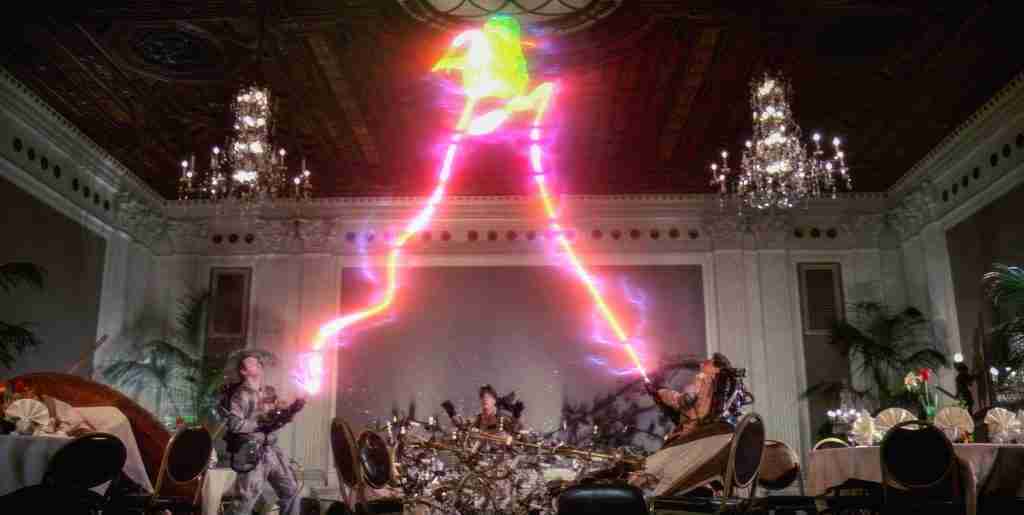
The film kicks off with subtle scares, like the Library Ghost encounter at 3m, setting a tone of eerie wonder. As the team faces their first capture at the Sedgewick Hotel around 30m, Venkman’s iconic “He slimed me” at 34m adds gross-out humor to the dread. Additionally, possessions intensify the peril, with Dana becoming Zuul at 66m and Louis as Vinz Clortho at 69m, turning everyday settings into battlegrounds.
Bureaucratic Antagonists Fuel Real-World Frustration in Ghostbusters Movie Breakdown
Walter Peck’s EPA inspection at 47m introduces human opposition, clashing science with red tape. This culminates in the containment unit shutdown at 78m, unleashing ghosts and leading to the team’s arrest. Meanwhile, discussions like Ray and Winston’s apocalyptic chat at 55m heighten the sense of impending doom, blending comedy with genuine threat.
Personal Stakes Converge with Apocalyptic Chaos in Ghostbusters Script Breakdown
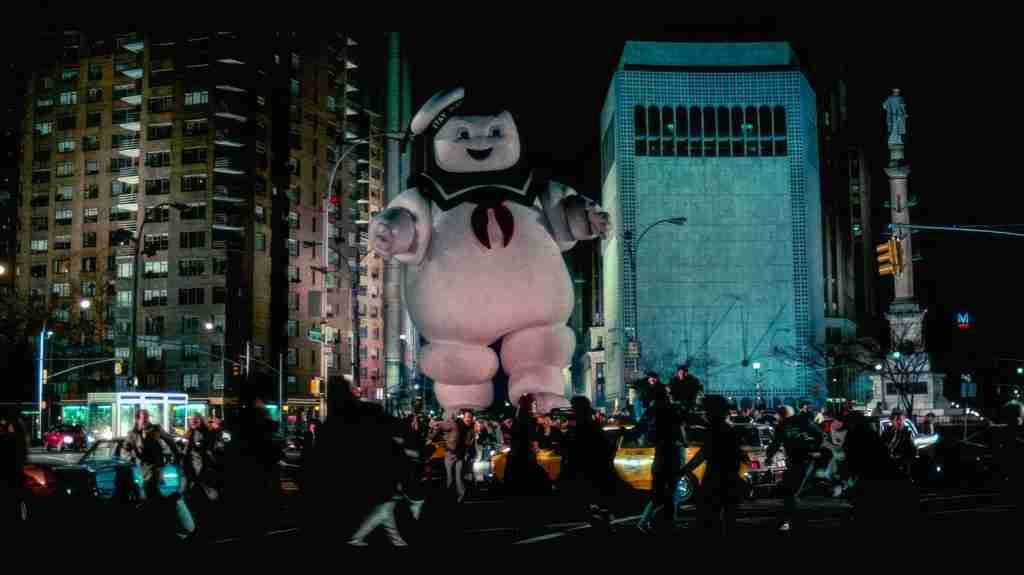
As chaos peaks, the Mayor’s jail release at 85m shifts to heroism amid citywide pandemonium. The rooftop climax at 94m forces a fateful choice, summoning the Stay Puft Marshmallow Man at 99m. Finally, crossing the streams at 101m resolves the conflict, teaching writers how to intertwine character growth with high-tension resolutions.
Key Themes in Ghostbusters: Entrepreneurship, Bureaucracy, and Mythic Heroism
Our Ghostbusters analysis uncovers layers of social commentary wrapped in spectral fun. Themes like innovation thriving outside rigid systems and teamwork conquering ancient evils resonate deeply. Therefore, these elements provide fertile ground for screenwriters exploring modern myths.
Innovation Triumphs Over Institutional Failures in Ghostbusters Analysis
Entrepreneurship shines as the trio, fired from Columbia University at 10m, mortgages Ray’s home at 14m to launch their business. Science vs. bureaucracy escalates when Peck’s interference triggers catastrophe at 78m, highlighting how government overreach can spark disasters. Blue-collar heroism frames ghost-busting as pest control, with Ray likening it to rat removal, emphasizing private sector ingenuity.
Teamwork and Modernity Clash with Ancient Forces in Ghostbusters Deep Dive
The power of teamwork culminates in the stream-crossing resolution at 101m, despite Egon’s warning “Don’t cross the streams” earlier at 31m. Modernity vs. ancient myth plays out as Sumerian god Gozer invades a New York skyscraper at 93m. As a result, these themes ground the supernatural in relatable struggles, offering lessons in blending myth with contemporary satire.
Meet the Cast: What Each Character Teaches Us About Screenwriting
| Character | Arc | Lesson |
|---|---|---|
| Peter Venkman | A cynical con-artist who becomes a genuine hero. | Use the protagonist’s dialogue to reflect their resistance to the “extraordinary” until they have no choice. |
| Ray Stantz | An enthusiastic dreamer who learns to handle the burden of responsibility. | The “Heart” of the team provides the emotional vulnerability necessary for the audience to believe the premise. |
| Egon Spengler | A stoic intellectual who learns to take tactical risks. | Exposition should be delivered through a character’s specific obsession or expertise to make it engaging. |
| Winston Zeddemore | A skeptic looking for a paycheck who becomes a true believer. | The “Everyman” perspective grounds the high-concept world and validates the stakes for the audience. |
| Dana Barrett | A guarded professional who is forced into vulnerability and rescued. | High stakes are best achieved by making the global threat personal to the lead characters (possession). |
| Louis Tully | A social nuisance who becomes the literal “Key” to the apocalypse. | Secondary comic relief can serve as a vital plot engine (The Keymaster). |
| Walter Peck | A bureaucrat who remains static in his disbelief. | The most effective human villains are those who are “right” in theory (regulation) but “wrong” in practice/timing. |
Unpacking Ghostbusters’ Plot and Hidden Gems
This Ghostbusters analysis delves into the narrative’s core, revealing how its plot weaves humor with horror. Plot details draw from precise beats, while behind-the-scenes insights highlight creative choices that elevated the script.
Plot Summary
The story opens with a haunting at the New York Public Library at 3m, introducing parapsychologists Peter, Ray, and Egon. Fired from university at 10m, they start Ghostbusters, airing their commercial “We’re ready to believe you!” at 16m. Dana’s visit at 19m adds romance, leading to Slimer’s capture at 37m and fame at 40m. Tensions rise with Peck at 47m, possessions at 66m-69m, and the explosion at 78m. Jailed at 81m, they uncover an apocalyptic plot, get released at 85m, and battle Gozer at 94m. The Destructor appears at 99m, resolved by crossing streams at 101m, ending with city cheers at 103m.
Behind-the-Scenes Insights
Dan Aykroyd originally conceived the project as a vehicle for himself, his close friend John Belushi (intended for Peter Venkman), and Eddie Murphy. Aykroyd was actively writing lines for Belushi when he learned of the comedian’s tragic death from a drug overdose in March 1982, forcing a major pivot. Bill Murray stepped in for Belushi’s role, bringing his signature deadpan style. Meanwhile, Eddie Murphy was eyed for what became Winston Zeddemore (with a larger part initially), but he passed—opting instead for Beverly Hills Cop, which launched him to superstardom and became 1984’s top-grossing film. The script shifted from a darker, more ambitious sci-fi epic set in the future with intergalactic ghost teams (potentially costing hundreds of millions) to a grounded, New York-based comedy after Harold Ramis joined to rewrite. Slimer was designed as a homage to Belushi’s wild, gluttonous persona from Animal House. Iconic ad-libs, like Venkman’s “I’m gonna turn this guy into toast” at 100m, added spontaneity, while the film’s pest-control framing turned supernatural chaos into everyday blue-collar work.
- For more on the making of, check out this 1984 featurette on YouTube.
- Read the full Ghostbusters screenplay on IMSDb for deeper study.

Save the Cat Beat Sheet: Ghostbusters Structure
Our Ghostbusters analysis shows a tightly paced 105-minute runtime, with beats hitting every 10-15 minutes to maintain momentum. This structure ensures comedy never overshadows the escalating stakes. The midpoint at 40m divides Act II into two distinct halves: Act II-A delivers the “promise of the premise” through fun successes, while Act II-B ramps up complications and rising obstacles.
ACT I
The setup establishes the quirky heroes and their world, thrusting them from academia into entrepreneurship. Ray’s enthusiasm contrasts Venkman’s cynicism, hooking viewers early.
| Sequence | Beat (Save the Cat!) | Key Event / Description |
|---|---|---|
| Act I | Opening Image | The haunting of the New York Public Library (3m) |
| Theme Stated | Ray insists on the reality of the paranormal while Venkman focuses on the “grants” (5m) | |
| Set-up | Introduction of the eccentric professors and their failing lab (1-10m) | |
| Catalyst | The Dean fires the trio, ending their academic safety net (10m) | |
| Debate | Ray worries about the private sector; they decide to mortgage his house (11-14m) | |
| Break into Two | The team moves into the firehouse and establishes the business (16m) |
ACT II-A
The first half of act two explores the new world of ghost-busting entrepreneurship, delivering on the film’s premise with humorous successes and rising fame. The team thrives initially, but subtle pressures build toward the turning point.
| Sequence | Beat (Save the Cat!) | Key Event / Description |
|---|---|---|
| Act II-A | B-Story | Dana Barrett enters, providing the romantic/emotional stakes (19m) |
| Fun and Games | The Sedgewick Hotel job and the “success” montage (30-40m) | |
| Midpoint | The business is booming, but the containment unit is nearing capacity (40m) |
ACT II-B
The last half of Act II shifts to mounting threats as external forces close in, consequences pile up, and the heroes face their lowest point. The tone darkens, forcing growth and desperation before the final push.
| Sequence | Beat (Save the Cat!) | Key Event / Description |
|---|---|---|
| Act II-B | Bad Guys Close In | The EPA (Peck) begins legal/regulatory pressure (47m) |
| All is Lost | The containment unit explodes; ghosts are released; the team is arrested (78m) | |
| Dark Night of the Soul | The team realizes the building is an antenna for the apocalypse while in jail (81m) | |
| Break into Three | The Mayor grants them the “Green Light” to act as heroes (85m) |
ACT III
The finale delivers explosive action, resolving arcs through heroic risks. It ties themes together in a satisfying payoff.
| Sequence | Beat (Save the Cat!) | Key Event / Description |
|---|---|---|
| Act III | Finale | The rooftop battle with Gozer and the Stay Puft Marshmallow Man (93-101m) |
| Final Image | The city celebrates the Ghostbusters; Dana is rescued (103m) |

Conclusion: Why Ghostbusters Still Teaches Screenwriters
This Ghostbusters analysis underscores the film’s enduring legacy in crafting genre-blending stories. Its lessons remain vital for modern writers navigating complex narratives.
Key Strengths and Lessons in Ghostbusters Analysis
The script excels in humor-infused exposition, like Egon’s tech warnings, making info dumps entertaining. However, its real strength lies in character-driven stakes, as seen in Venkman’s arc from skeptic to savior. Additionally, quotes like “Human sacrifice, dogs and cats living together… mass hysteria!” at 86m amplify themes without preachiness.
Practical Applications for Your Screenplays
Apply these by grounding fantastical elements in everyday dialogue for relatability. For example, use “Everyman” characters like Winston to validate world-building. Thus, in your scripts, layer conflicts progressively, ensuring each beat advances both plot and growth for maximum impact.