

Every March, the Academy tells the world which films matter most. The Oscars Best Picture data, though, tells a different story. When you compare 61 years of Best Picture winners against the best movies of all time ranked by IMDb, Metacritic, Rotten Tomatoes, and the domestic box office, a striking pattern emerges: in 59% of those years, the Academy’s choice matched none of the other four measures. The audience favorite, the critical consensus, the commercial champion—all pointed somewhere else.
This article presents that comparison decade by decade, using verified data from all five systems. The Oscars Best Picture data reveals, instead of a simple right-or-wrong argument, something more structural: the Academy measures something fundamentally different from what audiences, critics, and the marketplace measure. Understanding that difference matters—especially if you write screenplays.
A Note on What These Rankings Actually Measure
Before diving into the decade-by-decade comparison, it is worth pausing on a point most analyses of the best movies of all time ranked by these systems overlook entirely: these five columns represent fundamentally different moments in time.
The Academy voters who chose Rocky over Taxi Driver in 1976 are, for the most part, dead. The institution persists but the electorate turns over. Every Best Picture winner in this data reflects the tastes, politics, and industry pressures of a specific group of people in a specific year—a snapshot frozen in time.
IMDb’s voters, by contrast, are alive right now. When a 25-year-old rates The Godfather on IMDb in 2026, that is a retroactive judgment from someone born thirty years after the film. The IMDb column represents, in other words, the present evaluating the past. The films that rise to the top are, as a result, the ones that still compel modern audiences to watch, rate, and recommend them—regardless of what the Academy thought at the time.
Critics, Audiences, and the Box Office: Different Eras, Different Verdicts
Metacritic and Rotten Tomatoes occupy, meanwhile, a hybrid timeline. Both platforms include original reviews from a film’s era alongside modern critics revisiting older work. Their “consensus” blends, therefore, what critics thought then with what critics think now—which skews the Oscars’ Best Picture data comparison in ways most people don’t consider. Movies are, in this respect, like fashion: some of it holds up across generations, and some of it was always a product of the moment.
The box office column is, finally, frozen in time just like the Oscars—but it claims only to measure popularity, not quality. The Academy claims to measure quality. The gap between that claim and the Oscars Best Picture data is the subject of this article.
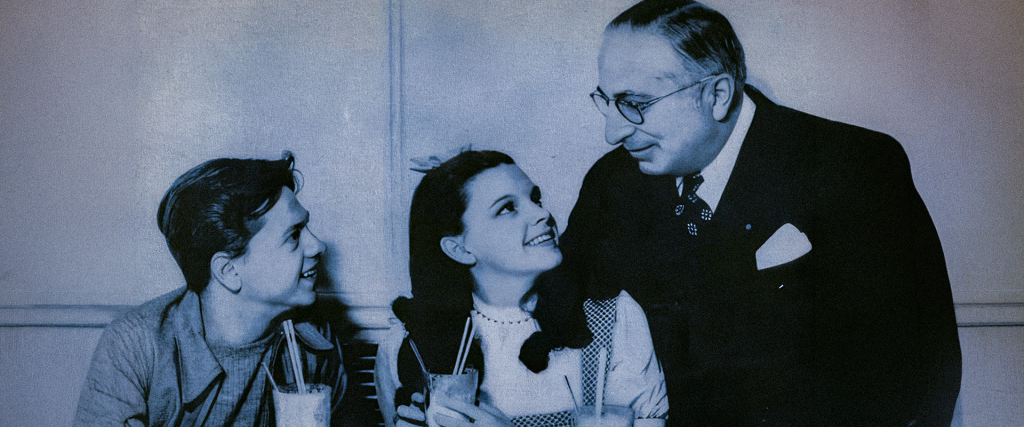
The Oscars’ Origin Story: Louis B. Mayer and the Birth of the Best Picture
Louis B. Mayer, production chief of Metro-Goldwyn-Mayer, founded the Academy of Motion Picture Arts and Sciences on January 11, 1927. He did not, however, create it to celebrate artistic achievement. Mayer designed the Academy to prevent labor organizing in Hollywood.
Nine film studios had, in late 1926, signed a Studio Basic Agreement with unions representing below-the-line workers. Mayer feared, as a consequence, that actors, directors, and writers would inevitably follow. His solution took the form of an elite professional organization that would mediate disputes internally, thereby keeping control in the hands of producers. As biographer Scott Eyman documented, Mayer later said: “I found that the best way to handle filmmakers was to hang medals all over them. If I got them cups and awards, they’d kill themselves to produce what I wanted. That’s why the Academy Award was created.”
How the Academy Awards Became a Promotional Tool
The awards ceremony started, notably, as an afterthought. Mayer held the first one on May 16, 1929, with fewer than 300 guests, winners announced three months in advance, and the entire event lasting roughly fifteen minutes. The Academy operated as a company union from 1927 to 1933. Hollywood unionized anyway, and Congress outlawed company-controlled unions through the National Labor Relations Act in 1935. The Academy survived only by pivoting to its awards function—which had, by then, become the industry’s most effective promotional tool.
How to Read the Oscars Best Picture Data
IMDb #1 = the highest-ranked film from that release year currently on the IMDb Top 250 (March 2026). Metacritic #1 = the highest Metascore for that release year, with re-releases excluded. RT #1 = the highest-ranked film from that year on Rotten Tomatoes’ 300 Best of All Time list. #1 Box Office = the top domestic grossing film of that calendar year, sourced from Box Office Mojo (1977 onward) or estimated from distributor rental data (pre-1977). Dashes indicate years where no film appears on a given list.
The 1960s: Best Picture Data in the Studio Era’s Twilight
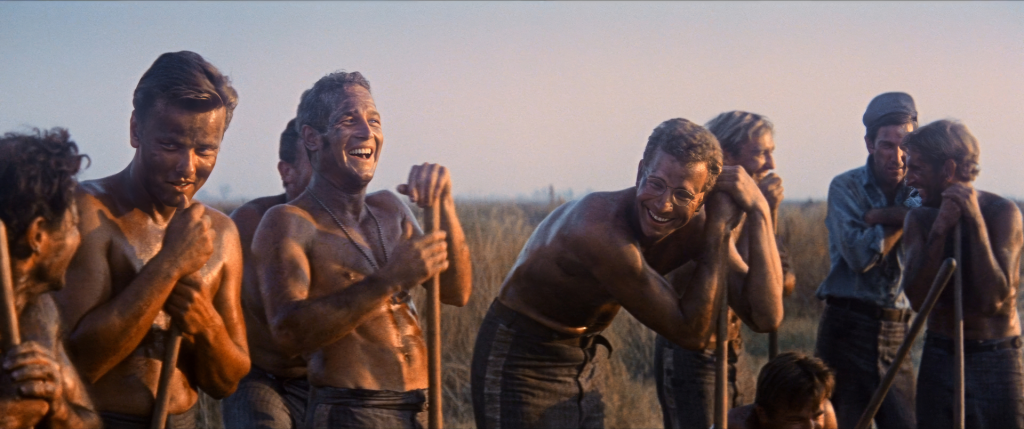
The Academy voters of the late 1960s operated in a Hollywood that was, by all accounts, dying. The old studio system had collapsed, the Production Code was crumbling, and a generation of filmmakers influenced by the French New Wave was about to rewrite every rule. The Oscars Best Picture data from this half-decade shows an Academy still clinging, in four out of five years, to choices that no other system validated. The audience favorites from this era—Sergio Leone’s Westerns, Stuart Rosenberg’s Cool Hand Luke—represented, by contrast, a populist energy the Academy was not yet ready to acknowledge. It is also worth noting that neither Metacritic nor Rotten Tomatoes had many entries for these years, since both platforms rely on a critical mass of reviews that older films often lack.
| Year | Best Picture | IMDb #1 | Metacritic #1 | RT #1 |
| 1965 | The Sound of Music | The Sound of Music | Alphaville | — |
| 1966 | A Man for All Seasons | The Good, the Bad and the Ugly | Au hasard Balthazar | The Battle of Algiers |
| 1967 | In the Heat of the Night | Cool Hand Luke | Chimes at Midnight | Cool Hand Luke |
| 1968 | Oliver! | Once Upon a Time in the West | Rosemary’s Baby | — |
| 1969 | Midnight Cowboy | Butch Cassidy and the Sundance Kid | The Wild Bunch | The Sorrow and the Pity |
Box office data is not included for the 1960s. Standardized domestic gross tracking did not begin until 1977, and pre-1977 figures vary significantly across sources. The box office column begins with the 1970s, where late-decade data (Jaws, Star Wars, Rocky) is more reliable, though earlier years in that decade should still be treated as approximations.
The 1970s: The Best Picture Decade That Actually Got It Right
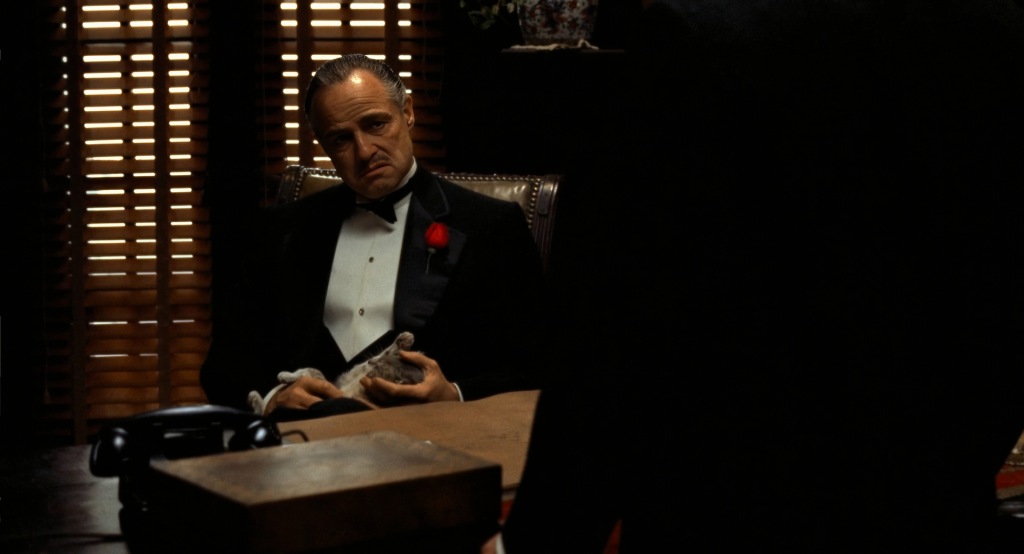
The 1970s are, remarkably, the one decade where the Academy and every other system came closest to agreement. The Oscars Best Picture data shows only a 20% standalone rate — the lowest of any decade in this study. And the reason has a name: Francis Ford Coppola.
1972 is, by any measure, the most extraordinary single year in this entire dataset. The Godfather won Best Picture. It sits at #2 on IMDb’s all-time list, tops Metacritic and Rotten Tomatoes for its year, and was the #1 domestic grosser of 1972. Five columns, one film.
No other movie in the 61 years of this study achieved that — not Schindler’s List, not Parasite, not even Citizen Kane, which lost Best Picture to How Green Was My Valley in 1941 and never topped a box office chart. Vertigo wasn’t even nominated. Gone with the Wind swept the 1939 Oscars but carries a racial legacy that complicates any modern critical consensus. The Godfather stands alone as the one film that every system recognized at the time and continues to recognize today. Coppola did what no other filmmaker in the history of the medium has done: he satisfied everyone, simultaneously, and the verdict has not changed in over fifty years.
The Rest of the 1970s: Alignment With Exceptions
One Flew Over the Cuckoo’s Nest and The Deer Hunter also won Best Picture while topping IMDb for their respective years. This was the era of the New Hollywood auteurs, when the best movies of all time ranked by audiences and critics were also, frequently, the films the industry itself wanted to celebrate. It is worth noting, though, that even in this golden decade, the Academy still passed over Star Wars, Alien, and Taxi Driver.
| Year | Best Picture | IMDb #1 | Metacritic #1 | RT #1 | #1 Box Office (est.) |
| 1970 | Patton | — | The Conformist | Woodstock | Love Story |
| 1971 | The French Connection | A Clockwork Orange | The French Connection | The Last Picture Show | Fiddler on the Roof |
| 1972 | The Godfather | The Godfather | The Godfather | The Godfather | The Godfather |
| 1973 | The Sting | The Sting | Playtime | — | The Exorcist |
| 1974 | The Godfather Part II | The Godfather: Part II | Chinatown | Chinatown | The Towering Inferno |
| 1975 | One Flew Over the Cuckoo’s Nest | One Flew Over the Cuckoo’s Nest | Nashville | Jaws | Jaws |
| 1976 | Rocky | Taxi Driver | Taxi Driver | Harlan County, U.S.A. | Rocky |
| 1977 | Annie Hall | Star Wars | Annie Hall | Star Wars | Star Wars |
| 1978 | The Deer Hunter | The Deer Hunter | Jeanne Dielman | The Last Waltz | Grease |
| 1979 | Kramer vs. Kramer | Alien | Apocalypse Now | Alien | Kramer vs. Kramer |

The 1980s: A Decade of Best Picture Disconnection
The 1980s produced the widest gap between the Academy and every other measure. The Oscars Best Picture data shows an 80% standalone rate—eight out of ten years where the Academy’s choice matched nothing else. Chariots of Fire over Raiders of the Lost Ark. Gandhi over E.T. and The Thing. Out of Africa over Back to the Future. The Last Emperor over Full Metal Jacket. The voters who made these choices reflected, in most cases, an older generation of industry professionals whose tastes had calcified against the blockbuster era they were living through. The films they passed over became, meanwhile, the canonical works that define 1980s cinema in the cultural memory. The Academy’s picks have, in nearly every case, faded.
| Year | Best Picture | IMDb #1 | Metacritic #1 | RT #1 | #1 Box Office |
| 1980 | Ordinary People | Star Wars: The Empire Strikes Back | — | — | Star Wars: The Empire Strikes Back |
| 1981 | Chariots of Fire | Raiders of the Lost Ark | The Decline of Western Civilization | Das Boot | Superman II |
| 1982 | Gandhi | The Thing | E.T. The Extra-Terrestrial | Fanny and Alexander | E.T. The Extra-Terrestrial |
| 1983 | Terms of Endearment | Star Wars: Episode VI – Return of the Jedi | — | — | Star Wars: Return of the Jedi |
| 1984 | Amadeus | Amadeus | Stop Making Sense | Stop Making Sense | Ghostbusters |
| 1985 | Out of Africa | Back to the Future | Ran | Tampopo | Back to the Future |
| 1986 | Platoon | Aliens | Platoon | — | Top Gun |
| 1987 | The Last Emperor | Full Metal Jacket | — | — | Beverly Hills Cop II |
| 1988 | Rain Man | Grave of the Fireflies | Dekalog | Grave of the Fireflies | Who Framed Roger Rabbit |
| 1989 | Driving Miss Daisy | Indiana Jones and the Last Crusade | My Left Foot | The Decalogue | Batman |

The 1990s: Best Picture Data in the Indie Boom and Weinstein Era
The 1990s show, in the Oscars Best Picture data, an 80% standalone rate, matching the 1980s—but for different reasons. This was the decade when aggressive Oscar campaigning became an industry unto itself. Harvey Weinstein’s Miramax machine turned the Best Picture race into a marketing contest, and the results are visible in the data: Shakespeare in Love over Saving Private Ryan in 1998 stands as the era’s defining upset, but the pattern runs deeper. Forrest Gump over The Shawshank Redemption and Pulp Fiction in 1994 produced, as discussed earlier, four completely different films across five columns. The best movies of all time ranked by modern audiences—Shawshank at #1 on IMDb, Pulp Fiction at #9—are films the Academy dismissed in favor of a crowd-pleaser that now sits at #12.
| Year | Best Picture | IMDb #1 | Metacritic #1 | RT #1 | #1 Box Office |
| 1990 | Dances With Wolves | Goodfellas | Reversal of Fortune | Goodfellas | Ghost |
| 1991 | The Silence of the Lambs | The Silence of the Lambs | Beauty and the Beast | The Silence of the Lambs | Terminator 2: Judgment Day |
| 1992 | Unforgiven | Reservoir Dogs | Brother’s Keeper | Aladdin | Batman Returns |
| 1993 | Schindler’s List | Schindler’s List | Schindler’s List | Schindler’s List | Jurassic Park |
| 1994 | Forrest Gump | The Shawshank Redemption | Three Colors: Red | Three Colors: Red | The Lion King |
| 1995 | Braveheart | Se7en | Toy Story | Toy Story | Batman Forever |
| 1996 | The English Patient | Fargo | Secrets & Lies | When We Were Kings | Independence Day |
| 1997 | Titanic | Life Is Beautiful | Maborosi | L.A. Confidential | Men in Black |
| 1998 | Shakespeare in Love | Saving Private Ryan | — | Saving Private Ryan | Titanic |
| 1999 | American Beauty | Fight Club | Close-Up | Toy Story 2 | Star Wars: The Phantom Menace |
The 2000s: Best Picture Data in the Franchise Era
The 2000s brought, for the Academy, a new kind of divergence. The box office column filled up with franchise films—Spider-Man, Harry Potter, Lord of the Rings, Shrek—while the Academy continued to reward mid-budget prestige dramas. The Oscars Best Picture data shows a 50% standalone rate, which is an improvement over the prior two decades. The reason is partly structural: the Academy expanded from five to up to ten Best Picture nominees in 2009, which widened the net considerably.
The Return of the King: When the Franchise and the Academy Agreed
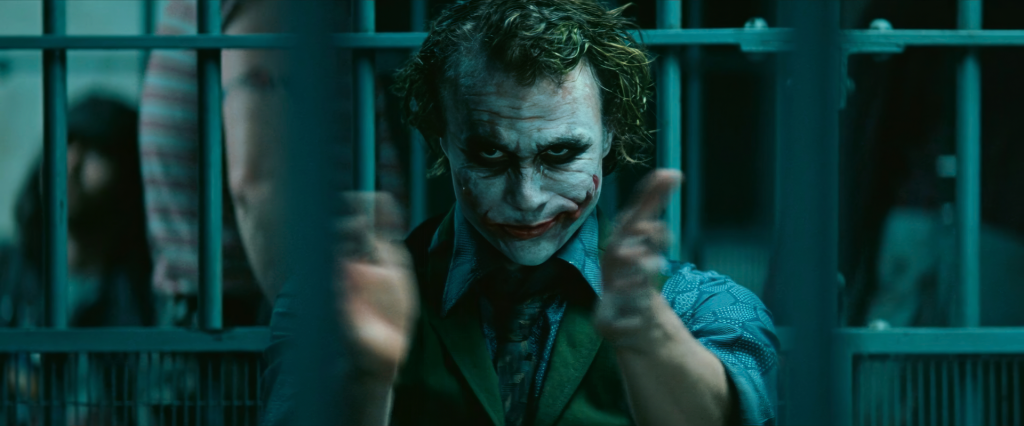
The Lord of the Rings: The Return of the King stands out, in 2003, as the rare year where all systems aligned. The franchise blockbuster and the Academy pick were, for once, the same film. That convergence was, however, the exception rather than the rule. The rest of the decade saw the Academy choosing films like Crash, Chicago, and Million Dollar Baby while audiences gravitated toward Christopher Nolan’s The Dark Knight and the IMDb Top 250 filled with films the Academy largely ignored.
The 2000s Oscars Best Picture Data
| Year | Best Picture | IMDb #1 | Metacritic #1 | RT #1 | #1 Box Office |
| 2000 | Gladiator | Gladiator | Yi Yi | Crouching Tiger, Hidden Dragon | How the Grinch Stole Christmas |
| 2001 | A Beautiful Mind | The Lord of the Rings: The Fellowship of the Ring | Werckmeister Harmonies | Spirited Away | Harry Potter: Sorcerer’s Stone |
| 2002 | Chicago | The Lord of the Rings: The Two Towers | Spirited Away | The Lord of the Rings: The Two Towers | Spider-Man |
| 2003 | The Lord of the Rings: The Return of the King | The Lord of the Rings: The Return of the King | The Lord of the Rings: The Return of the King | Finding Nemo | Finding Nemo |
| 2004 | Million Dollar Baby | Eternal Sunshine of the Spotless Mind | The Battle of Algiers | — | Shrek 2 |
| 2005 | Crash | V for Vendetta | — | Murderball | Star Wars: Revenge of the Sith |
| 2006 | The Departed | The Departed | Army of Shadows | Pan’s Labyrinth | Pirates: Dead Man’s Chest |
| 2007 | No Country for Old Men | No Country for Old Men | Killer of Sheep | Once | Spider-Man 3 |
| 2008 | Slumdog Millionaire | The Dark Knight | 4 Months, 3 Weeks and 2 Days | The Wrestler | The Dark Knight |
| 2009 | The Hurt Locker | Inglourious Basterds | The Hurt Locker | Up | Transformers: Revenge of the Fallen |

The 2010s: Best Picture Data in the Streaming Age
The 2010s saw, in the Oscars Best Picture data, a 50% standalone rate that masks a deeper shift. The Academy’s membership underwent its most dramatic transformation during this decade: the #OscarsSoWhite movement in 2015–16 forced a doubling of female and minority membership, and international voters joined in significant numbers for the first time. The results are visible. Moonlight won in 2016. Parasite—a South Korean film—won in 2019 and aligned, remarkably, with both IMDb and Metacritic for its year. The best movies of all time ranked by audiences and critics increasingly included international and genre work, and the Academy was, slowly, following. The IMDb column filled, meanwhile, with blockbusters (Interstellar, The Dark Knight Rises, Inception) that the Academy continued to overlook for Best Picture.
| Year | Best Picture | IMDb #1 | Metacritic #1 | RT #1 | #1 Box Office |
| 2010 | The King’s Speech | Inception | The Social Network | How to Train Your Dragon | Avatar |
| 2011 | The Artist | Intouchables | A Separation | A Separation | Harry Potter: Deathly Hallows 2 |
| 2012 | Argo | Django Unchained | Amour | Argo | The Avengers |
| 2013 | 12 Years a Slave | The Wolf of Wall Street | 12 Years a Slave | Short Term 12 | Iron Man 3 |
| 2014 | Birdman or (The Unexpected Virtue of Ignorance) | Interstellar | Boyhood | Selma | Guardians of the Galaxy |
| 2015 | Spotlight | Inside Out | Carol | Spotlight | Jurassic World |
| 2016 | Moonlight | Your Name | Moonlight | Zootopia | Finding Dory |
| 2017 | The Shape of Water | Coco | Dunkirk | Coco | Star Wars: The Last Jedi |
| 2018 | Green Book | Avengers: Infinity War | Roma | Spider-Man: Into the Spider-Verse | Black Panther |
| 2019 | Parasite | Parasite | Parasite | Parasite | Avengers: Endgame |

The 2020s: Best Picture Data in a Fractured Landscape
The 2020s are still in progress, but the Oscars Best Picture data through 2025 shows a 66% standalone rate—a return to 1980s-level disconnection. The pandemic upended theatrical distribution, streaming platforms entered the Best Picture race, and the electorate continued to diversify. Everything Everywhere All at Once stands out, in 2022, as the rare alignment between the Academy and IMDb. But CODA over Dune in 2021, and Nomadland in a year when the #1 IMDb film was Hamilton, illustrate how the Academy’s choices continue to diverge from every other system. The 2025 winner, One Battle After Another, tops Metacritic for its year but appears nowhere else in the data—another reminder that the Oscars Best Picture data reflects industry insider taste, not broader consensus.
| Year | Best Picture | IMDb #1 | Metacritic #1 | RT #1 | #1 Box Office |
| 2020 | Nomadland | Hamilton | Small Axe: Lovers Rock | The Father | Bad Boys for Life |
| 2021 | CODA | Jai Bhim | Quo Vadis, Aida? | Summer of Soul | Spider-Man: No Way Home |
| 2022 | Everything Everywhere All at Once | Everything Everywhere All At Once | Aftersun | Top Gun: Maverick | Top Gun: Maverick |
| 2023 | Oppenheimer | Spider-Man: Across the Spider-Verse | Past Lives | Godzilla Minus One | Barbie |
| 2024 | Anora | Dune: Part Two | Do Not Expect Too Much From the End of the World | Wallace & Gromit: Vengeance Most Fowl | Inside Out 2 |
| 2025 | One Battle After Another | Chainsaw Man: Reze Arc | One Battle After Another | Sinners | A Minecraft Movie |
How Each System Ranks the Best Movies of All Time
IMDb: The Audience’s Best Picture Picks Over Decades
The IMDb Top 250 functions, in essence, as a compound-interest metric. Certain films accumulate passionate, returning audiences over years and decades—and those films rise to the top. The list skews, as a result, toward genre film, narrative intensity, and rewatchability. The typical IMDb voter is, it should be noted, disproportionately male, English-speaking, and internet-active. The Top 250 represents a specific slice of audience consensus rather than the general public at large.
Metacritic: How Professional Critics Rank Best Pictures
Metacritic uses a weighted average of professional reviews, then normalizes the scores to spread them across a wider range. The list skews, consequently, toward formal innovation, international cinema, and art-house sensibility. For older films, the Metascore blends original-era reviews with modern critical reassessments—which means the “consensus” is, in part, a contemporary judgment rather than a historical one. This diverges, frequently, from both audience favorites and the Oscars Best Picture data.
Rotten Tomatoes: A Blended Best-of-All-Time Ranking
Rotten Tomatoes combines, unlike the other systems, Tomatometer (critic) scores with Popcornmeter (audience) votes, then applies an editorial pass. The RT list surfaces, because of this blended methodology, animated films, documentaries, and international work alongside mainstream hits. The result is arguably the most eclectic ranking of the best movies of all time.
Box Office: The Commercial Market’s Verdict
The box office is, of all five measures, the rawest—simply what the broadest possible audience paid to see. It skews, naturally, toward spectacle, franchise, and mass accessibility. Unlike every other column, the box office number is frozen at the moment of release. No retroactive revision is possible. It tells you what was popular, not what was good—but it is, at least, transparent about the distinction.
The Academy: How Best Picture Voters Actually Choose
Approximately 11,000 industry professionals cast these votes. Voters must, starting with the 98th ceremony in 2026, watch all nominees before casting ballots. The Academy uses a preferential ballot where voters rank their choices rather than selecting one, which tends to favor consensus picks—films that many voters place second or third rather than the ones that inspire passionate first-place support. The Oscars Best Picture data shows, nevertheless, that campaign spending, guild politics, and release timing continue to shape outcomes in ways no independent system reflects.
Who Decides the Oscars Best Picture Winner
The Academy includes, as of 2025, more than 11,000 members across 19 craft branches. Membership comes by invitation only. The largest branch—actors—holds over 1,300 members. All members vote on Best Picture, while most other categories remain branch-specific.
How Academy Demographics Have Shifted
A 2012 Los Angeles Times investigation revealed that the membership stood at approximately 94% white and 77% male. The #OscarsSoWhite movement in 2015–16 forced changes. The Academy pledged, in response, to double its female and minority membership by 2020—and achieved that goal. Approximately 35% of members now identify as women, 22% come from underrepresented communities, and 21% reside outside the United States. The diversification effort is, by any measure, significant—but these are still industry professionals evaluating their own industry’s product.
What the Oscars Best Picture Data Means for Screenwriters
If you measure your work against the Academy’s approval, you are calibrating to the least consistent instrument available. The decade-by-decade data makes this conclusion, frankly, inescapable.
The films that compound—the ones that get studied in classrooms, analyzed in craft books, and cited as structural models decades later—frequently appear among the best movies of all time ranked by IMDb, Metacritic, and Rotten Tomatoes. Many of those same films never, however, won Best Picture. Chinatown, for instance, ranks #7 on Rotten Tomatoes’ all-time list and tops Metacritic for 1974. Robert Towne won the Oscar for Best Original Screenplay. The film lost Best Picture, though, to The Godfather Part II. The screenplay that film schools teach as the structural gold standard earned, in the end, recognition from every independent system except the Academy’s top prize.
A nomination changes, after all, a film’s commercial trajectory, and a win can transform a career. Commercial leverage and artistic validation are not, though, the same thing. Writers who internalize this distinction will, as a result, stop chasing the approval of an insider system and start studying the films that audiences and critics have independently validated across decades. The Oscars Best Picture data—compared across seven decades of audience ratings, critical scores, and box office results—makes that choice clearer than any single anecdote could.
Structural Breakdowns of Films in This Data
Many of the films in these tables have their own structural breakdowns on this site. For the screenplays behind the data, explore our analyses of The Godfather (1972), The Good, the Bad and the Ugly (1966), Chinatown (1974), Batman (1989), Superman (1978), and Gladiator (2000) — or browse the full screenplay analysis archive and beat sheet library. For more on the realities of the film industry, see The Screenwriting Industry: What Writers Need to Know.
Methodology and Data Sources
All data comes from each platform’s current rankings as of March 2026. IMDb Top 250 positions reflect the weighted rating formula applied to regular voters (minimum 25,000 ratings). Metacritic scores represent weighted averages of professional reviews, normalized on a curve; re-releases are excluded. Rotten Tomatoes rankings come from the “300 Best Movies of All Time” editorial list. Best Picture winners come from the Academy’s official record.
Box office data from 1977 onward is sourced from Box Office Mojo’s Domestic Yearly Box Office chart (boxofficemojo.com/year/), which tracks calendar-year gross for the U.S. and Canada market. Pre-1977 box office figures are estimated from distributor rental data compiled by Variety and film historians. Because standardized domestic gross tracking did not begin until 1977, pre-1977 figures may vary across sources and should be treated as approximations. The box office column is excluded entirely from the 1960s table for this reason.
The “Year” column refers to each film’s release year, not the ceremony year. Oscar ceremonies honor the prior year’s films (the March 2026 ceremony, for example, honors 2025 films). Gold highlighting indicates years where the Best Picture winner does not match any of the other columns.







That 59% stat really highlights how the Academy is operating on a completely different wavelength than audiences and even critics. It makes me wonder if Best Picture is less about consensus quality and more about signaling industry values or narratives in a given year. I’d be curious to see a deeper breakdown of what specific factors (themes, campaign strategies, etc.) tend to correlate with those outlier wins.
That’s exactly the right frame — Best Picture isn’t measuring quality, it’s measuring what the industry wants to say about itself in a given year. The campaign strategy angle is worth its own breakdown. Films like Shakespeare in Love beating Saving Private Ryan, or Crash beating Brokeback Mountain, aren’t taste failures — they’re the system working as designed. The data article goes deeper on this, but the short answer is: follow the money, then follow the politics, and the winner usually makes sense even when the craft doesn’t.