Deep SHT · Network (1976) · The Boardroom
The Arthur Jensen Speech in Network (1976): Selling Howard Beale the World
Ned Beatty’s primal forces of nature speech is a sales pitch staged as a show for one viewer. The show is Howard Beale’s own trick, played back at him
Written by
Paddy Chayefsky
Directed by
Sidney Lumet
Arthur Jensen
Ned Beatty
The other speech
The Arthur Jensen Speech Is a Sale, Not a Sermon
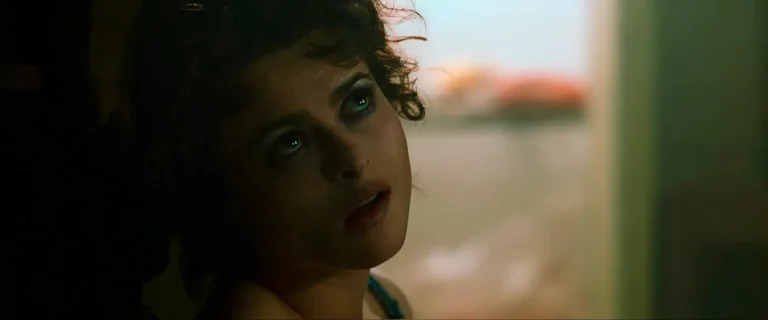
Howard Beale gets the famous speech in Network (1976). Arthur Jensen gets the one that answers it. Howard arrives at CCA raving about the light that is impending. So Frank Hackett hauls him up the stairs by the arm. Jensen takes the other arm and walks him into the conference room. Then he kills the lights. There are no nations and no peoples, he says, only one holistic system of systems, a dominion of dollars. Howard has meddled with the primal forces of nature, and he will atone.
A performance for an audience of one
It plays like a vision, and Howard takes it as one. But Chayefsky frames it as something smaller and more exact. First, Jensen says he started as a salesman; last, he closes. The thing in between is a performance. Alone in a dark room, Jensen does to Howard what Howard does to sixty million people a night. He says something insane with perfect conviction, and then he makes it sound like the natural order. So this page follows the sale and the staging together. Next it compares what Chayefsky wrote with what the Library let Lumet shoot. Finally it gets to the joke underneath. The only man who would buy a performance as a revelation is a man who gives one five nights a week.
The dimmer
The Lights on the Page and the Lights on the Screen
In the shooting script, Chayefsky writes the lighting as one unbroken paragraph of stage direction before Jensen says a word. First the curtains are up and a celestial light pours in. Then the drapes fall until the room is utterly dark. Next, pinspots pop on at every desk, including Howard’s, to make a miniature Milky Way. Finally a shaft of white light spots Jensen at the podium, a sun of its own little galaxy. In short, it is a lighting cue sheet for a stage show, and only some of it exists in the film.
On the making-of documentary, cinematographer Owen Roizman says the New York Public Library would not let him rig lights anywhere. He got one lamp on a post, while everything else had to sit on the floor, hidden from the camera. So the four bands below pair each written cue with what actually plays. Each also names the move in the pitch it lights. Either way, the page darkens as the sale closes.
On the page
The curtains are up, and an almost celestial light pours in through the windows. The room takes up two floors, with two hundred empty seats in a double semicircle.
On the screen
Howard is escorted twice. First Hackett grips his arm on the Library’s main staircase to keep the raving man moving. Then Jensen takes the other arm in his sunlit office and walks him through the big oaken door. Nobody lets go of Howard until he is seated.
1. Curtains up: the handshake
“I started as a salesman, Mr. Beale.”
The sale: establish the trade and disqualify nothing. Howard says he is as mad as a hatter; Jensen answers that nobody isn’t, then takes his arm. Then he names his product line: sewing machines and automobile parts, hair brushes and electronic equipment. After that he tells Howard outright that he would like to try to sell him something. A good salesman tells you he is one. A great one tells you the pitch is coming and makes you want it anyway.
On the page
Jensen pushes a button, and the enormous drapes slowly fall. They slice away layers of light until the vast room is utterly dark.
On the screen
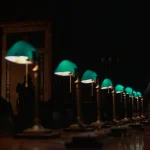
The room is already dark when Jensen says Valhalla. Two rows of green-shaded desk lamps run the length of the long table. Jensen is a small figure at the far end of them. No button, no drapes; instead the darkness is simply the condition of the room.
2. Drapes fall: the objection
“You have meddled with the primal forces of nature.”
The sale: reframe the customer’s win as his problem. Howard went on the air and killed a deal. Still, Jensen will not let him think that is what he did. Instead, the money the Arabs took out of the country must flow back. Howard has interrupted ebb and flow, tidal gravity, ecological balance. The script has Jensen wheel on his audience of one and roar, and Beatty roars. It is the first thing he does that Howard would recognize. After all, roaring at a seated audience in a dark room is Howard’s act.
On the page
The little pinspots at each desk pop on, Howard’s among them, creating a miniature Milky Way effect.
On the screen
No lamp lights Howard. He sits in the dark, his face picked out just enough to read the fear on it. Meanwhile the green lamps stay where they were. Roizman changed lenses as Beatty spoke, so the lamps compressed into something more and more like a starlit sky. Jensen then walked the length of the table through them.
3. Pinspots pop: the product
“There are no nations. There are no peoples.”
The sale: show the product, which is a worldview. No Russians, no Arabs, no Third Worlds, no West; instead, one interwoven, multivariate, multinational dominion of dollars, listed by currency. On the page, Howard’s own pinspot would have made him one account among two hundred. On the screen the effect is harsher and better: Howard does not get a star. The galaxy belongs to the salesman. Meanwhile the customer is a frightened old man sitting in the part of the room nobody lit.
On the page
A shaft of white light shoots from the rear of the room. It spots Jensen on the podium, a sun of its own little galaxy.
On the screen
By the end of the walk the lamps have dropped out of the frame. Now Beatty is backlit so hard that the light blows out into a halo around his head. Lumet’s instruction to Roizman was that Howard should look at Jensen the way a man looks at God. Lose the stars, and he is the sun.
4. The shaft of light: the close
“I have chosen you, Mr. Beale, to preach this evangel.”
The sale: close. The world is a business and always has been. So the perfect future is one vast and ecumenical holding company: all anxieties tranquilized, all boredom amused. Then comes the ask. Howard’s only real question, why me, gets the only honest answer in the room. Sixty million people watch him every night. In response, Howard says he has seen the face of God. Then Jensen, who has just arranged the lighting for exactly that impression, allows that he might be right.
Because you’re on television, dummy.
Arthur Jensen answers “Why me?” — the last joke in the script, by Sidney Lumet’s count
The show
Jensen’s Show: Playing Howard’s Game Back at Him
Lumet says it plainly on his commentary as Beatty walks in. Jensen is going to convince Howard that CCA has to own the world. That means, in Lumet’s words, “the necessity of making the whole thing a performance.” He is going to seat him, darken the room, and arrange the light for the strongest dramatic effect. Then he will put a spotlight on himself. That is not a description of a man who believes he is talking to God’s messenger. Rather, it is a description of a producer.
The same act, one seat
So set the two scenes side by side. The Howard Beale Show is a dark studio and a single lit figure. A man howls that the world is not what you think, and an audience takes his rage as revelation. The CCA conference room is a dark hall and a single lit figure. A man roars that the world is not what you think. Then an audience of one takes his pitch as the face of God. Jensen has built a television show with one viewer, and he has cast himself in Howard’s part. Likewise, he keeps Howard’s tempo, the long slow build to the roar, then the quiet, humble whisper of the ask.
Acting crazy for a crazy man
Why would the chairman of a conglomerate put on this kind of show? Because a memo would not reach Howard, and Jensen knows it. Hackett has told him Beale is a madman, and Howard confirms it in the first exchange. So Jensen pitches in the only register a prophet can hear: he plays a bigger prophet. He acts crazy to get through to a crazy man. That is the strategy, and indeed it works in a single scene. The irony Chayefsky plants underneath it is that Jensen’s “madness” is the most rational thing in the picture. In fact, he is describing, accurately, how the money actually moves. Howard’s madness was the only honest thing on television. So which of the two is the sane man on the block? The rest of the film answers that by having Howard’s new gospel bore sixty million people to death.
It is all a show, and the show is for money
Now, here is where the scene stops being a parody of Howard and becomes the film’s thesis. Howard never meant to run a show; rather, the network built one around his breakdown because it sold. Jensen means every bit of his. Yet his is built for the same reason: to get a deal through and keep the money flowing back.
The difference between the prophet and the chairman is that the chairman knows what he is. The message he is selling is that the world is a business. That is also an exact description of the thing he is doing while he sells it. Howard has never once understood that he was in a show. So he is the one man in the building who can be sold a performance as scripture. That is why Jensen chose him. It is also why “because you’re on television, dummy” is the last joke in the script. After it, nobody in the picture is kidding.
Draft to screen
What the Film Cut From the Speech
Beatty delivers the speech almost word for word from the shooting script. Still, the handful of differences all push in one direction: away from the pulpit and toward the sales floor.
The passage about Allah
In the drafts, after the Russians and their linear programming charts, Jensen keeps going. The Muslim masses may be medieval, he says. Even so, what rules every moment of their lives is the primordial pull of profit and the primeval push of power. Not their desert god. Chayefsky had already struck the passage in the November 1975 revision, and the film does not use it. As a result, the speech stays on currencies and corporations, which a salesman can quote. It stays off religion, which is exactly what Howard is about to confuse it with.
Howard’s “Amen”
On the page, Jensen asks whether he is getting through. Howard answers from the darkness with a single word: Amen. The film leaves him silent and holds the question in the air. Yet it is a small cut with a large effect. Howard’s conversion now happens entirely on Finch’s face. He arrives at the religious reading (“I have seen the face of God”) instead of muttering it halfway through. It also keeps the show in Jensen’s hands: a congregation that answers back is participating, and Jensen wants a viewer.
The world is a business, Mr. Beale.
Arthur Jensen — the one sentence every draft and the film agree on, and the one his own show proves
Three smaller changes
The script puts a figure on the Arab money: fifty billion dollars. Beatty says only “billions,” which ages better and sounds less like a number a man would look up. The script’s “Good afternoon, Mr. Beale” becomes “Good morning,” matching the ten o’clock appointment Hackett sets up the night before. And the film adds one line the script does not have. After the roll call of IBM, ITT, AT&T, DuPont, Dow, Union Carbide and Exxon, Beatty adds a line. Those are the nations of the world today. It restates the thesis as a closing line. In other words, it is the kind of thing a salesman says to make sure you heard the price.
The shoot
Shot Simply: Beatty, the Library, and No Score
Lumet says on his commentary that from the moment the film enters this room, Chayefsky is writing completely outside realism. The mistake, he adds, would be to confuse unrealistic with untrue. His answer was to shoot it as if nothing unusual were happening. Not by accident, that is also how a good salesman delivers a wild claim.
Three days to cast Jensen
Another actor had the part first. In rehearsal, Lumet says, he made the fatal mistake of playing the madness. Lumet could not break him of it, so he let him go. The suggestion came over lunch from Robert Altman, who told the production he had the guy: Ned Beatty. Lumet cast him three days before the scheduled shoot. Beatty flew in from California knowing his lines perfectly, and gave what Lumet calls an astonishing performance. The note Lumet had given the first actor is the note the whole scene runs on: Jensen is not mad. He is a sane man putting on a mad act for a madman. The act only works if the actor never winks. Lumet also says they tried to make Beatty look like Teddy Roosevelt, the original of this kind of American-destiny character.
The room was a library, and the Library said no lights
The CCA boardroom is the boardroom of the New York Public Library at 42nd Street and Fifth Avenue. The film uses it first for Frank Hackett’s annual report and then for this scene. Lumet says they did not change a thing in it. The room was perfect because it let him reach what he calls a completely unreal extension without anyone noticing. Owen Roizman walked in and said that’s it. Then he found out the Library would not let him rig a single light overhead. He got one lamp on a post; everything else sat on the floor out of frame. So the drapes, the pinspots and the shaft of light that Chayefsky wrote had to go. In their place came lens changes, a walk down a long table, and one hard backlight. The architecture did the rest.
Less cutting, no music
Compare this scene with the first Howard Beale Show and, Lumet says, you would see a tremendous difference. There is far less intercutting, because the film is getting down to it now. The last joke in the script has happened. From here on, Chayefsky wants what he wants out of the whole picture. Lumet sums that up as the idea that we have let ourselves become the same as automobile tires. Network also has no score at all. Lumet did not think music could add anything, and he feared it would kill the comedy. He gives the boardroom scenes as the reason. A composer would have wanted a great musical crash under the line about having to kill Howard. That is exactly the wrong note. Jensen supplies his own drama. The film, meanwhile, refuses to add any.
Quick answers
Arthur Jensen Speech FAQ
The speech and the man
What is the Arthur Jensen speech about?
Jensen is the chairman of CCA, the conglomerate that owns the network. He tells Howard Beale that nations, peoples, and ideologies no longer exist. The world is run by the international system of currency and by corporations, which have replaced countries. Howard has “meddled with the primal forces of nature” by using his show to kill a CCA business deal. So Jensen wants him to preach this corporate worldview on the air instead. Howard does, and as a result his ratings collapse.
Is Arthur Jensen crazy?
No, and that was the casting problem. Lumet let the first actor go for playing Jensen as a madman. Jensen is a sane salesman staging a mad performance because a madman is the audience. The dark room, the roar and the spotlight are his tools, not his symptoms. On his commentary, Lumet describes the scene as Jensen making the whole thing a performance. That includes arranging the light on himself.
Who plays Arthur Jensen in Network (1976)?
Ned Beatty, who received an Academy Award nomination for Best Supporting Actor for the role. He has one scene of substance. Lumet cast him three days before shooting it, on Robert Altman’s suggestion, after letting the original actor go.
The words and the room
What does “corporate cosmology” mean?
It is the narrator’s phrase for what Howard preaches after the meeting. That evening, he went on the air to preach the corporate cosmology of Arthur Jensen. A cosmology is an account of how the universe is ordered. In Jensen’s account, money orders the universe. So the joke in the phrase is that Howard treats a sales pitch as scripture.
Where was the Arthur Jensen scene filmed?
In the boardroom of the New York Public Library’s main building at 42nd Street and Fifth Avenue. Lumet says the production changed nothing in the room. Cinematographer Owen Roizman says the Library would not let him rig lights. That is why the script’s drapes and pinspots became lens changes and a single backlight. Earlier in the film, the same space also hosts Frank Hackett’s annual-report presentation.
Go deeper
More on Network (1976)
The hub
Network (1976): The Deep SHT Screenplay Analysis
The whole film, act by act, through Chayefsky’s drafts and Lumet’s commentary.
The other speech
The “Mad as Hell” Speech in Network (1976): Draft to Screen
Four passes from a pencil note to Peter Finch, and the ratings line that changed speakers.
The origins
Is Network (1976) Based on a True Story?
What Chayefsky took from the real newsrooms of 1975, and what he cut between drafts.
Next in the series: the ending of Network explained. It runs from the boardroom that decides Howard’s fate to the final title card.