Screenplay analysis + beat sheet
Angel Heart Explained: Johnny Favorite and the Faustian Reveal
Angel Heart explained: who Johnny Favorite is, why the Devil waited twelve years, and how every witness Harry Angel questions is a piece of his own past
Director / Screenplay
Alan Parker
Source novel
Falling Angel (1978) by William Hjortsberg
Year / Runtime
1987 / ~113 min
Starring
Mickey Rourke, Robert De Niro, Lisa Bonet, Charlotte Rampling
Cinematography
Michael Seresin
Production design
Brian Morris
Music
Trevor Jones; saxophone solos improvised by Courtney Pine
Setting
New York and New Orleans, 1955
The hook
A detective is hired to find a missing man. The missing man is himself.
4
Scenes with Louis Cyphre
Every one sits at a structural hinge point.
~15
Minutes of De Niro on screen
He dominates a film he is mostly absent from.
5
Killings Harry cannot remember
Fowler, Toots, Margaret, Ethan, Epiphany. Every one during a blackout.
12
Years the Devil waited
From New Year’s Eve 1943 to the winter of 1955.
The case
Angel Heart Explained: The Short Version
Alan Parker’s 1987 film Angel Heart is both a masterclass in dramatic irony and a brutal deconstruction of the detective genre. Parker adapted William Hjortsberg’s 1978 novel Falling Angel and transformed a Manhattan noir into a sweltering descent through 1950s New Orleans. In it, private investigator Harry Angel discovers that the missing person he’s hunting is himself. The twist alone doesn’t make the film extraordinary. What elevates it is the architecture Parker built to sustain two hours of dread.
This Angel Heart explained guide draws on Parker’s own audio commentary, his production diary, primary interviews from the original release, and the working draft screenplay. Below the screenplay breakdown, you’ll find a complete Angel Heart beat sheet mapping every act and key craft decision. For screenwriters, the film offers a case study in visual motif systems, unreliable protagonist construction, and weaponized genre expectations.
On this page
- Story and screenplay development
- The central mechanism: dramatic irony
- What the fans mean
- What the egg scene symbolizes
- Does Harry Angel know he is Johnny Favorite?
- Why Harry is afraid of chickens
- Is the ending a plot hole?
- What happened to the real Harry Angel’s soul?
- Character analysis and cast
- The MPAA battle
- New Orleans as character
- Parker’s visual architecture
- I know who I am: going down
- Angel Heart beat sheet
- What screenwriters can learn
- Angel Heart explained: quick answers
Adaptation
Story and Screenplay Development
Rewriting the Killer’s Identity
The most critical screenplay change involved the killer. Hjortsberg’s novel suggested that someone framed Harry Angel for the murders. Parker eliminated this ambiguity entirely. Harry Angel IS the killer. He operates in an amnesiac trance while his suppressed Johnny Favorite personality resurfaces to eliminate everyone who knows the truth. This single decision transformed the story from a mystery into a genuine tragedy of self-damnation.
Parker wrote most of the screenplay longhand in corner tables of New Orleans bars. While there, he listened to conversations and absorbed the atmosphere. He gave Harry Angel his own birthday — February 14th, Valentine’s Day. In part, the choice was practical: an easy date to remember in a labyrinthine script. It also carried obvious thematic resonance for a film called Angel Heart. These story structure decisions shaped every beat that follows in the screenplay breakdown below.
From New York to New Orleans
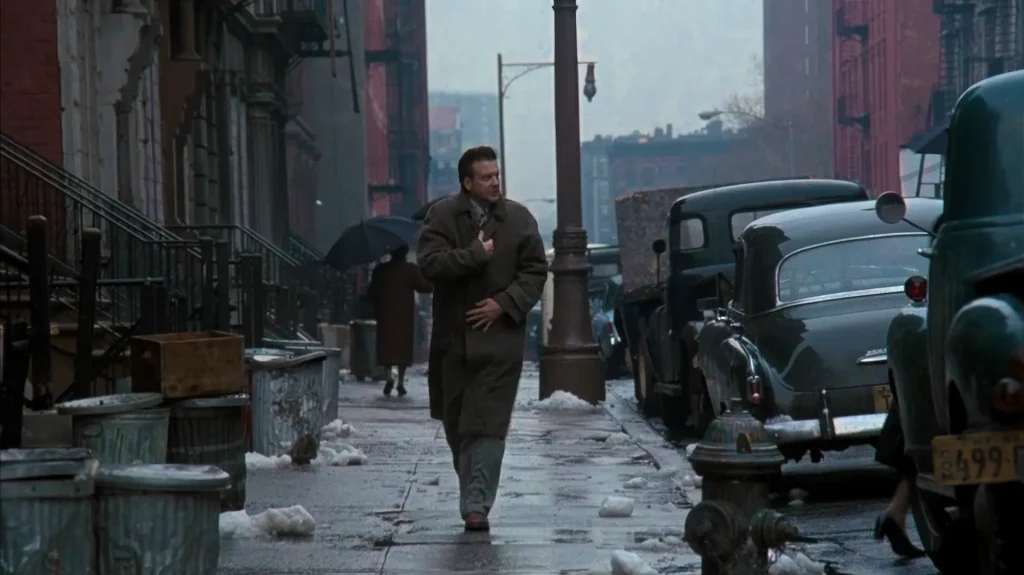
Parker deliberately transformed Hjortsberg’s source material into something more cinematically ambitious. Hjortsberg set the entire story in New York City. Parker moved the second half to Louisiana — a decision Hjortsberg himself had once considered but never executed. In his audio commentary, Parker explained that another Manhattan detective story would struggle to feel fresh. New Orleans offered something no other American city could: a geography where the supernatural lives in daily experience.
Shifting the Timeline
Parker also shifted the timeline from 1959 to 1955. The change wasn’t arbitrary. As he noted in his commentary, 1959 pointed toward the cultural upheaval of the 1960s. But 1955 still belonged to the 1940s. Because of the historical pause button of World War II, it could even reach back to the 1930s. The earlier setting gave the film a more authentically noir visual texture. It also kept the soldier’s murder feeling immediate rather than historical.
Read the full adaptation analysis: how Falling Angel became Angel Heart →
Dramatic irony
The Central Mechanism: Dramatic Irony as Architecture
The Sacrificial Clue
The name Louis Cyphre is transparently Lucifer. Parker knew this. He treated it as a feature, not a bug. The audience senses the supernatural threat while Angel doesn’t. This creates sustained dramatic irony from the first Cyphre scene onward. Yet the real twist operates on a deeper level. The detective and the criminal are the same person. Audiences are so busy spotting Lucifer that they miss the more devastating revelation hiding underneath.
Here’s the screenwriting principle worth studying: give the audience something to figure out early. They’ll feel satisfied and stop looking for the real secret. Parker used Cyphre’s name as misdirection — a sacrificial clue protecting the true twist.
The Two-Track Structure
Angel Heart’s fundamental screenplay challenge is a problem most writers would avoid. How do you sustain a two-hour detective story where the detective unknowingly investigates himself?
Parker built the film on two parallel tracks of understanding. On the surface, Harry Angel conducts a straightforward missing-person investigation. Below that surface, every scene carries a second meaning. These double meanings only become visible on rewatch — or to attentive first-time viewers who catch the visual clues. The Angel Heart story structure depends on the audience accepting one track while the other operates beneath their awareness.

Visual motif
What Do the Fans Mean in Angel Heart?
Origin of the Motif
Ceiling fans in Angel Heart serve as visual harbingers of death. Parker created this motif organically while writing the screenplay in New Orleans bars. As he sat writing longhand, bright light hit the ceiling fans above him. The spinning blades began to look like descending swords. Parker took this visceral impression and wove it into the film’s visual language. Fans appear in scenes that precede or follow acts of violence.
How It Works on Screen
In his audio commentary, Parker confirmed that every fan appearance signals impending death. Most viewers won’t consciously register the pattern on first viewing. But they’ll feel the accumulated dread. On rewatch, fans become the film’s most reliable structural signpost. When you see one, violence is imminent.
The fan isn’t the only silent harbinger Parker embedded. A cloaked figure in black appears throughout the film, scrubbing blood from walls at scenes of death. This unnamed background presence seems like atmospheric set dressing, but the conclusion reveals the figure’s face: the Woman in Black is Louis Cyphre himself, moving through the film in disguise.
The Woman in Black
The scrubbing isn’t literal. Police find every body exactly as Harry left them — the evidence is never cleaned up. The blood-scrubbing is a visual metaphor for Cyphre manipulating Harry’s mind, wiping his awareness of the murders clean after each blackout. That’s why Harry never remembers the killings. The Devil isn’t removing evidence from crime scenes. He’s removing memory from Harry’s consciousness. During the blood-sex scene, the figure appears scrubbing mid-act — the Devil managing Harry’s mind in real time. For the complete mapping of every Woman in Black appearance and how it connects to the blackout structure, see the Angel Heart twist and foreshadowing analysis.
Discovery Versus Imposition
The screenwriting lesson here is about discovery versus imposition. Parker didn’t sit at his desk and intellectually devise a death symbol. He found one in the physical environment where he wrote. The authenticity of that origin gives the motif its power. Great visual motifs emerge from the world of the story, not from the filmmaker’s desire for cleverness.
Pauline Kael mocked this choice in her review. As Parker noted in his commentary, he wasn’t particularly concerned.
Character through action
What Does the Egg Scene Symbolize in Angel Heart?
Character Through Action
Louis Cyphre carefully peels and eats a hard-boiled egg. Then he tells Angel that some religions consider the egg a symbol of the soul. In this moment, Cyphre performs his nature rather than explaining it. De Niro never announces that he’s the Devil. He demonstrates what the Devil does. He consumes souls with meticulous, unhurried precision.
De Niro’s Precision
Parker confirmed in his commentary that the egg symbolism came from his own research, not Hjortsberg’s novel. De Niro’s handling of the egg was deliberate. Parker noted that every gesture synchronized with the dialogue’s subtext — the way De Niro strips the shell, places each piece, and bites. Nothing about it was random. Parker described watching De Niro crack the shell as feeling like watching someone crush every bone in Harry Angel’s body.
The Symbolic Chain
A secondary layer of symbolism connects the egg scene to the film’s broader architecture. Cyphre spills salt — a Last Supper reference. Angel reflexively throws spilled salt over his shoulder. This superstitious instinct betrays deeper knowledge that his conscious mind has suppressed. The chicken phobia, the eggs, and the heart-eating ritual all form a single symbolic chain. Each represents a soul being consumed.
The unreliable protagonist
Does Harry Angel Know He Is Johnny Favorite?
The Amnesia Shield
Not consciously. Favorite’s war injuries disrupted the identity transfer and caused amnesia. Harry Angel genuinely believes he is Harry Angel. Because of this sincerity, he becomes sympathetic and makes the twist devastating. If Angel knowingly hid his identity, the film would become a thriller about concealment. Instead, it’s a tragedy about self-discovery.
The Blackout Murders
Parker’s screenplay plants evidence that the Favorite personality surfaces during blackout episodes. The fan motif marks these transitions visually. Each death corresponds to a moment where Angel loses time or experiences a hallucinatory vision. The audience sees the visions but not the violence. The murders happen during the blackouts, off screen. This screenplay breakdown of the blackout pattern is essential to understanding how Parker sustains dramatic irony.
Angel is unreliable not to the audience — we see more than he does — but to himself. He cannot access his own memories. Every interview he conducts is actually a conversation with fragments of his own past. The detective genre becomes a mechanism of self-examination. The investigation concludes not just with his arrest but with his absolute psychological collapse into Hell.
The loaded character quirk
Why Is Harry Angel Afraid of Chickens?
Harry Angel’s chicken phobia functions as a subconscious memory leak. Chickens play a central role in voodoo sacrifice rituals. Their blood connected directly to Favorite’s world. Angel’s irrational fear is his buried self recoiling from the tools of his own crimes.
The phobia connects to the egg symbolism and to Cyphre’s observations about souls. Chickens sacrificed in voodoo. Eggs consumed by Cyphre. A heart eaten by Favorite. Together, these are three variations on the same act of spiritual consumption. Parker threads this symbolic chain through the entire film without making it explicit. The connections register subconsciously.
For screenwriters, this is the loaded character quirk: a behavioral detail that appears to be comedy but is actually foreshadowing. When Harry says he has “a thing about chickens,” the line plays as a laugh. On rewatch, it’s a confession.
“You’re gonna burn for this, Angel.” “I know. In hell.”
Detective Sterne and Harry Angel — the last exchange in the film
The Faustian mechanism
Is the Angel Heart Ending a Plot Hole?
Why the Devil Waited Twelve Years
The most common objection — why did the Devil wait twelve years to collect? — has a textual answer in the screenplay. Cyphre didn’t lose track of Favorite. He needed Favorite to uncover his own identity voluntarily. The soul contract required conscious acknowledgment. Angel’s amnesia prevented exactly that.
The Investigation as Trap
The entire investigation is Cyphre’s trap. Every person Angel interviews dies — not because they’re loose ends but because they’re stepping stones. Each death strips away another layer of Angel’s amnesia. Cyphre conducts the investigation through Angel. He uses Harry as both detective and instrument of his own damnation. The five hundred dollars Cyphre pays restates the original Faustian transaction: money for soul, dressed up as a missing-person case.
“All killed by your own hand. Guided by me, naturally.”
Louis Cyphre, the revelation scene
This interpretation resolves every apparent plot hole. Why does Cyphre seem unsurprised by each murder? He orchestrated them. Why does he keep pushing Angel deeper? The deaths are the point. Why does he reveal himself rather than simply claiming the soul? The contract requires Favorite to know who he is when the bill comes due.
The open question
What Happened to the Real Harry Angel’s Soul?
The real Harold Angel was a young soldier. Johnny Favorite, Margaret Krusemark, and Toots Sweet lured him to a Times Square hotel room on New Year’s Eve. Favorite killed Angel in a black magic ritual, consumed his heart to absorb his soul, and assumed his identity.
The film raises an unresolved theological question. Is the real Angel’s soul trapped because of Favorite’s actions? Or did it find release when the identity theft failed? Parker deliberately leaves this open. The ambiguity serves the film’s architecture. Angel Heart explores the impossibility of escaping moral debt, not the resolution of metaphysical questions.
Cast and characters
Character Analysis
Harry Angel (Mickey Rourke)
Rourke captures a man whose surface confidence masks a psychological fault line he can’t perceive. Parker chose him specifically for his unconventional physicality. He wanted someone who operated outside traditional movie star behavior — an actor whose presence communicated lived-in authenticity rather than polished glamour.
In his audio commentary, Parker called Rourke a completely spontaneous actor. His performance changed on every take. Rourke found character through physical details: striking a match on his foot, bringing his own props (most of which Parker removed because they missed the period), touching Charlotte Rampling’s face in a moment Parker said no director could ever request.
Rourke at His Peak
Interviews from 1987 capture Rourke at the peak of his engagement with acting. This was before the boxing career that would reshape both his face and his relationship to the craft. Director Adrian Lyne famously said that if Rourke had died after Angel Heart, he would have been bigger than James Dean. Parker repeated this in his production diary. The sentiment was widely shared among filmmakers who worked with Rourke during this period.
Rourke’s Harry begins as a recognizable noir detective: cynical, underpaid, skeptical. But Rourke plays the role with a vulnerability that becomes devastating once the truth emerges. We root for Harry because Rourke makes him sympathetic. This sympathy gives the twist its emotional weight. We don’t just understand intellectually that Harry is Johnny Favorite — we feel the horror of it.
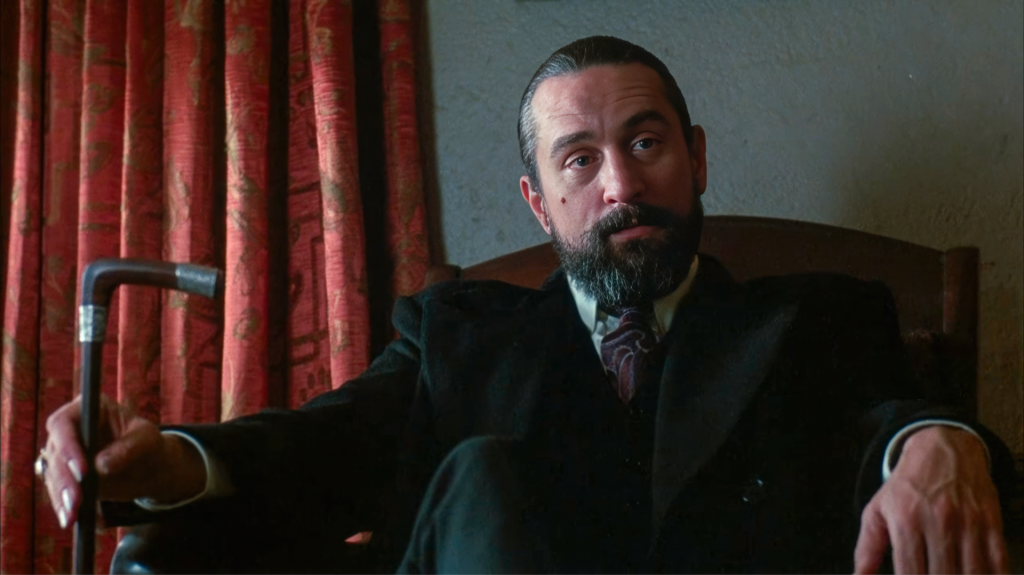
Louis Cyphre (Robert De Niro)
De Niro appears for roughly fifteen minutes. He dominates the entire film. Every scene he’s absent from still carries his presence through the investigation he set in motion. This screen time paradox makes Cyphre one of cinema’s great antagonist designs.
Casting the Devil
Parker spent six months courting De Niro. At first, he wanted De Niro as Harry Angel. But on their first meeting, De Niro said he preferred the Cyphre role. Parker then approached Jack Nicholson and even inquired about Brando. De Niro committed two weeks before filming began. His phrase was characteristically understated: “Alan, I am of a mind to do the movie.”
The Craft of Restraint
De Niro’s preparation was meticulous. He found the silver-topped canes himself in a Paris shop. Daily conversations with Parker established the exact length of Cyphre’s fingernails. The nails grow imperceptibly longer with each appearance. Most audiences would never consciously register this. It builds menace subliminally across the film. Parker noted that the nails were where De Niro found his character.
Cyphre’s performance strategy: restraint over menace. He never raises his voice. Composure never cracks. Power never needs proving. His calm is the calm of inevitability. Parker shot every De Niro/Rourke scene with two cameras simultaneously. He knew both actors would improvise and needed to capture any spontaneous reaction. Parker compared directing these scenes to refereeing a prize fight. De Niro was cool and controlled. Rourke was disarming and instinctive. The electricity between them was unlike anything Parker had experienced.
Parker later admitted he agonized over the contact lens effect in the revelation scene. He wondered whether the supernatural visual undermined the grounded realism he maintained throughout. Even master filmmakers second-guess their choices.
Read the full Louis Cyphre deep dive →
Epiphany Proudfoot (Lisa Bonet)
Lisa Bonet was eighteen when Parker cast her. He had never seen The Cosby Show. He chose her because she was the strongest actress who auditioned — only the second person to read, and his favorite throughout weeks of additional casting. Parker took considerable care to ensure Bonet’s comfort with the explicit scenes. He discovered that she was more composed about the material than either he or Rourke.
Bonet confirmed in a 1987 profile that she asked Bill Cosby for approval. He gave it, despite concerns about the show’s image. The cultural collision between Bonet’s wholesome television persona and the blood-soaked sexuality of Epiphany fueled the film’s controversy. That controversy had more to do with who appeared on screen than with what appeared on screen.
Epiphany functions as both the emotional center of the New Orleans section and the final instrument of Johnny Favorite’s self-destruction. Her name means sudden realization. Her murder — committed by the resurfaced Favorite personality within Harry — seals Harry’s damnation. She is Johnny Favorite’s daughter. Harry’s sexual relationship with her is incestuous. Neither character perceives this until it’s too late.
Margaret Krusemark (Charlotte Rampling)
Parker chose Rampling after an extensive search. Rourke suggested her. Parker phoned her in France and she accepted. As he wrote in his production diary, Parker described the casting challenge: Margaret is a small part but omnipresent in the dialogue. The role required someone who could project both class and eccentricity in limited screen time. Rampling delivered exactly that combination.
Censorship
The MPAA Battle and Censorship Context
The X Rating
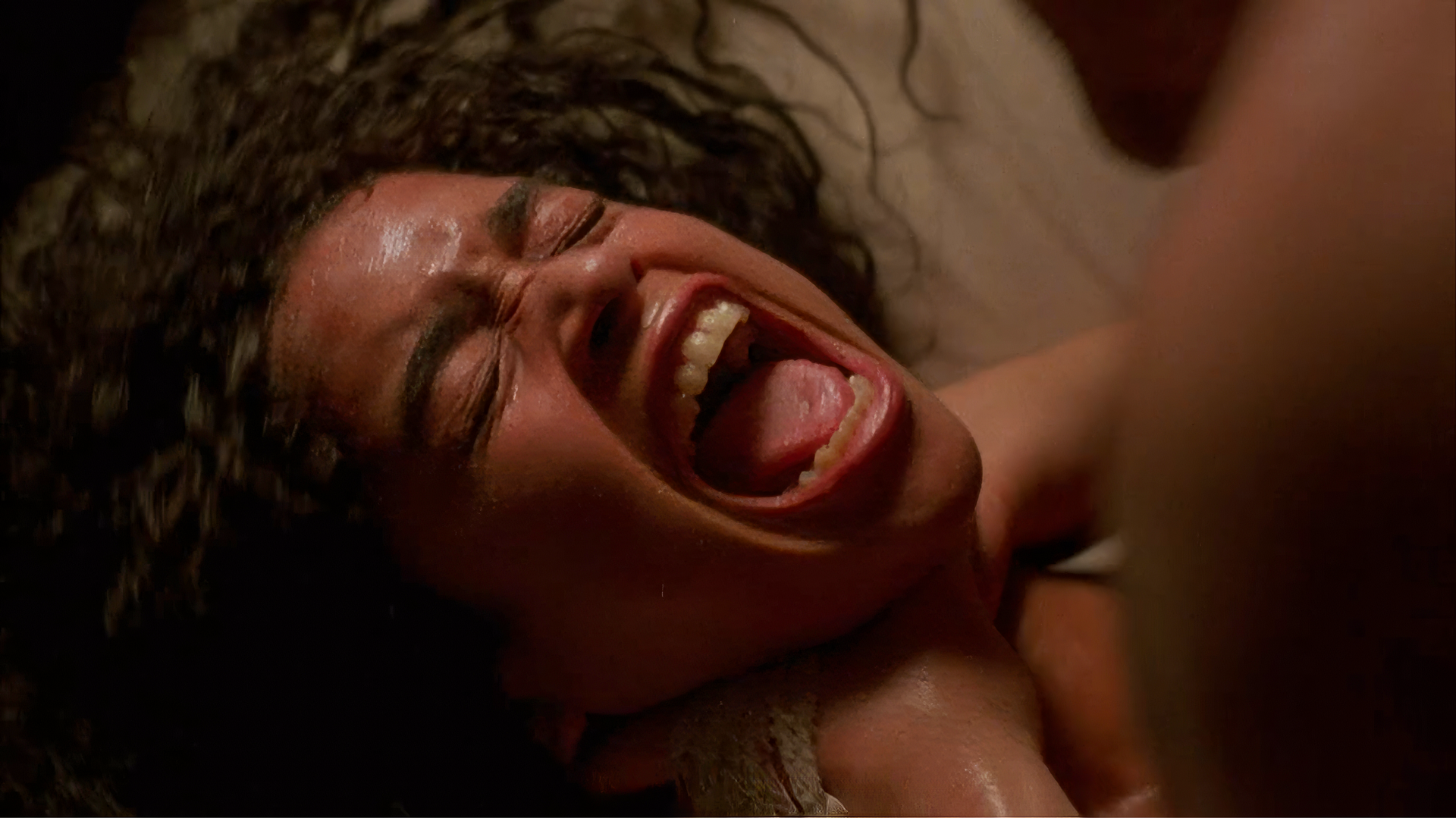
The MPAA imposed an X rating on the finished film — a designation that would severely limit theatrical release. Parker described navigating vague objections. Officials told him only that there was “something offensive lurking in reel three.” The offending content turned out to be roughly seven seconds from the love scene between Rourke and Bonet.
The Racial Dimension
In a 1987 joint interview, Rourke named a dimension Parker’s diplomatic public statements skirted: race. Rourke noted that the film’s nudity was nothing new for audiences. He openly questioned whether the interracial nature of the scene triggered the X rating.
Parker appealed, lost, and ultimately cut roughly ten seconds — primarily shots of Rourke’s backside. He called the MPAA appeals process wasteful, pointless, and expensive. The few feet of film, he noted, were no great loss to the history of cinema.
The Cult Legacy
Home video later carried the complete version. France showed the film uncut in theaters. Censorship controversy generated publicity that the film’s modest box office couldn’t match. Audiences sought out the uncut version on home video — where Angel Heart finally found its audience.
Setting
New Orleans as Character
Finding the Other City
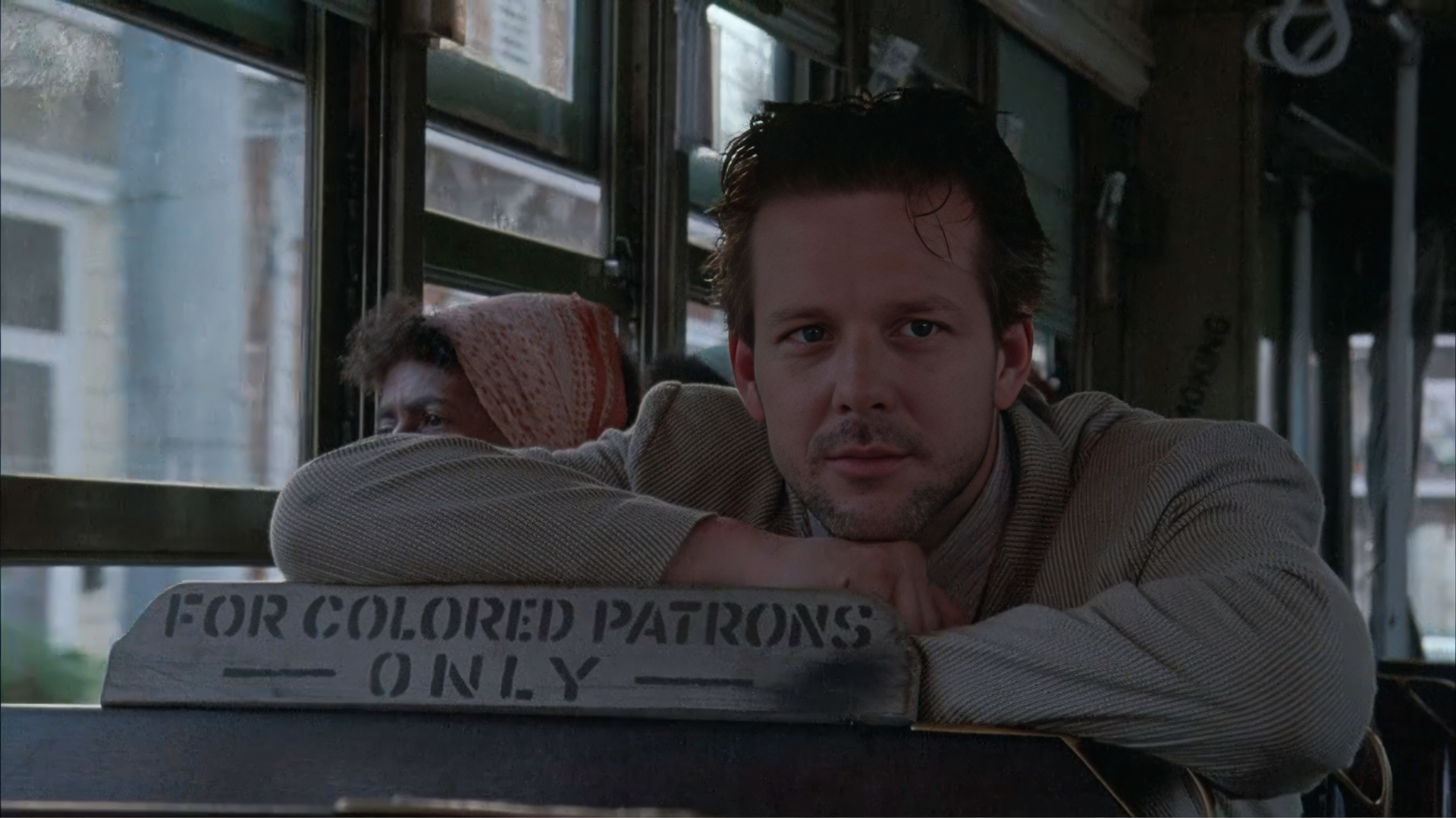
Parker moved the story from Manhattan to Louisiana for both practical and thematic reasons. He felt New York had been exhaustively filmed as a noir backdrop. The deeper reason was spiritual geography. New Orleans offered a cultural landscape where voodoo, Catholicism, and the occult coexist as living traditions.
Parker spent extended time in the city during the writing process. He sat in corner bars and absorbed rhythms. He discovered that New Orleans presents two versions of itself. There’s the postcard French Quarter with its freshly painted ironwork. And there’s the darker, more decadent city that, as Parker put it, would make old Walt choke. Parker sought the second version. He pushed into the Irish Channel, the bayous, and the back streets behind Royal Street. There he found a boarded-up house untouched for sixty years. It became both Harry’s hotel and Margaret Krusemark’s apartment.
Shooting in Black and White — in Color
Parker, cinematographer Michael Seresin, and production designer Brian Morris drained all primary colors from every set, costume, and location. Parker described their goal as shooting a black and white film in color. Every storefront on Magazine Street got repainted. The Coney Island Ferris wheel got repainted. The visual temperature rises as the story moves from cold New York to sweltering Louisiana. Parker explicitly connected this gradient to Harry’s approach toward hell.
Voodoo: What Parker Got Right and Wrong
Real voodoo practitioners assessed the film’s ceremonial scenes in the Blu-ray supplements. Their responses were nuanced. The voodoo dance sequence captures the authentic feeling of ritual frenzy: the drums, the white clothing, the intensity of possession. But it doesn’t depict a structurally accurate ceremony. There is no altar. No offerings to specific spirits. No identification of which loa are being invoked.
The practitioners also identified a fundamental theological tension. Voodoo does not recognize a Satan figure or a concept of hell separate from earthly existence. Parker grafted a Catholic/Western framework onto a voodoo cultural backdrop. This creative choice mirrors the film’s central act of identity theft. One system consumes the aesthetics of another.
Craft
Parker’s Visual and Tonal Architecture
The Descending Elevator
The elevator appears throughout the film in Harry’s recurring visions. It always goes down. It always moves toward something Harry doesn’t want to face. Parker noted in his commentary that the elevator grew much more prominent during editing than he originally planned. The image’s power emerged in post-production. The elevator works as both literal descent (toward Hell) and structural architecture (each act takes Angel deeper into the truth).
De Niro’s Growing Fingernails
De Niro’s nails grow imperceptibly longer with each appearance. Parker had extensive daily conversations with De Niro about the exact length for each scene. The evolution is so subtle that most viewers would never register it. Yet it contributes to the accumulating sense that something is wrong with Cyphre — even when his behavior appears perfectly proper.
Music and Casting as Atmosphere
Trevor Jones’s score combines jazz, blues, and atmospheric horror. The fusion reflects the film’s genre blend. Courtney Pine improvised his saxophone solos to picture. Parker played the entire film for Pine, who based his performances on variations of “Girl of My Dreams.” The result gives the soundtrack an improvisational quality that mirrors the narrative’s instability.
Parker’s casting extended beyond the principal roles. He held massive open calls in both New York and New Orleans. He read with hundreds of non-actors alongside professionals. Real blues musicians filled the cast — including Brownie McGhee as Toots Sweet — because Parker wanted genuine performers, not actors imitating authenticity. This approach gave the film’s world a textural reality that grounds even the supernatural elements.
Signature: the investigation as descent
I Know Who I Am: Going Down
Every witness Harry questions is a fragment of his own past, and every interview ends in a death he cannot remember. Read the investigation as an elevator. Each floor is one witness. On the left is the case Harry thinks he’s working. On the right is what is actually happening. The floors get darker on the way down.
1
Floor
Dr. Albert Fowler
Staten Island
What Harry thinks
A morphine-addicted doctor took $25,000 from a man named Edward Kelly to keep Favorite’s hospital records alive. One night people came and took Favorite away. A lead, nothing more.
What is actually happening
Harry returns to the house and Fowler is dead — shot through the eye, staged as a suicide. A fan spins overhead. The first blackout. The case turns lethal before Harry has filed a single report.
2
Floor
Toots Sweet
The Red Rooster
What Harry thinks
A hostile blues guitarist who says he hasn’t seen Favorite since before the war. A chicken foot with a ribbon in the bathroom — a voodoo warning to back off.
What is actually happening
Toots is dead the morning after the ceremony, and Harry’s name and address are in the dead man’s hand. Harry is now a suspect in a killing he has no memory of.
3
Floor
Margaret Krusemark
The French Quarter
What Harry thinks
Favorite’s old fiancée, an astrologer who asks for Harry’s birthdate so she can do his chart. February 14, 1918. She seems oddly startled by it.
What is actually happening
She is startled because she knew a boy born on that exact date. Days later her heart is on a lace tablecloth beside her body, and the dog tags that end the film are hidden in her vase.
4
Floor
Ethan Krusemark
The gumbo hut
What Harry thinks
Margaret’s rich, hostile father, squeezed with ice tongs until he confesses everything about the ritual Favorite performed on New Year’s Eve 1943.
What is actually happening
Ethan is telling Harry the story of Harry’s own crime. Harry vomits. When he comes back, Ethan has been drowned in the boiling gumbo, and the fan is spinning.
5
Floor
Epiphany Proudfoot
Harry’s hotel room
What Harry thinks
A witness who becomes a lover. Evangeline Proudfoot’s daughter, who says she never met anyone called Favorite.
What is actually happening
Favorite’s daughter — Harry’s daughter. Her child’s eyes glow like Cyphre’s. She dies last, on Harry’s bed, with Harry’s dog tags resting on her body.
B
Basement
The Landing
The elevator stops. Harry looks in the mirror and sees Johnny Favorite. The detective solved the case. The case was himself. Sterne tells him he’s going to burn for this, and for the first time in the film Harry knows something before we do: “I know. In hell.”
“Alas, how terrible is wisdom when it brings no profit to the wise.”
Louis Cyphre, the revelation scene
Screenplay breakdown
Angel Heart Beat Sheet
Angel Heart operates as a three-act detective story with a supernatural backbone. The screenplay follows classic private-eye structure beat for beat — a client hires a gumshoe, the gumshoe follows leads, witnesses die, the mystery deepens — while simultaneously functioning as a Faustian tragedy the protagonist doesn’t know he’s in. This Angel Heart beat sheet maps that dual architecture: what Harry thinks is happening versus what’s actually happening. Runtime: approximately 113 minutes.
Act I: The Contract (New York — Cold, Gray, Noir)
The first act plays as a conventional detective setup. A mysterious client hires Harry Angel to find a missing crooner. Every scene establishes genre expectations the film will later destroy. Underneath the familiar detective beats, Parker plants the first visual motifs — fans, the descending elevator, the whistled tune — that will pay off as harbingers of Harry’s true identity.
| Beat # | Beat | Time | Synopsis |
|---|---|---|---|
| 1 | Opening Image | 0:00 | Alley. Snow. A dead woman with a slit throat. The dog licks the blood. On the fire escape, a cat watches. Death is ambient in Harry’s world before the story starts. The shadowy figure of Louis Cyphre walks past — though we don’t know it yet. |
| 2 | Introduction: Harry Angel | 0:03 | Harry’s apartment/office on the Lower East Side. He takes a phone call from attorney Herman Winesap. He’s broke, sardonic, small-time. He smokes Camels, reads the Daily News. His world is grimy but familiar. |
| 3 | The Client Meeting (Inciting Incident) | 0:05–0:12 | Harlem. The Kingdom Mission. Harry meets Winesap, then Louis Cyphre. Cyphre sits in an elevated chair — subtle visual dominance. He hires Harry to find Johnny Favorite, a missing crooner who owes him a debt. Cyphre’s manicured nails catch light. Harry notices but doesn’t understand. |
Following the Trail
| Beat # | Beat | Time | Synopsis |
|---|---|---|---|
| 4 | The Exposition Scene | 0:09–0:12 | Cyphre and Winesap explain: Favorite was a pre-war singing sensation who suffered head injuries and ended up in a private hospital upstate. Cyphre’s contract was never honored. Harry takes the job at $50/day plus expenses. |
| 5 | The Hospital Lead | 0:12–0:15 | Harry drives upstate to the Emma Dodds Harvest Memorial Clinic. He uses a fake NIH credential. The nurse reveals Favorite was transferred in December 1945. But the file is written in ballpoint — unavailable in 1945. First detective instinct: the paperwork is forged. |
| 6 | Dr. Fowler | 0:15–0:23 | Harry tracks Dr. Albert Fowler to a decaying house on Staten Island. Fowler is a morphine addict in squalor. Through intimidation, Harry extracts the truth: Fowler took $25,000 from a man named Edward Kelly to maintain the pretense Favorite was still hospitalized. People came one night and took Favorite away. Fowler never saw him again. |
| 7 | Fowler’s Murder (Plot Point I) | 0:23–0:26 | Harry returns to Fowler’s house. Fowler is dead — shot through the eye, staged as suicide. A fan spins overhead. The case has turned lethal before Harry’s first report is even filed. |
The Second Meeting
| Beat # | Beat | Time | Synopsis |
|---|---|---|---|
| 8 | The Egg Scene (Cyphre Meeting #2) | 0:27–0:30 | Harry reports Fowler’s death to Cyphre at a diner and tries to quit. Cyphre peels a hard-boiled egg with surgical precision. “Some religions think the egg is the symbol of the soul.” Harry declines an egg: “I got a thing about chickens.” Salt spills. Harry throws it over his shoulder. Cyphre offers $500. Harry accepts. The detective is now committed. Every prop in this scene is a thesis statement. |
The Decision to Go South
| Beat # | Beat | Time | Synopsis |
|---|---|---|---|
| 9 | Connie and the Research (Debate / Decision) | 0:33–0:37 | Harry’s girlfriend Connie delivers exposition about Favorite’s backstory: orphan turned singing star, engaged to Margaret Krusemark, secret girlfriend named Evangeline Proudfoot, connected to bandleader Spider Simpson and guitarist Toots Sweet. Harry’s voice-over notebook recap organizes the leads. Decision: Harry heads to New Orleans. |
Act II-A: The Investigation (New Orleans — Humid, Strange, Deepening)
Harry arrives in Louisiana and the film’s visual temperature shifts from cold gray to sweltering heat. Each lead produces fragments of truth, but never the full picture. Parker uses this section to immerse the audience in New Orleans as a character — the voodoo culture, the racial dynamics, the music. Every person Harry meets is a piece of his own forgotten past.
| Beat # | Beat | Time | Synopsis |
|---|---|---|---|
| 10 | Arrival in New Orleans | 0:41–0:44 | Harry gets off the train. Blues music. Sun. He clips a plastic nose shield onto his own face — a transferred identity prop. He rents a car and checks into a shabby hotel. The atmosphere shift is immediate and total. |
| 11 | Mammy Carter’s Herb Store | 0:44–0:45 | Harry searches for High John the Conqueror root, following a lead from Spider Simpson. Mammy Carter tells him Evangeline Proudfoot died and points him toward the cemetery in Armandville. |
| 12 | The Graveyard / Meeting Epiphany | 0:45–0:55 | Thibodaux. Harry finds Evangeline’s grave. He meets Epiphany Proudfoot — young, beautiful, washing her hair at a communal stand. She’s Evangeline’s daughter. She says she never met anyone called Favorite. Her child screams at the sight of Harry. He gives her his hotel number. |
| 13 | Margaret Krusemark | 0:46–0:50 | Harry visits Margaret (Charlotte Rampling) in the French Quarter. She’s cold and evasive. The apartment overflows with occult objects. Margaret offers to do Harry’s chart — she needs his birthdate. February 14, 1918. She’s startled: she knew a boy born on the same date. |
Into the Bayou
| Beat # | Beat | Time | Synopsis |
|---|---|---|---|
| 14 | Toots Sweet at the Red Rooster | 0:56–1:00 | The Red Rooster club. Brownie McGhee plays Toots Sweet performing blues guitar. Harry tries to talk. Toots is hostile. In the bathroom, Toots reveals a chicken foot with a ribbon — a voodoo warning. A large man threatens Harry. |
| 15 | The Voodoo Ceremony | 1:00–1:03 | Harry follows Toots into the bayou at night. Drums. Candles. Dancers in white. Epiphany performs the ritual — frenzied, possessed. A chicken is sacrificed. Harry watches from outside the circle. The slate number during filming: 666. Harry has entered a world where the supernatural is real, not metaphorical. |
| 16 | Confronting Toots | 1:03–1:05 | Harry confronts Toots about the ceremony and Favorite. Toots claims he hasn’t seen Favorite since before the war. Toots slashes Harry with a razor. Tension escalates to physical violence. |
Act II-B: The Murders (New Orleans — Blood, Rain, Disintegration)
From this point, violence accelerates. Every lead Harry follows ends in death. The audience watches the body count climb and begins to sense what Harry cannot: he’s the common denominator. Parker layers nightmares, hallucinations, and the descending elevator vision more aggressively. The fan motif appears before each killing. The film’s mood shifts from mystery to dread.
| Beat # | Beat | Time | Synopsis |
|---|---|---|---|
| 17 | Toots Sweet Murdered (Midpoint) | 1:06 | Police wake Harry at his hotel. Toots is dead — suffocated by his own severed genitals. Harry’s name and address were found in Toots’s hand. Harry is now a suspect. The investigation turns lethal in New Orleans. |
| 18 | Ethan Krusemark at the Horse Race | 1:15–1:18 | Harry tracks Ethan Krusemark (Stocker Fontelieu), Margaret’s father, to a Cajun quarter-horse race. Ethan is hostile. His men beat Harry up. Harry limps away but doesn’t quit. |
| 19 | Epiphany Confrontation | 1:15–1:18 | Harry accuses Epiphany of setting up Toots. She reveals Favorite was her father. “We don’t go around murdering people.” Harry: “I know. You gotta kill a chicken to make the soup.” |
| 20 | Margaret Krusemark Murdered | 1:16–1:19 | Harry finds Margaret’s body in her apartment. Her heart has been cut out and placed on a lace tablecloth beside her. The fan spins. Harry is now tied to a second New Orleans killing. |
The Violence Escalates
| Beat # | Beat | Time | Synopsis |
|---|---|---|---|
| 21 | The Church (Cyphre Meeting #3) | 1:19–1:23 | Lafayette Cathedral. Harry meets Cyphre in a pew and reports Margaret’s death. So far, three murders and zero progress. Yet Cyphre is unsurprised. “There’s just enough religion in the world to make men hate one another, but not enough to make them love.” Harry: “Churches give me the creeps.” Cyphre: “Are you an atheist?” Harry: “Yeah. I’m from Brooklyn.” |
| 22 | The Blood-Sex Scene (Point of No Return) | 1:24–1:28 | Harry’s hotel room. Epiphany arrives, frightened. They dance. They make love. Rain pours through the ceiling. The rain turns to blood. Intercut: the descending elevator, flashing nightmare imagery, fragments of violence. Harry has slept with Favorite’s daughter — his own daughter. Neither knows. |
| 23 | The Morning After | 1:30–1:32 | Detective Sterne arrives. Harry has blood on his pants. Sterne connects Harry to Margaret’s murder. “Down here, we don’t mix with the jigaboos.” The racial dynamics of 1955 Louisiana press against the investigation. |
Act III: The Revelation (New Orleans — Hell)
Everything converges. Harry extracts the full history of Favorite’s Satanic ritual from Ethan Krusemark. He finds the dog tags. He discovers his own name on them. Cyphre drops the mask. The detective, the criminal, and the damned soul are all the same person. The elevator reaches the bottom.
| Beat # | Beat | Time | Synopsis |
|---|---|---|---|
| 24 | Ethan’s Confession | 1:36–1:41 | The gumbo hut. Harry confronts Ethan with ice tongs. Ethan breaks. Favorite sold his soul to Satan for stardom. When he tried to escape, he found an ancient ritual. He kidnapped a young soldier on New Year’s Eve 1943 in Times Square. With Margaret’s help, he branded a pentacle on the boy’s chest, sliced him open with a virgin dagger, and ate his still-beating heart. The plan: steal the soldier’s soul and identity. But Favorite got drafted. War injuries caused amnesia. |
| 25 | Ethan Drowned | 1:41 | Harry screams “WHO WAS THE BOY?” Ethan doesn’t know. Harry vomits. When he returns, Ethan has been drowned in the boiling gumbo. The Favorite personality killed him during Harry’s blackout. The fan spins. |
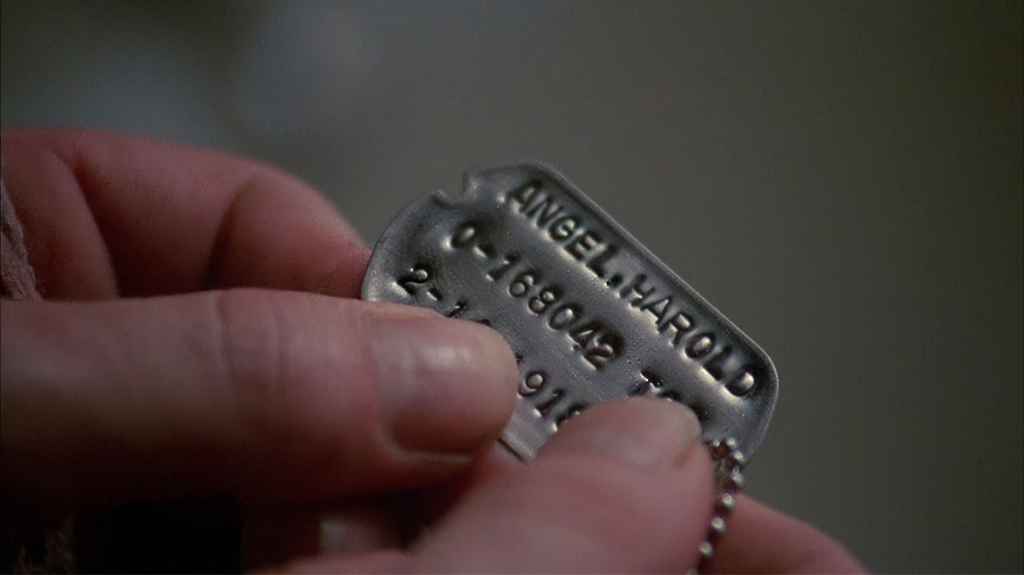
| 26 | The Dog Tags (Plot Point II / Reversal) | 1:42–1:43 | Harry breaks into Margaret’s apartment. He searches frantically — bathroom, herb bottles, records. He finds a white alabaster vase and smashes it. Inside: army dog tags. He runs his finger across the embossed name. ANGEL, HAROLD R. His heartbeat pounds. He cups his ears. Silence. Harry Angel is the stolen identity. He is the soldier Johnny Favorite murdered. |
The Devil Collects
| Beat # | Beat | Time | Synopsis |
|---|---|---|---|
| 27 | Cyphre Revealed (Climax) | 1:43–1:47 | Cyphre sits in the corner. Hair down — long, cascading. Nails at their longest. “Alas, how terrible is wisdom when it brings no profit to the wise.” Harry screams that he knows who he is. Cyphre: “You’ve been living on borrowed time and another man’s memories.” Harry accuses Cyphre. Cyphre: “All killed by your own hand. Guided by me, naturally.” The contact lenses reveal devil eyes. Harry looks in the mirror and sees Johnny Favorite. “I KNOW WHO I AM!” |
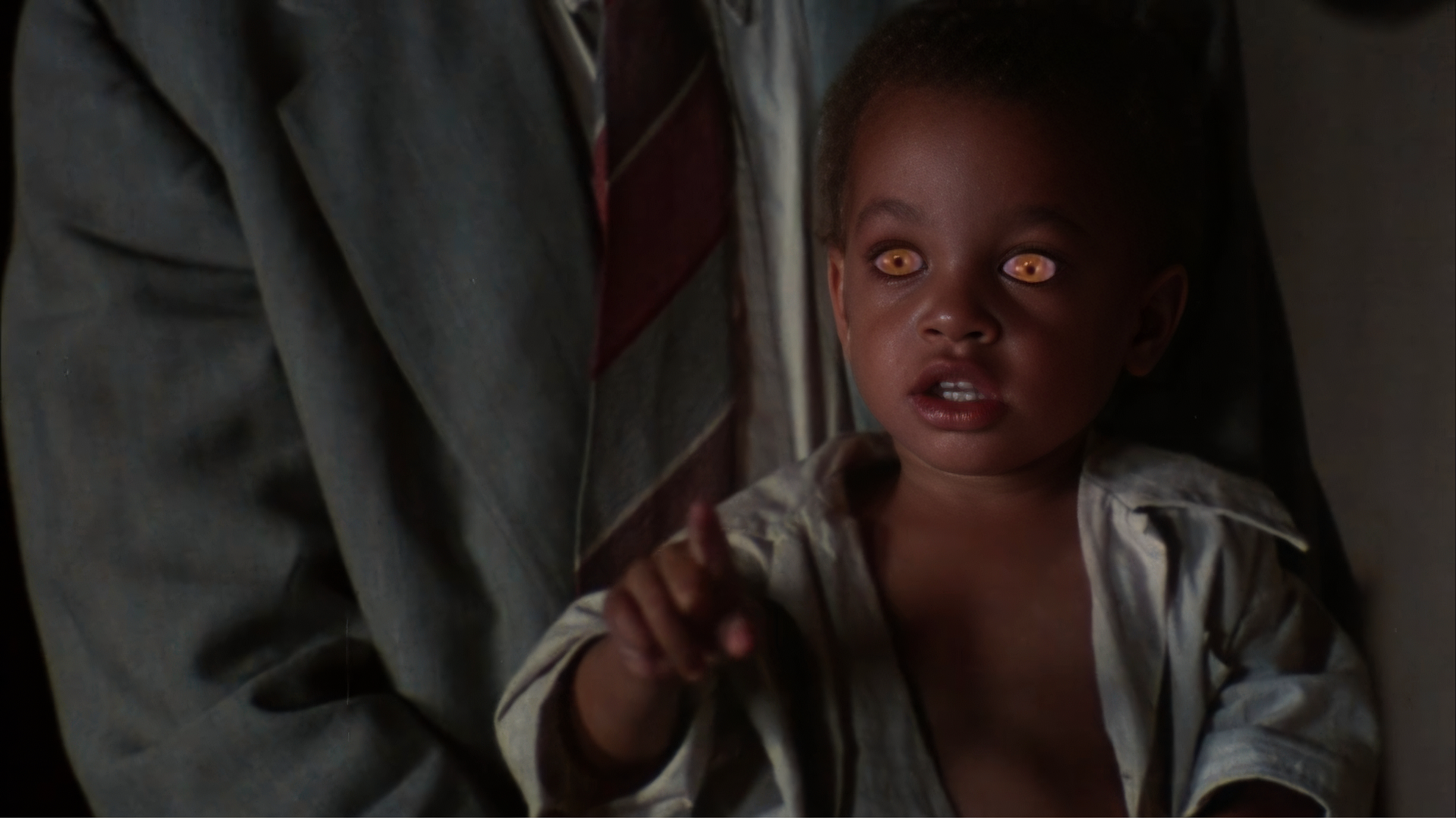
| 28 | Epiphany Dead | 1:47–1:49 | Harry runs through the rain. Arrives at his hotel. Opens the door. Epiphany lies dead on the bed. Harry’s dog tags rest on her. His gun is inside her. Detective Sterne stands in the corner. His partner carries Epiphany’s son from the bathroom. The child’s eyes glow like Cyphre’s. |
| 29 | Final Image | 1:49 | Sterne: “You’re gonna burn for this, Angel.” Harry: “I know. In hell.” The elevator descends. Going down. Forever. The detective solved the case. His case was himself. Damnation is eternal. |
Structural Patterns for Screenwriters
Runtime breakdown: Act I runs roughly 37 minutes (0:00–0:37). The investigation phase (Act II-A) runs 28 minutes (0:37–1:05). Act II-B matches at 28 minutes (1:05–1:33). Then Act III compresses to 17 minutes (1:33–1:49). Once the revelations begin, Parker never lets the audience breathe.
The blackout structure: Murders occur at approximately 0:23 (Fowler), 1:06 (Toots), 1:17 (Margaret), 1:41 (Ethan), and before 1:47 (Epiphany). Each corresponds to a gap in Harry’s awareness — a moment where the scene cuts away or Harry experiences a hallucinatory vision. Audiences never see Harry commit violence. Murders happen in the negative space of the edit.
Motif Timing
The fan appearances: Fans appear at or near 0:08 (Cyphre’s first meeting), 0:23 (Fowler’s death), 1:06 (after Toots’s death), 1:17 (Margaret’s apartment), and 1:41 (Ethan’s death). Each signals the Favorite personality’s activation.
The elevator visions: The descending elevator appears at approximately 0:23, 1:04, 1:27 (during the blood-sex scene), 1:43, and 1:49 (final shot). Frequency increases as Harry approaches the truth. The image grows longer each time.
The Cyphre appearances: Cyphre appears in only four scenes — 0:05 (the hiring), 0:27 (the egg scene), 1:19 (the church), and 1:43 (the revelation). Each scene sits at a structural hinge point. He arrives, adjusts the investigation’s direction, and disappears. The Devil as project manager.
Craft takeaways
What Screenwriters Can Learn from Angel Heart
The Angel Heart beat sheet and story structure reveal five craft principles that screenwriters can apply directly to their own work.
Plant your twist in a different sensory channel than your plot
Parker uses visual motifs (fans, elevator, mirrors) while the plot operates through dialogue and investigation. The audience processes these channels separately. The visual clues don’t spoil the narrative surprise.
Make your protagonist sympathetic even if they’re the villain
The twist devastates because we spend two hours inside Harry’s experience and care about his survival. If Harry were unlikable, the revelation would be intellectual, not emotional.
Use genre expectations as misdirection
In a detective story, we trust the detective. Parker exploits this trust. We never suspect Harry because detective stories don’t work that way. The twist subverts the genre contract itself.
Build visual motifs from the world of the story
Parker found the fan motif in New Orleans bars. He discovered the egg symbolism in occult research. He drew the elevator descent from old building architecture. Every motif has roots in the film’s physical environment. That authenticity is what gives them power.
Economy of screen time forces precision
De Niro’s Cyphre proves that fifteen minutes can dominate two hours. Every moment advances both plot and theme simultaneously.
Quick answers
Angel Heart Explained: Quick Answers
The story
What is Angel Heart about?
In 1955, private investigator Harry Angel is hired by a client named Louis Cyphre to find Johnny Favorite, a pre-war crooner who disappeared before honoring a contract. The trail runs from Harlem to New Orleans, every witness dies, and Harry discovers that the missing man he is hunting is himself.
Who is Johnny Favorite?
A singing star who sold his soul to the Devil for fame. On New Year’s Eve 1943 he murdered a young soldier named Harold Angel in a ritual, ate his heart, and stole his identity to escape the contract. War injuries caused amnesia, and he has lived as Harry Angel ever since, unaware of who he really is.
What does the ending of Angel Heart mean?
Cyphre reveals that every murder in the film was committed by Harry during blackouts, guided by the Devil. The contract required Favorite to consciously acknowledge who he is, which is why Cyphre engineered the investigation. Harry ends the film in a descending elevator — he is going to Hell. The twist and foreshadowing analysis maps every clue.
Is Angel Heart based on a book?
Yes — William Hjortsberg’s 1978 novel Falling Angel, set entirely in New York. Parker moved the second half to New Orleans, shifted the year from 1959 to 1955, and removed the novel’s ambiguity about whether Harry was framed. In the film, Harry is unambiguously the killer.
The details
Who is in the Angel Heart cast?
Mickey Rourke as Harry Angel, Robert De Niro as Louis Cyphre, Lisa Bonet as Epiphany Proudfoot, and Charlotte Rampling as Margaret Krusemark. Blues musician Brownie McGhee plays Toots Sweet, and Stocker Fontelieu plays Ethan Krusemark.
Why was Angel Heart rated X?
The MPAA objected to roughly seven seconds of the love scene between Rourke and Bonet. Parker appealed, lost, and cut about ten seconds — mostly shots of Rourke’s backside. Rourke publicly questioned whether the scene’s interracial dimension drove the decision. Home video restored the full version.
Whose child is Epiphany’s son?
The film’s final image of the boy shows his eyes glowing like Cyphre’s. The Devil fathered the child with Johnny Favorite’s daughter — which is why the boy screams at the sight of Harry when they first meet.
What does the egg scene mean?
Cyphre peels and eats a hard-boiled egg while telling Harry that some religions consider the egg a symbol of the soul. He is performing his nature rather than explaining it: the Devil consuming a soul with unhurried precision. Harry’s refusal — “I got a thing about chickens” — is the buried Favorite personality flinching.
Go deeper
The Angel Heart Series
This page is the hub. Three supporting analyses take each thread further.
Twist and foreshadowing
Six foreshadowing systems, the blackout structure, and every Woman in Black appearance mapped.
Adaptation
How Falling Angel became Angel Heart
Every change Parker made to Hjortsberg’s novel, and why each one serves the twist.
Antagonist design
Louis Cyphre: the Devil in four scenes
How fifteen minutes of restraint dominates a two-hour film.