Scene analysis · Michael Clayton (2007)
Michael Clayton Horses: The Prophetic Meaning of the Scene
Why he stops, what Realm & Conquest is, and why the one uncalculated act in the film is the one that saves him
Written and directed by
Tony Gilroy
The scene
14m in the opening · 103m in Act III
The book
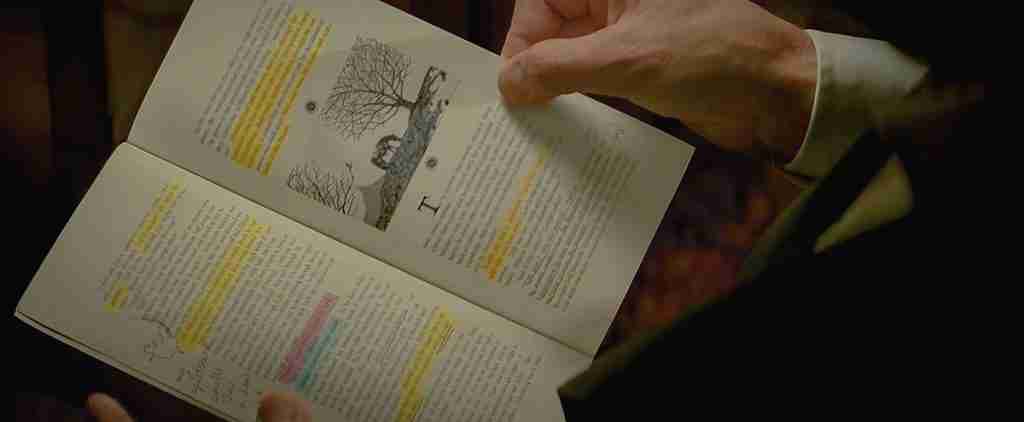
Realm & Conquest, chapter: Summons to Conquest
3
Horses in the field
2
Times we see them: 14m and 103m
87
Minutes between “Sounds familiar” and its payoff
Why he stops
Why Michael Clayton Stops for the Horses
Michael Clayton is a legal thriller built as a character study, and its whole thematic architecture rests on two things that look minor: a children’s fantasy game called Realm & Conquest, and a silent minute with three horses in a field. The film shows the horses twice, at 14m and 103m, and never explains them. This article does, from what’s on the screen.
Realm & Conquest isn’t a subplot. It’s a mirror. The game gives Michael the strategy for his final act before he knows he’ll need one, and it’s the only moral compass in a film where every adult has sold theirs. Arthur reads it as prophecy. Michael reads it as a kid’s game. The film sides with Arthur.
For the full minute-by-minute structure, see the Michael Clayton beat sheet. For the shooting script against the finished cut, see the Michael Clayton script vs film analysis.
Signature element · the echo
Sounds Familiar: The Echo
The same exchange plays twice. At 18m it’s a father humoring his son on the school run. At 105m, with the car burning behind him, it’s the plan. Nothing in the words changes. Everything around them does.
18m
The school run. Henry explains the game.
“Nobody has any alliances. You can’t even say who you are, because you don’t know, maybe the person you’re talking to, maybe they were like your mortal enemy in the wars. So it’s just completely like everybody for themselves.”
Henry Clayton
“Sounds familiar.”
Michael Clayton
87
Minutes between the two readings
105m
The woods. Michael decides to play dead.
“Nobody has any alliances. You can’t even say who you are, because you don’t know, maybe the person you’re talking to, maybe they were like your mortal enemy in the wars. So it’s just completely like everybody for themselves.”
Henry Clayton
“Sounds familiar.”
Michael Clayton
The first time, Michael is describing his firm: six hundred attorneys, no alliances, everybody for themselves. The second time he is describing his method. The deserter who survives is the one nobody can identify, and Michael has just thrown his identification into a fire.
The prophetic language
The Realm & Conquest Setup
The Realm & Conquest motif lays down the moral and strategic map for Michael’s final act, and it hangs over the first two acts as dramatic irony: the audience is given the answer before Michael understands the question.
The world of no alliances
Henry describes the game’s world as one of deserters forced into hiding. Nobody has any alliances; it’s everybody for themselves. Michael, cynical and in debt, files it under child’s fantasy and misses that his son has just described his life.
The prophetic madness
Arthur seizes the same idea. Where Michael hears a game, Arthur, in his manic state, hears confirmation that his “madness” is a sign of something larger than himself, a moral quest laid out in the chapter titled Summons to Conquest. Arthur, the supposedly crazy one, tries to follow the path. His journey is cut short because he couldn’t finish the game.
The irony of dismissal
Michael manages Arthur’s breakdown by treating the prophecy as pathology. He bribes an EMT to sedate him. It has to be pathology: Michael’s whole worldview depends on Arthur’s moral truth, that the corporate evil is real, being false. If Arthur is right, Michael has spent seventeen years cleaning up after murderers.
The setup and payoff minutes are marked in the beat sheet.
Make believe it’s not just madness.
Arthur’s wall, 44m
Structural frame and symbolic death
The Horses Scene
The horses (14m, 103m) are where the metaphor of Realm & Conquest collides with Michael’s reality and forces a transformation he can’t walk back.
The thematic frame and spiritual low point
The horses frame the film. They appear once in the non-chronological opening at 14m and again just before the explosion at 103m, and the repeat marks the gravity of the game Michael has been playing without knowing it. The second time, he arrives at the field having taken the money.
Michael has accepted the firm’s dirty money, the price of renewed loyalty and of his part in burying the U/North problem. He knows he chose the career and the debt over the moral case. He drives aimlessly until he sees the horses, and they echo the illustration in Arthur’s copy of the book. This is his lowest point.
The irony of irrationality and survival
Stopping the car and walking toward three horses is an irrational, emotional act for a corporate lawyer. It’s also the start of the sane path. It’s vulnerability, in a film where every other choice is a calculation.
The vulnerable act pushes him toward redemption. His survival is still luck. Arthur’s tragedy was arrogance: he believed his intellect and stature would be armor enough in the game. Not a lack of moral conviction but a failure to shed that arrogance is what got him killed. Michael’s uncalculated vulnerability saves him where Arthur’s sharpest calculation failed.
The last place you want to see me is in court.
Arthur Edens, 62m
Symbolic self-immolation
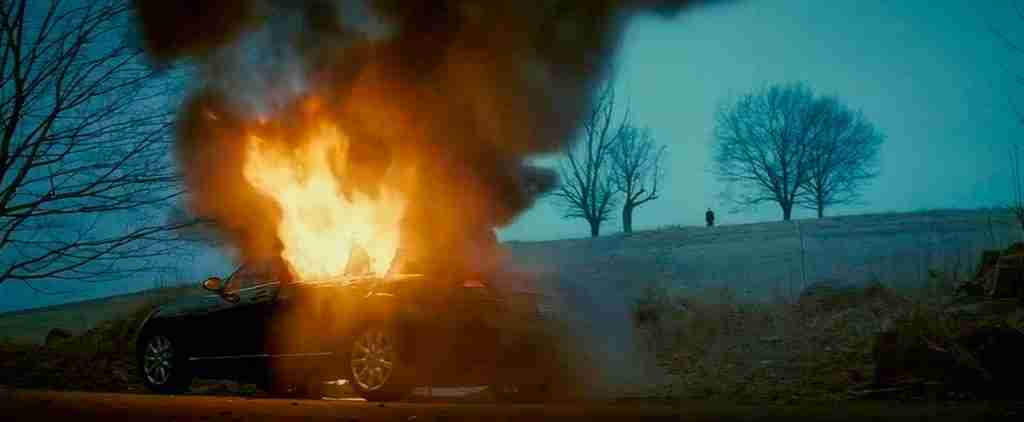
Out of the shock, Michael throws his Rolex, his ID and his personal effects into the burning wreck. It’s self-immolation in effigy: the death of the old Michael, the cynical fixer, and the birth of the lone deserter who will run the no-alliances strategy against U/North and his own firm.
The final act of appropriation
The Final Prophecy: Becoming Shiva
Michael’s arc closes when he claims the role Arthur started. He goes from the janitor who cleans up after destruction to the instrument of it.
Having destroyed his own identity, he confronts Karen Crowder. Challenged on who he is, he takes the destructive, cleansing role Arthur named in Act One.
Don Jeffries
Who are you?
Michael
I’m Shiva the God of Death.
The line resolves the film’s central irony. Arthur’s call to moral clarity, dismissed as a symptom, is accepted in full. Arthur wasn’t just mad; he was right. Michael isn’t the janitor anymore. He’s the necessary destruction, and the words on Arthur’s wall turn out to be instructions: make believe it’s not just madness.
The wire, the arrest and the cab are at 111m to 116m in the beat sheet.
I’m Shiva the God of Death.
Arthur Edens, 31m. Michael Clayton, 112m.
Questions readers ask
Michael Clayton Horses FAQ
The scene
Why does Michael Clayton stop to look at the horses?
The film doesn’t say, and the silence is the point. The horses echo the illustration in Arthur’s copy of Realm & Conquest, which Michael found in the apartment at 89m. Stopping is the one thing in the film he does without an angle, and it’s the reason he isn’t in the car when it explodes.
What do the horses mean in Michael Clayton?
Two things at once. Structurally they’re the frame: seen at 14m before we understand anything, and at 103m when we understand everything. Thematically they’re Arthur’s summons reaching Michael through the one channel he can’t argue with. He can dismiss a manic lawyer. He can’t dismiss what he does himself when nobody is watching.
Is the car explosion real or does Michael fake his death?
The bomb is real, placed by Verne’s associate at 97m while Michael plays poker. Michael survives by luck: he’s out of the car, in the field, when they trigger it. The fake is what comes after. He throws his effects into the fire so that Kenner Bach, and Karen, believe he died.
The book
What is Realm & Conquest in Michael Clayton?
A fantasy role-playing book Michael’s son Henry is reading. Its world is one of deserters cut off from their armies, hiding to survive, with no alliances. Henry explains it to Michael at 18m and to Arthur, over the phone, at 36m. Arthur buys a copy; Michael finds it, highlighted, in Arthur’s apartment.
Is Realm & Conquest a real book?
No. It was created for the film. The chapter Arthur highlights is titled “Summons to Conquest,” and the bound copies of Memorandum #229 he has printed at 91m carry a red cover modeled on it.
What does “Summons to Conquest” mean?
It’s the chapter Arthur highlights, and it’s how he understands his own breakdown: not an episode, but a call. Henry’s description of the players who all think they’re going crazy alone, when it’s real and it’s happening to all of them, is the closest the film comes to saying so out loud.
Go deeper
More Michael Clayton
Beat sheet
Seventy-six minute-marked beats, from Arthur’s voice-over to the cab, with the setup and payoff of Realm & Conquest labelled.
Script vs film
Michael Clayton script vs film
Gilroy’s February 2006 shooting script against the finished cut: what moved, what was cut, and what the page says that the screen doesn’t.
The series
Deep SHT: deep dives on your favorite movies
Primary-source structural analysis of Chinatown, No Country for Old Men, Angel Heart and more.


I love how you highlighted the horses scene as the key to Michael’s redemption. It’s such a subtle moment, yet it encapsulates his whole journey. The connection to the Realm & Conquest game adds an interesting layer to the film’s themes, showing how even the smallest moments can hold immense symbolic weight.
Fantastic observation! You hit on a key point: the subtlety of that scene is its strength. It shows how the smallest moments can hold immense symbolic weight in great screenwriting. Thanks for reading and for the great comment!
Thank you for this insight. I thought he stopped to see the 3 horses as a representation of him and his brothers. A longing when they were together, perhaps younger and unbridled.
Thanks for reading and for this thoughtful take!
I love your interpretation—the three horses as Michael and his brothers, longing for that freer, younger time together. It really captures his regret and disconnection beautifully.
The piece focuses more on the horses as a symbol of freedom/vulnerability (and the direct tie to the “Realm & Conquest” book that saves his life), but your family angle adds such a poignant layer. Great insight—thanks for sharing!