Deep SHT / Screenplay Analysis
When Harry Met Sally Screenplay Analysis: Page to Screen
Three chance meetings, one argument, and a shooting script the film kept rewriting
Written by
Nora Ephron
Directed by
Rob Reiner
Released
1989 / Castle Rock Entertainment
Starring
Billy Crystal, Meg Ryan, Carrie Fisher, Bruno Kirby
Shooting script
Rev. August 1988
Structure
Three meetings, twelve years, one New Year’s Eve
Rob Reiner died on December 14, 2025. This analysis was reworked in his memory from the shooting script and the commentary he recorded with Nora Ephron and Billy Crystal.
3
chance meetings before the friendship starts
12
years from the drive to New Year’s Eve
60+
takes for the four-way phone call
2 > 3
months to the wedding: script says two, film says three
The Argument
Getting Started: When Harry Met Sally Analysis and the One Question It Asks
This When Harry Met Sally screenplay breakdown reads Nora Ephron’s script against what reached the screen. Director Rob Reiner and Ephron built the film around one question: can men and women stay friends without sex getting in the way?
The story spans twelve years. Harry and Sally move from clashing strangers to close friends and finally to lovers. The unusual part is how long the script makes them wait.
Logline: Over twelve years, a cynical man and an optimistic woman fight to keep their friendship platonic, testing the idea that sex always interferes.
Witty dialogue, recognizable characters, and a patient structure drive the film’s appeal. It builds tension through talk, not chases. Everyday arguments expose deeper truths.
What the script flips
The script flips the classic meet-cute. Harry and Sally meet and annoy each other twice before they bond, and the time jumps make their slow changes visible.
On this page
Writing Challenge: Script a scene where two opposites debate a big life question. Watch how the argument reveals their chemistry.
Signature Structure
The Three Meetings: One Argument, Re-Run for Twelve Years
The closing recap states the structure out loud. The first time they met they hated each other. The second time he did not remember her. The third time they became friends. Each meeting reopens the argument from the drive with the terms changed, and each ends with the question unanswered.
1977 / Chicago to New York
The Drive
Harry’s rule
Men and women can’t be friends; sex always gets in the way.
Sally’s reply
She says he is wrong, then proves his point by refusing to be his friend at all.
What it settles
They part on “Have a nice life.” Harry’s rule stands, untested.
1982 / The Airport and the Plane
The Flight
Harry’s rule
He amends the rule: friendship works if both are involved with someone else.
Sally’s reply
She barely gets a word in. Harry talks himself out of his own amendment before she can answer.
What it settles
Both are attached, so the amendment gets its one chance. Harry retracts it in the same breath.
1987 / The Bookstore
The Bookstore
Harry’s rule
Divorced, softened, he offers friendship as a rule-free experiment.
Sally’s reply
Single again, she accepts on the condition that sex stays out of it.
What it settles
The experiment begins. The next year is the test Harry predicted they would fail.
1988 / New Year’s Eve, twice
The Outcome
They sleep together and the friendship breaks, which is what Harry said would happen on the drive. Then the ending overrules him: the couple is settled, the argument is not. Years later, in a recorded conversation with Reiner, Ephron still called the first-draft ending in which they stay apart the true one, and Reiner agreed, adding that more people tell him the film fooled them than tell him it happened to them. That unresolved question is why the film keeps getting re-litigated.
The third time we met we became friends.
Harry, the closing recap, 92m
The Scene Everyone Searches For
Where “I’ll Have What She’s Having” Came From
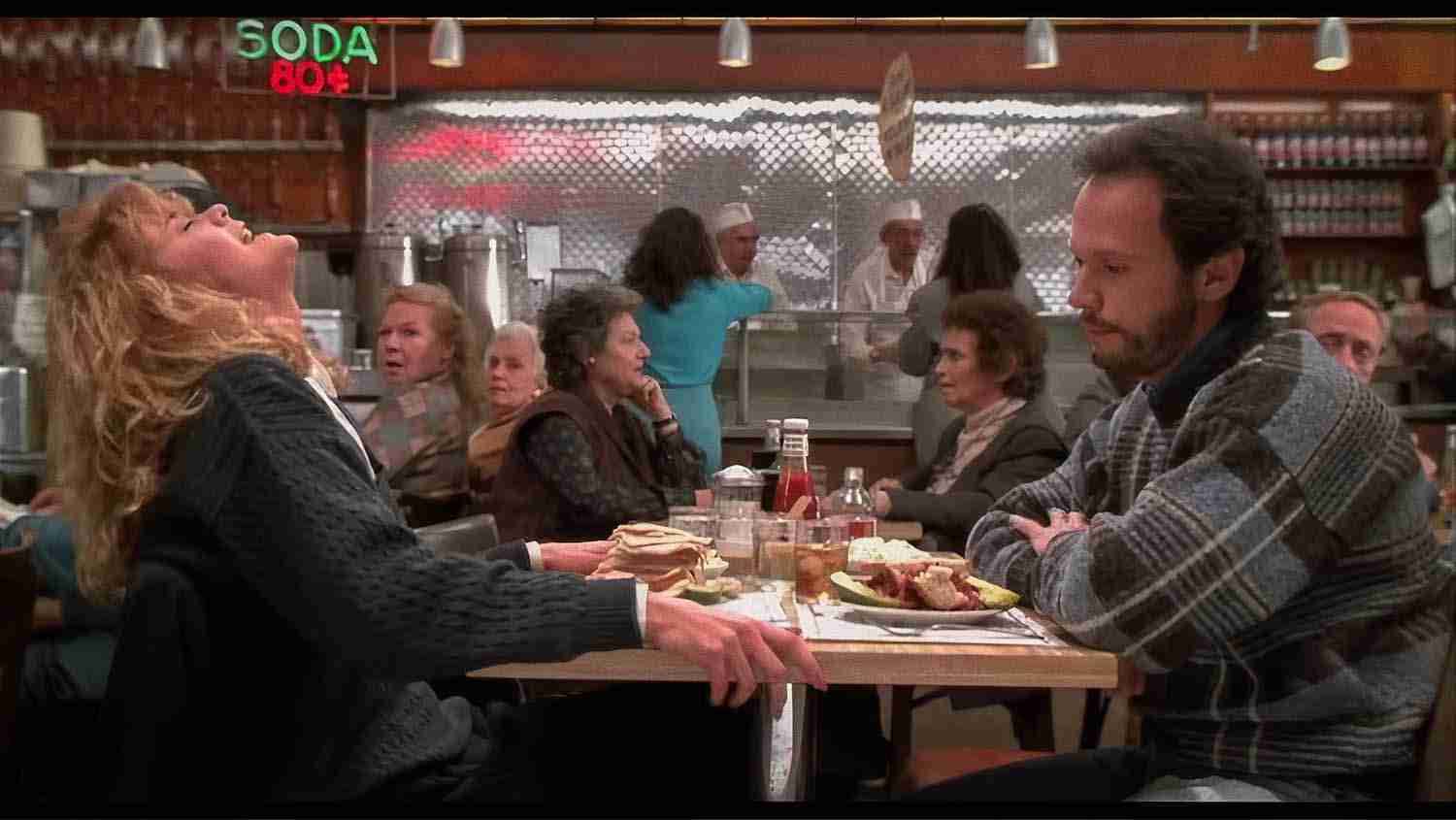
The deli scene sits at Scene 57 of the August 1988 shooting script, printed pages 58 and 59, and the slug line does not say Katz’s. The scripted location is the Carnegie Delicatessen; Katz’s was the choice that came after the read-through, when the group went looking for the most public place possible. On the page, Sally challenges Harry’s certainty that no woman has ever faked it with him, then delivers the performance while the rest of the deli listens in. The stage direction holds on Harry in shock and on the customers who overheard.
How the scene got written
Reiner and Ephron tell the origin story on the commentary. Ephron had been interviewing Reiner and producer Andrew Scheinman about their dating lives, and Reiner dared her to tell them something about women they did not know. Her answer was that women fake orgasms. Reiner did not believe it, polled the women working in the Castle Rock office, and got a unanimous yes.
The scene they wrote had the argument but no demonstration. At a read-through with Meg Ryan and Billy Crystal, Ryan suggested Sally could fake one on the spot. That is when the Carnegie became Katz’s.
The topper and who says it
Crystal supplied the topper: a nearby customer should ask for what Sally was having. Reiner cast his mother, Estelle Reiner, to say it, and by his account he warned her he would cut it if it did not land. It became one of the film’s two lines on the AFI list of the hundred most memorable movie quotes, alongside the Casablanca line the film borrows earlier.
For the screenplay reader, the takeaway is procedural. The argument was scripted; the demonstration came from the actress; the punchline came from the co-star; the delivery came from the director’s family. The scene at 48m is a record of the collaboration that produced it.
I’ll have what she’s having.
Estelle Reiner, Katz’s Delicatessen, 48m
Development
Crafting the Core: When Harry Met Sally Script Development
The film started as Reiner’s second pitch; Ephron rejected the first one at the Russian Tea Room before lunch arrived. In his telling, he then brought Ephron the idea of two people who become friends at the end of the first big relationship in each of their lives, decide not to sleep together because it would ruin the friendship, and then do, and it does. Ephron says she left that meeting already knowing the structure: a couple who keep bumping into each other at the wrong moments.
Ephron then interviewed Reiner and Scheinman about their single lives. Reiner had been divorced for about a decade, and the stories he told became Harry’s material. Sally’s habits came from Ephron herself, most visibly the ordering. Reiner watched her order lunch, sandwich components on the side, and insisted it go into the character.
The drafts and the gap years
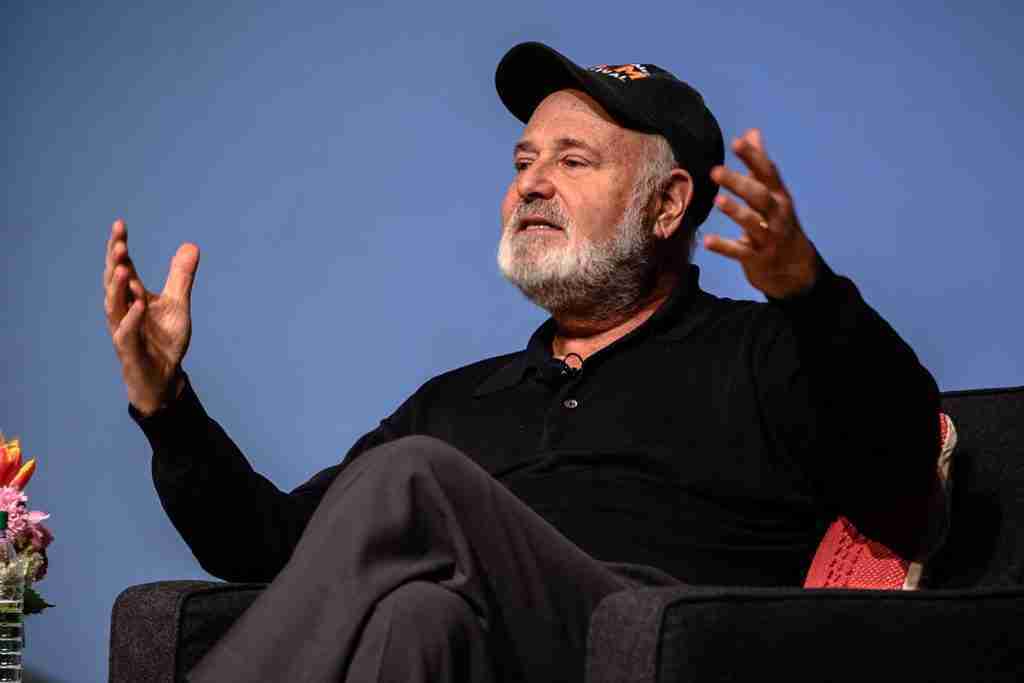
The writing stretched across Reiner’s other films. Ephron wrote a draft, Reiner made Stand by Me, they traded notes, she wrote another, he made The Princess Bride, and only then did the three of them work the script in a room together. Crystal joined late and, by Reiner’s account, added a great deal. One deliberate omission: the characters’ careers stay off camera, because, as Reiner put it, he only ran the camera when they were talking about each other.
The framing device came from a dinner at Alan Horn’s house, where Reiner asked Horn’s father how he had met his wife; that answer became the first story in the film. Real couples were filmed telling their stories, but the footage did not play; Ephron condensed the stories into monologues and actors performed them. The elderly couples on the loveseat are cast, not documentary.
The ending that changed
The first draft kept Harry and Sally apart. Reiner reversed that about a year later, for the audience, while admitting on the commentary that the reunion still felt manufactured to him. Meeting Michele Singer during the shoot changed his mind about whether two people coming out of serious relationships could find each other again. The New Year’s scene was shot more than once before it worked, the final time with a speech Reiner and Crystal built in rehearsal by asking what Harry would really say.
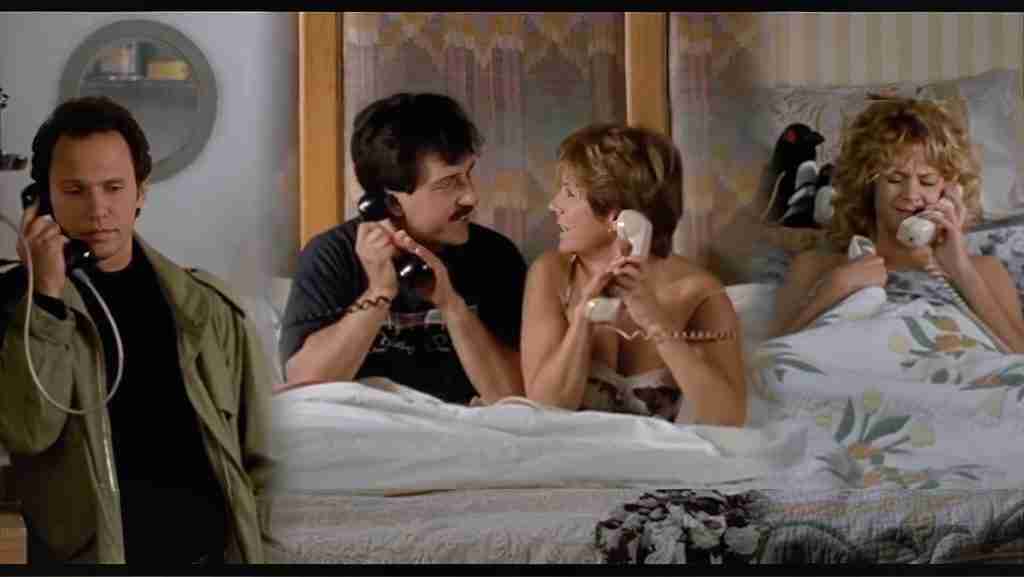
The late-night phone calls in the film echo Reiner’s own habit of calling Crystal at night during his divorce. The split-screen framing came from Ephron, who made Reiner watch Indiscreet and Pillow Talk for their divided beds and bathtubs.
Innovation Spotlight: Ephron stretches the rom-com over years. Growth feels real, not forced. This slow-burn mix of friction and warmth redefined the genre.
New York seasons mirror the characters’ moods. Autumn leaves signal change. New Year’s Eves mark the key shifts. Settings like these teach symbolic storytelling.
Themes
Big Ideas in When Harry Met Sally: Love, Friendship, and Growth
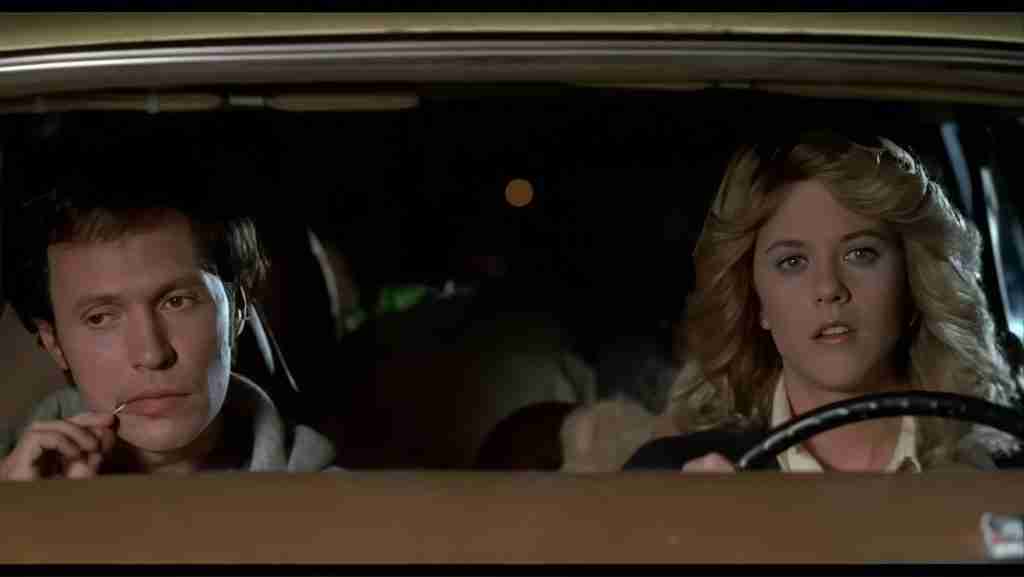
Harry declares, in the car after the diner stop, that men and women can’t be friends because “the sex part always gets in the way.” That thesis, delivered at 13m, drives the argument about attraction, bonds, and gender for the rest of the film.
The film shows platonic ties can falter under desire. Yet timing and openness turn friends into partners.
Clashing views, his gloom versus her cheer, spark the early fights. Rigid beliefs block connection. Discomfort drives change, a vital arc lesson.
Breakups, recovery, and the mirror couple
Breakups force recovery. Sex disrupts the friendship but deepens it. Jess and Marie’s easy romance contrasts with their mess. Themes of commitment run underneath.
The loveseat couples work like a chorus. Their stories frame the journey with plainspoken accounts of how love starts, and the film’s last shot puts Harry and Sally among them.
Characters
Meet the Crew: When Harry Met Sally Character Breakdowns
The characters contrast yet complete each other through their flaws.
Harry Burns (Billy Crystal): The Cynical Foil
Harry views the world darkly. He reads the last page of a book first in case he dies before finishing it, which he offers on the drive as proof of his dark side.
Flaw: He walls off emotion with pessimism, preparing for disaster. Voice: Sex blocks male-female friendship. Arc: Harry learns vulnerability unlocks real closeness and drops his defenses.
Sally Albright (Meg Ryan): The Optimistic Counterpoint
Sally stays sunny, practical, and ordered.
Flaw: She demands control, “high maintenance” while claiming the opposite. Her orders show it. Voice: Platonic cross-gender friendship works. Arc: Sally releases rigidity. Love defies perfect plans.
Jess and Marie: The Mirror Couple
Jess and Marie bond fast and marry smoothly. Their ease highlights Harry and Sally’s self-made hurdles. Dialogue reveals the traits: Harry’s dark jokes versus Sally’s precision. Strong foils build electric chemistry.
Structure
The Roadmap: When Harry Met Sally Save the Cat Breakdown
Ephron and Reiner pace the romance in a three-act structure. Page references below are to the August 1988 shooting script.
Act I: Setting the Stage (1977-1987)
Chance meetings pose the big question. Time jumps delay the romance for a realistic setup.
| Sequence | Beat (Save the Cat!) | Key Event / Description |
|---|---|---|
| 1. The Drive (1977) | Opening Image | An elderly couple on a loveseat tells how they met. |
| Setup | Harry and Sally drive cross-country. Opposites clash: organized Sally, dark Harry. | |
| Theme Stated | The argument in the car after the diner: sex ruins male-female friendship. (Scene 10, 13m) | |
| Catalyst | Awkward New York goodbye: “Have a nice life.” | |
| 2. The Flight (1982) | Debate (Part 1) | Plane reunion. Harry amends the rule for couples, then talks himself out of it before Sally can answer. |
| 3. The Bookstore (1987) | Debate (Part 2) / Break into Two | Bookstore chance meeting. Both single now. They agree to try friendship. (Plot Point I) |
Act II: Building Friendship and Tension (1987-1988)
Notice how the midpoint shifts. “Fun and Games” shows platonic joy. Subplots contrast; fears escalate to the midpoint.
| Sequence | Beat (Save the Cat!) | Key Event / Description |
|---|---|---|
| 4. Friendship Deepens | Fun and Games | Museum antics, Casablanca phone calls. |
| B-Story | Date talks keep the boundaries. Intimacy grows without sex. | |
| 5. The Deli | Fun and Games | The fake orgasm proves the tension is boiling. (Scene 57, pp. 58-59, 48m) |
| 6. The Double Date | Midpoint | The setup backfires; Jess and Marie pair up and get engaged. Harry and Sally stay stuck. |
| 7. The Crisis | Bad Guys Close In | Harry sees ex-wife Helen (58m), spirals, and snaps over the wagon-wheel table. (Scenes 74-78, 62m) |
| 8. The Transgression | All Is Lost | Joe’s marriage news crushes Sally. Harry consoles her; they sleep together. The four-way call to Jess and Marie follows. (75m) |
| Dark Night of the Soul | Morning regret shatters the friendship. (Plot Point II) |
Act III: Crisis to Resolution (1988-1989)
Vulnerability pays off. Earned epiphanies secure the happy close.
| Sequence | Beat (Save the Cat!) | Key Event / Description |
|---|---|---|
| 9. The Fallout | Break into Three | The awkward “mistake” talk; they drift apart. (76m) |
| 10. The Fight | Five Point Finale (Gathering the Team) | Wedding blowup, then the phone call where Sally refuses the “consolation prize” role. (Scene 124, 85m) |
| 11. The Realization | Five Point Finale (The High Tower) | Lonely New Year’s; Harry catalogs Sally’s quirks. |
| 12. The Declaration | Five Point Finale (Dig Deep) | Harry races to the party and lists why he loves her. (Scene 139d, pp. 120-121, 90m) |
| 13. The Marriage | Final Image | The loveseat: they married three months later. (p. 122, 92m) |
The Ending Explained
When Harry Met Sally Ending Explained: Why “I Hate You” Is a Yes
The Paradox of “I Hate You”: The Ultimate Surrender
At the New Year’s Eve party, Sally’s tearful outburst that she hates Harry looks like rejection. It is the resolution of the opposites-attract dynamic.
Harry, the pessimist, has spent the film shielded by cynicism. Sally, the optimist, clings to control. When he finally drops his guard and says that once you know who you want to spend your life with, “you want the rest of your life to start as soon as possible,” he dismantles her defenses.
Her claim of hatred is surrender. She tells him that saying things like that makes it impossible to hate him, which is an admission that he knows her better than anyone. Their friction was never incompatibility. It was the inevitability of love, and the film lets that land through vulnerability and timing.
“You make it impossible for me to hate you.”
Sally, Scene 139d, 90m
What the page says and what the screen says
The shooting script has the bones of the speech and a different list. On the page Harry loves that she gets cold at 62 degrees and that her mouth turns down a little; on screen the temperature is 71 and the detail is the crinkle she gets when she looks at him like he is nuts. The page has Harry say it took him eleven years to figure it out; the film replaces that with his insistence that he is not there because he is lonely or because it is New Year’s Eve.
The last page changes too. In the script the loveseat Harry says they married two months later. On screen it is three. The coconut cake and the chocolate sauce on the side are on the page, though the actors say the exchange was improvised; either way, the script had them arguing about cake before the cameras did.

The Screenplay
What the When Harry Met Sally Screenplay Shows That the Film Changed
The circulating draft is a Castle Rock shooting script credited to Ephron, Reiner, and Andrew Scheinman, with revision pages dated August 3 through August 23, 1988. Revision pages run through the whole document, the last batch marked pink, and several scenes are marked omitted. It is a working script, not a clean final, which is what makes it useful.
Reading the deli scene on the page
The car argument that states the theme is Scene 10, around printed page 15. The deli scene, the one searchers call the diner scene, is Scene 57, pages 58 and 59, still set at the Carnegie in this draft, and it ends on the page exactly where the film does, with an older woman turning to a waiter. The topper line is not printed; it was Crystal’s suggestion at the read-through.
Where the page and the film differ
The wedding fight, Sally’s consolation-prize phone call (Scene 124), and the loveseat frame are all on the page close to how they play. The gaps cluster at the end: the specifics of Harry’s speech, the eleven-years line, the two-months line, and the baby-talk riff in the Pictionary scene at Jess and Marie’s, which Crystal flags on the commentary as improvised.
The practical lesson for a screenwriter is that the structure held from the first draft through the shoot, and the surface kept moving. Ephron’s three-meeting spine never changed. The lines everyone quotes were found on top of it.
Questions
When Harry Met Sally Screenplay FAQ
The script
Who wrote the When Harry Met Sally screenplay?
Nora Ephron wrote the screenplay. The shooting script’s title page also credits Rob Reiner and Andrew Scheinman, and Ephron has described the process as interviewing the two of them and building the script from their stories and her own.
Is the When Harry Met Sally script available as a PDF?
A Castle Rock shooting script dated August 1988 circulates in scanned form and is the version this analysis cites by scene and page. It is a revision draft with colored pages, not a published final screenplay.
What is the When Harry Met Sally logline?
Over twelve years, a cynical man and an optimistic woman fight to keep their friendship platonic, testing the idea that sex always interferes.
The scenes
Is the fake orgasm scene in the script?
The argument that sets it up is in the shooting script (Scene 57), and the stage direction has Sally build to the performance at the table. The customer’s punchline is not printed; Billy Crystal suggested it and Estelle Reiner, the director’s mother, delivered it.
What does “I’ll have what she’s having” mean?
It is the deli customer’s response to Sally’s performance: she wants whatever produced that reaction. The joke lands because the customer takes the fake at face value, which is Sally’s whole argument.
How does When Harry Met Sally end?
Harry runs to the New Year’s Eve party and lists the things he loves about Sally. She says she hates him for making it impossible to hate him, they kiss, and the last scene puts them on the loveseat as one of the film’s couples, married three months later.
Legacy
Why This When Harry Met Sally Breakdown Still Teaches Writers Today
Years later, the film endures for its honest portrayal of relationships. Sharp dialogue and patient character growth create the effect. Just as Annie Hall revolutionized rom-coms in the 1970s with neurotic realism and an inventive style, When Harry Met Sally did the same for the 1980s, making the genre more optimistic, dialogue-driven, and relatable while inspiring You’ve Got Mail and beyond.
Writers learn: personal truths fuel great stories. Life sometimes writes the best endings.
Key lessons from this When Harry Met Sally analysis
Foils power stories. Opposing views spark the compatibility reveals. Dialogue drives action. Talk raises stakes like a chase. Authenticity wins. The real-life pieces, from the ordering to the phone calls, are the ones people quote. Earn endings. Years of growth make the joy believable, and the crew still reshot it until it was.
Challenge: Revise a debate scene. See character evolution unfold over time.