Deep Dives on Film, Built for the Classroom
Screenwriting and film studies courses have been assigning ScreenplayHowTo pages on their own initiative. The referrals arrive from Canvas, Blackboard, D2L and Brightspace, at state universities and at schools overseas. This page is for those instructors, and for anyone teaching screenwriting who wants classroom material built to survive the question every good student asks: where does that claim come from?
The Deep SHT: Chinatown educator package takes the book’s primary-source analysis — screenplay drafts, commentary transcripts, documented interviews, every quote and timestamp checked against the source — and shapes it for a film studies syllabus. Material students can cite in a paper, question in seminar, and verify for themselves.
What’s in the Chinatown Educator Package
One film, taken apart from the drafts up. The package is built so a single chapter can carry a week of class, and the whole book can carry a unit.
Syllabus-ready chapters
Each chapter reads as a self-contained week: one structural question, the documented evidence, and a close reading students can push back on. Assign a single chapter or run the full book across a unit on Chinatown.
Worksheets and discussion prompts
Scene-analysis worksheets and seminar prompts keyed to screenplay pages and film timestamps, so a class can move between script and screen without hunting for the moment.
Draft-to-film comparison
Robert Towne’s screenplay drafts set against Roman Polanski’s finished film, including the ending they fought over — the cleanest case study I know for teaching how a script changes on its way to the screen. Grove keeps the published screenplay in print if you want the script itself on the syllabus.
Desk Copies for Instructors
Publishers have offered examination copies for as long as courses have adopted books. This series follows that practice.
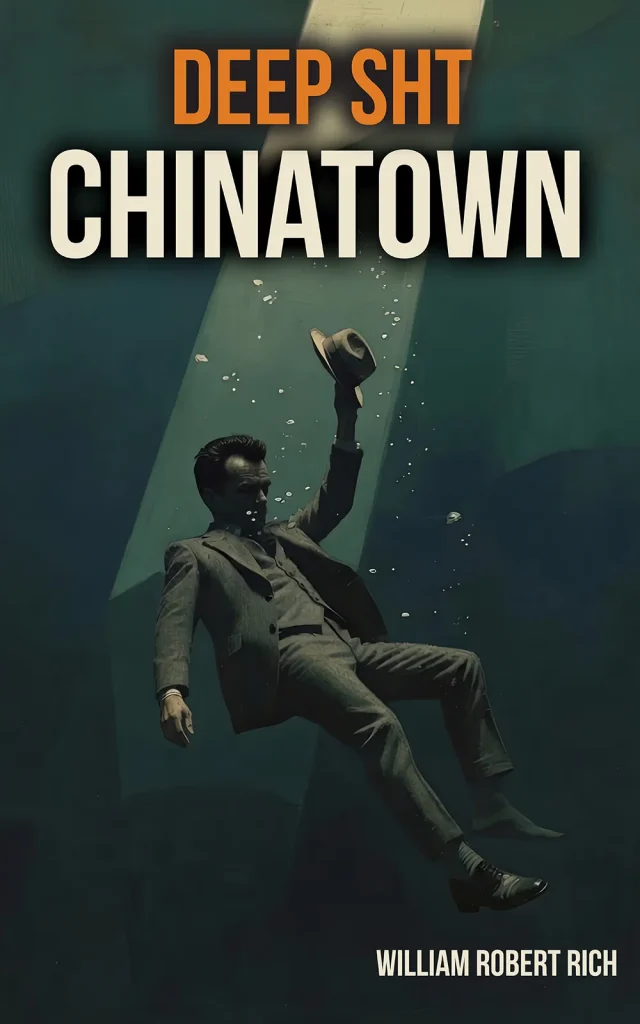
The Chinatown Desk Copy
Teaching screenwriting or film studies this year? Request a desk copy of Deep SHT: Chinatown and evaluate it against your syllabus — free, with no commitment to adopt. The desk copy is the full book, not a sampler, because you can’t judge a course text from an excerpt.
Spring orders are due to bookstores before the print edition exists, so the desk copy goes out as a complete PDF in October, ahead of the print run. Read it on your own schedule and decide about spring without waiting for a box to arrive.
Classroom licensing for student copies follows at launch, priced like a course book rather than courseware.
PDF desk copies go out in October 2026. The print edition follows.
What You Need for the Syllabus
The questions a department chair asks before a title goes on a course list, answered here rather than by email.
Format
PDF and EPUB at launch, paperback from Amazon. Chapters are sized to carry a single week, so the book can run as a full unit or as one assigned reading.
What students buy
A book. No access code, no expiring license, no platform to log into, and nothing that stops working at the end of term. Under the access program, no cost at all.
Posting to your LMS
Licensed chapters and worksheets can go straight into Canvas, Blackboard, D2L or Brightspace for enrolled students. No clearance request, no per-page fee.
Accessibility
Selectable text, tagged headings and alt text on every image. No scanned pages, so a screen reader gets the whole book and a student can search it.
Citations
Every source carries a full reference — draft date and page for screenplays, timestamp for commentary, publication and date for interviews. Students can build a works-cited entry from what is on the page.
Read it before you decide
The free Chinatown analysis on this site is the same method at article length. Nothing on it is gated. Judge the standard there before you request anything.
Why Primary Sources Matter When Teaching Screenwriting
“Evidence-first” is easy to claim but expensive to do. Here is what it costs on this site — and what it buys your students.
Citable by design
Every quote traces to a screenplay PDF, a commentary transcript, or a documented interview, with the reference on the page. Students can carry a claim straight into a paper without laundering it through a video essay.
No invented intent
A claim about what Towne or Polanski intended appears only when they said it on the record. When the record is silent, the text says so — which is the discipline most students spend a degree learning.
Source tiers in plain sight
Primary and secondary sources are labeled as such throughout, so the book models the source hierarchy instructors spend whole semesters trying to teach. The method is visible enough to grade against.
None of it imposes a template on the film, and none of it sorts scenes into someone else’s beat sheet. The book documents what the screenplay does, proves it from the record, and leaves the interpretation to the seminar — which is where it belongs. That restraint is what makes the book work as screenwriting course materials rather than one more critic’s reading.
The Access Program
Desk copies are free for every instructor. The access program goes further: community colleges and institutions with limited course-materials budgets get the full classroom package for their students at no cost. No paperwork and no means test — check one box on the request form and it’s done.
A student’s access to serious teaching material shouldn’t depend on their school’s bookstore budget. If your institution can pay, the package will be priced fairly. If it can’t, teach with it anyway.
Request a Desk Copy
Tell me what you teach and when your next course runs. The Chinatown desk copy reaches you as a complete PDF in October, with the print edition following, plus first word on classroom licensing and the access program. One list, one email per launch, no course funnels. If you’re deciding on spring texts this fall, the PDF is built to arrive before your deadline.