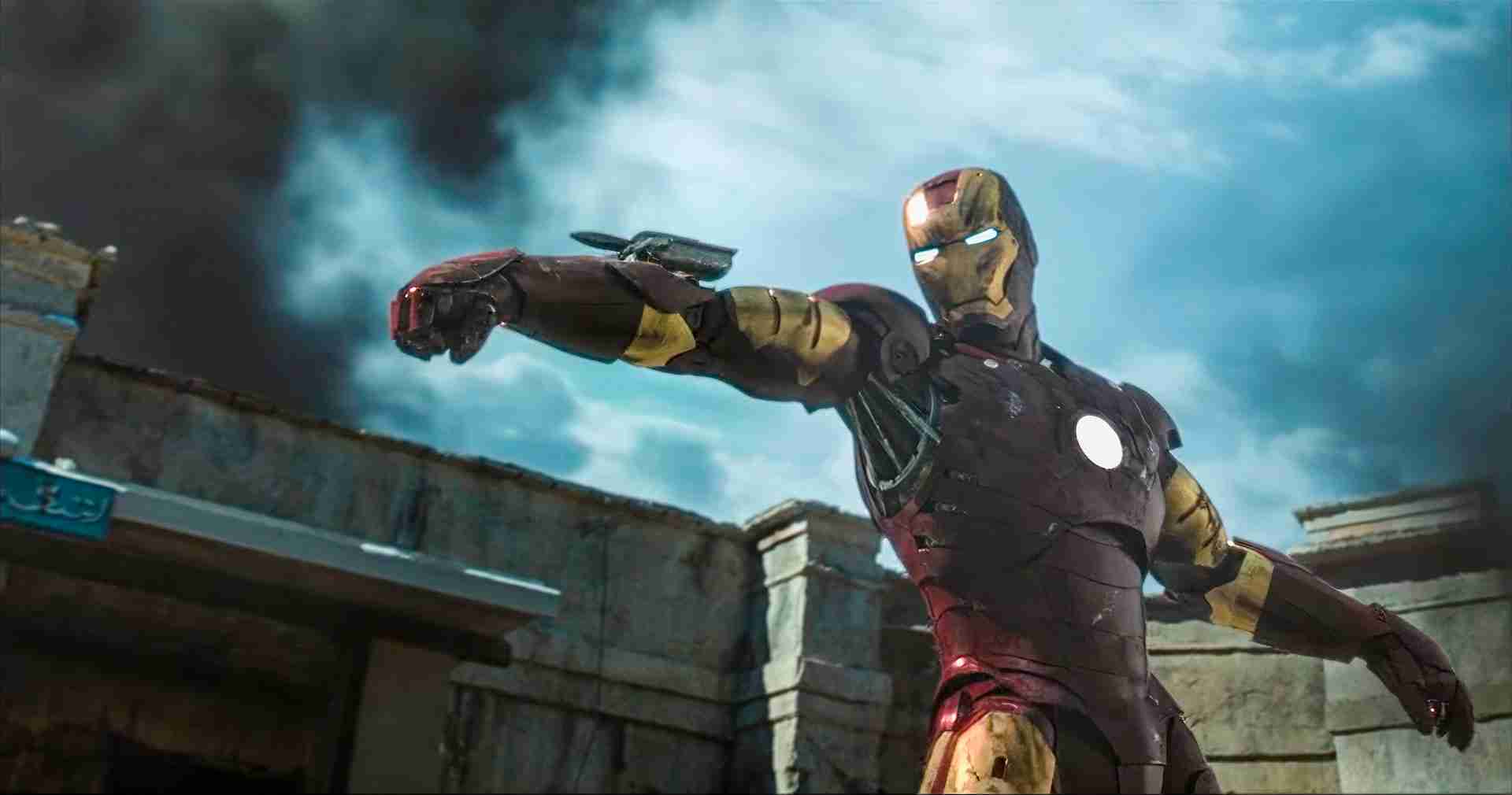

In this Iron Man analysis, we break down the 2008 screenplay that launched the Marvel Cinematic Universe. The film’s defining moment arrives at the end: Tony Stark steps to the podium, discards his prepared statement, and declares, “The truth is… I am Iron Man.” This Iron Man analysis examines how the script subverts the classic secret-identity trope, turning Tony’s ego-driven arc—from arrogant weapons mogul to self-proclaimed hero—into a believable redemption story.
The result is earned, subversive, and endlessly rewatchable, driven by razor-sharp dialogue, precise pacing, and a transformation that feels authentic. The writers (Mark Fergus, Hawk Ostby, Art Marcum, Matt Holloway, with Jon Favreau’s polish) tackled a tough challenge: making a billionaire playboy likable while forcing genuine change. They seeded Tony’s flaws early and paid them off through rising consequences. Behind the scenes, Marvel’s rookie production was messy—Jeff Bridges recalled rehearsing a revised script for weeks, only for Marvel to scrap it on day one, pushing heavy improvisation from Favreau and Robert Downey Jr. That real-time “jamming” infused the dialogue with natural energy—RDJ even ad-libbed the iconic final line, which Feige kept because it perfectly captured Tony’s truth.
Tension & Conflict Mechanics
In-Your-Face Opening Hooks with Irony
The film opens at 1m with Tony’s convoy ambushed by his own Jericho missiles—immediate irony that screams “your hubris bites back.” This isn’t subtle setup; it’s a gut-punch visual thesis for the entire Iron Man analysis.
The Cave: Pressure Cooker for Change
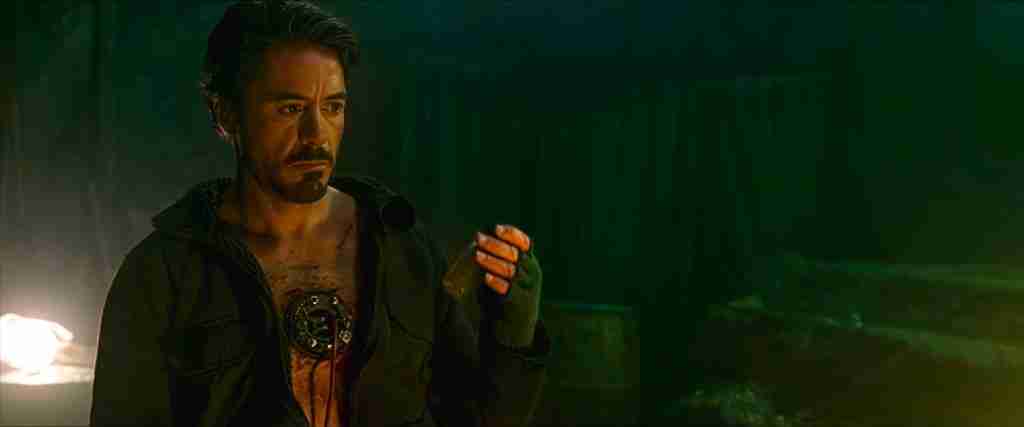
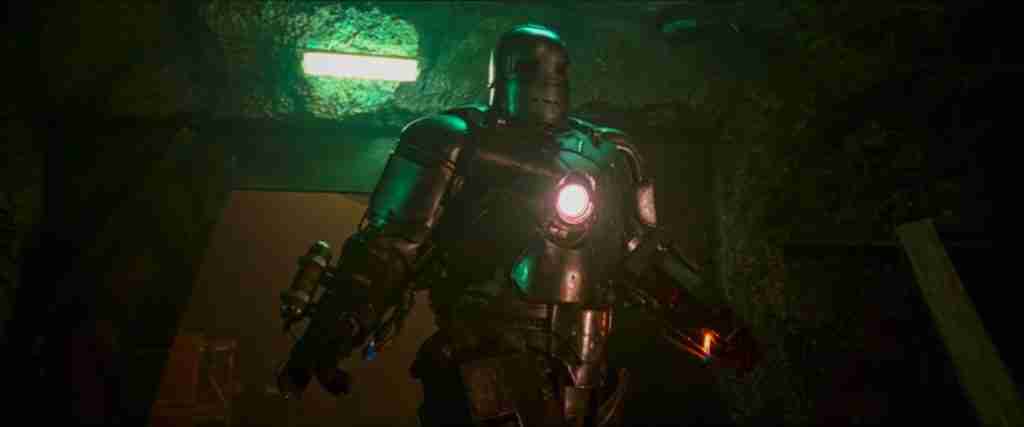
From 16m to 41m, the cave sequence builds tension through brutal constraints: limited time, scarce resources, and Yinsen’s impending death. The writers cleverly use the electromagnet implant (25m) as both literal survival tool and metaphor—Tony literally rebuilds his heart while planning escape. This externalizes internal stakes without heavy exposition.
Writer’s Note: Externalize internal stakes with props that double as metaphors. The arc reactor isn’t just tech—it’s Tony’s evolving heart.
Dialogue as Defense: Verbal Sparring Evolves
Tony’s quips function as emotional armor. Early lines are rapid-fire and long-winded to deflect vulnerability—like the “Merchant of Death” banter (~8-15m): performative sentences that keep people at arm’s length. By the end, his dialogue becomes shorter and more direct when he’s honest, mirroring emotional growth.
The production chaos—Marvel discarding the polished script on day one—amplified this quality. Bridges remembered hours in trailers rewriting lines with Favreau and RDJ—until he reframed it as a “$200 million student film” and embraced the jam session. That freedom made Tony’s voice feel lived-in rather than rigidly scripted.
Writer’s Note: Use sentence length as subtext—long and performative when guarded, short and direct when real. When talent is strong, embrace on-set chaos; improv can elevate a shaky script into something authentic.
Character Breakdown: What Each Teaches Screenwriters
| Character | Arc Summary | Screenwriting Lesson |
|---|---|---|
| Tony Stark | Hubristic dealer ? sacrificial hero | Tie transformation to physical/emotional “heart” change (arc reactor literal/metaphorical). |
| Obadiah Stane | Mentor ? betrayer (non-creator industrialist) | Mirror hero’s early flaws; make antagonist iterate on hero’s inventions for contrast. |
| Pepper Potts | Assistant ? moral compass/love interest | B-story grounds hero’s stakes with subtle, relatable romance. |
| Yinsen | Captive ? sacrificial mentor | Minor role delivers theme via high-impact death words. |
| Rhodey | Rule-follower ? ally | Provide external tension/perspective on hero’s choices. |
The Iron Man Beat Sheet (Save the Cat! Framework)
The script’s rhythm feels effortless—Act I sets up the flawed world, Act II delivers promise-of-premise fun with suit-building and moral awakening, and Act III explodes into high-stakes payoff. Pacing keeps momentum without drag. (Thematic Goal column shows each beat advances the story’s soul: legacy/responsibility/identity.)
Act I – The Fall from Grace
Act I establishes Tony’s pre-transformation world: a charming but morally bankrupt weapons mogul living in total self-absorption. The act moves quickly from setup to disruption, using irony and high-stakes action to force Tony into a new reality. By the end of Act I, his old life is literally destroyed, and a new purpose is born in the cave.
| Beat # | Beat Name | Minute | Synopsis of the Beat | Thematic Goal |
|---|---|---|---|---|
| 1 | Opening Image | 1m | Convoy ambush in Afghanistan—Tony’s own Jericho missiles turn against him and his soldiers. | Hubris meets immediate consequence |
| 2 | Theme Stated | 23m | Yinsen challenges Tony’s defiance and legacy during captivity. | “Don’t waste your life” |
| 4 | Catalyst | 16m | Kidnapping and ultimatum to build a Jericho missile for the Ten Rings. | Forced reckoning begins |
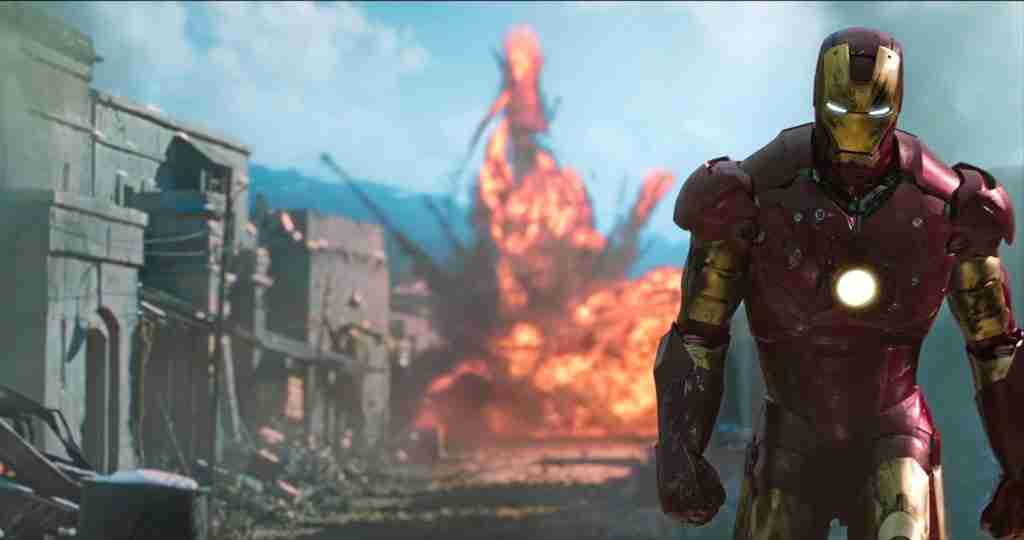
| 6 | Break into Two | 41m | Tony escapes the cave with the Mark I suit and burns the terrorists’ weapons, vowing change. Stark’s emotional pivot from isolation to accountability mirrors Will Hunting’s therapy-driven growth in Good Will Hunting (1997), highlighting genius-level hubris as a barrier to true heroism. | New purpose born |
Act II-A – Invention & Rising Stakes (Fun & Games to Midpoint)
Act II-A is the “promise of the premise” phase: Tony dives into suit-building, testing, and vigilante action in his new world. It’s playful and empowering—pure gadgeteering joy—while planting the seeds of moral conflict. The midpoint shifts everything from personal tinkering to public heroism, raising stakes irreversibly.
| Beat # | Beat Name | Minute | Synopsis of the Beat | Thematic Goal |
|---|---|---|---|---|
| 7 | B Story | 51m | Tony relies on Pepper for support; chest piece swap exposes vulnerability and budding romance. | Reliance on others emerges |
| 8 | Fun & Games | 63m | Suit trials and development: Mark II flight tests, “run before you can walk” innovation. | Tech as empowerment/trial & error |
| 9 | Midpoint | 72m | Gulmira news hits: Tony sees his weapons destroying Yinsen’s village on TV, spurring Mark III debut and active protection. | From profiteer to protector |
Act II-B – Complications & Descent (Bad Guys Close In to Dark Night)
Act II-B tightens the screws: external threats (Stane’s betrayal) and internal doubts converge. Tony’s new life unravels as consequences catch up—betrayal, power struggles, and near-failure push him to rock bottom. This half builds dread and stakes, forcing Tony to confront that genius alone isn’t enough.
| Beat # | Beat Name | Minute | Synopsis of the Beat | Thematic Goal |
|---|---|---|---|---|
| 10 | Bad Guys Close In | 87m | Stane acquires Mark I wreckage, builds Iron Monger; board injunction and escalating threats close in. | Legacy threatened |
| 11 | All Is Lost | 97m | Stane steals the arc reactor, leaving Tony paralyzed and dying—ultimate betrayal and physical low point. | Genius alone fails |
| 12 | Dark Night of the Soul | 100m | Tony struggles to reach the old reactor; legacy feels ruined as he faces dependency and doubt. | Dependency revealed |
Writer’s Pro-Tip: If your hero is a genius, the only way to make them vulnerable is to take away their tools. In Act III, Tony isn’t winning because he has the best tech—he’s winning because he has the most resolve.
Act III – Hero Birth
Act III delivers the full heroic payoff: Tony integrates his new identity, confronts the final antagonist, and publicly claims his role as protector. The act resolves both the physical threat and the thematic arc—responsibility triumphs, legacy is redeemed, and identity is no longer hidden. It ends with a bold declaration that subverts superhero conventions and sets up the MCU.
| Beat # | Beat Name | Minute | Synopsis of the Beat | Thematic Goal |
|---|---|---|---|---|
| 13 | Break into Three | 103m | Tony installs the old arc reactor and suits up for the final confrontation. | Heart (literal) restored |
| 14 | Finale | 107m | Rooftop battle with Iron Monger; Tony exploits suit weaknesses and overloads the reactor to win. | Responsibility triumphs |
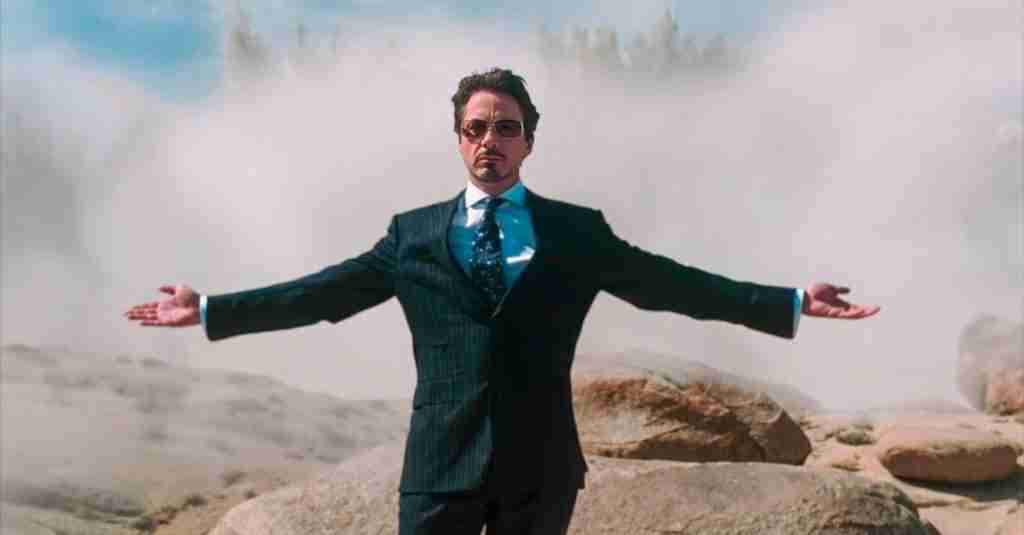
| 15 | Final Image | 117m | Press conference: Tony discards the cover story and publicly declares “The truth is… I am Iron Man.” This public ownership of heroism echoes the dual-identity tensions in Superman (2025), where Clark’s revelation redefines legacy.” | Identity fully integrated |
Iron Man Ending Explained: The Reveal That Changed Everything
The Iron Man ending explained centers on one of the most iconic and subversive moments in superhero cinema: Tony Stark’s public declaration at the press conference. After defeating Obadiah Stane in a rooftop battle (107m), Tony exploits the Mark II suit’s high-altitude freeze weakness to outmaneuver Stane’s bulkier Iron Monger. He lures Stane high, then instructs Pepper to overload the massive Stark Industries arc reactor (113m)—resulting in a massive electrical surge that consumes Stane in the explosion.
Why the Public Reveal Lands So Hard
Tony starts with the rehearsed “bodyguard” lie, then abandons it entirely: “The truth is… I am Iron Man.” He smirks at the cameras as flashes erupt, the screen fades to black, and Nick Fury’s post-credits tease (“Avenger Initiative”) hints at the larger universe. This Iron Man ending explained moment works because the screenplay deliberately builds a classic secret-identity expectation—Tony’s “bodyguard” excuse is the conventional superhero play—only to flip it completely. Stane, the non-creator industrialist who can only reverse-engineer Tony’s inventions, forces the hand. By trafficking weapons, exposing Stark Industries’ double-dealing, and stealing the arc reactor to build his own suit, Stane eliminates any realistic path for secrecy. The villain unwittingly becomes the catalyst for the hero’s full identity integration: no more masks, no compartmentalized ego. Tony publicly owns his flaws and heroism, transforming hubris into transparent responsibility.
Writer’s Note: The best antagonists don’t just oppose the hero—they force the hero’s deepest truth into the open. Stane’s inability to create (only iterate) crumbles against Tony’s innovation + moral resolve.
The All Is Lost Moment: Genius Alone Fails
The emotional and physical low point (97m) sets up the ending’s power. Stane doesn’t merely steal the arc reactor—he rips it from Tony’s chest, leaving him paralyzed and dying on the floor. This is the gut-punch realization: genius and technology alone are insufficient. Tony must depend on the “antique” prototype reactor Pepper preserved—the one she placed in a glass case and labeled “Proof That Tony Stark Has a Heart” (setup at ~51m during the intimate chest-swap scene).
The Emotional Setup & The Utility Payoff (Chekhov’s dual-purpose object):
- 100% emotional weight: Pepper’s gift reveals she already saw Tony’s decency beneath the playboy exterior.
- 100% plot necessity: the old reactor powers his survival, the Mark III suit-up (103m), and ultimately the victory.
Lesson for writers: Plant objects that carry deep character meaning early, then make them solve both emotional and practical problems in the climax.
[Image: Tony Stark collapsed after Stane steals the reactor—dim lighting, blue glow fading from his chest, vulnerability raw.]
[Image: Tony Stark at the press podium, mid-declaration, lights flashing—the iconic “I am Iron Man” moment.]
What the Ending Really Means for the Character and the Genre
This Iron Man ending explained moment isn’t just about defeating a villain—it’s the completion of Tony’s identity arc. He rejects compartmentalization (private hero, public playboy) and chooses full integration. The declaration subverts decades of superhero convention—no more Clark Kent glasses or Bruce Wayne brooding. Tony’s public ownership of “Iron Man” means his flaws (arrogance, recklessness) are now part of his heroism, not hidden from it.
This choice also plants the MCU’s future: transparency invites scrutiny, government pressure, and team dynamics (Avengers). For screenwriters, it’s a masterclass in ending on theme rather than just action—responsibility triumphs, legacy is redeemed, and identity is no longer fractured.
Writer’s Note: When your hero’s final action echoes their opening flaw in a transformed way, the ending feels inevitable yet surprising. Here, Tony’s early performative ego (“Is it better to be feared or respected? Both”) is redeemed through honest, public declaration.
This Iron Man ending explained moment remains one of the most satisfying payoffs in modern blockbuster cinema because it rewards every planted seed—hubris lines, Yinsen’s plea, Pepper’s gift—while launching an entire shared universe with a single line.
Why Iron Man Still Matters for Screenwriters
This Iron Man analysis shows you can have a “jerk” protagonist as long as his struggle is tangible. RDJ’s charisma sells the arc, but the writing (plus heavy improv) plants seeds (hubris lines, Yinsen’s plea, Pepper’s gift) that bloom naturally.
Practical Applications: Subvert tropes by building to an inevitable-yet-surprising reveal. Use constraints (cave, betrayal) to force growth. Bridges’ mindset shift is key: when scripts fall apart, relax and jam with talent—turn chaos into creativity. In your next draft, ask: Does the final choice echo the opening flaw in transformed form? And if production gets messy, remember: sometimes the best lines come from the trailer, not the page.