Deep SHT · Beat Sheet · 2000
Gladiator Beat Sheet
What we do in life echoes in eternity: the structure, minute by minute
Screenplay by
David Franzoni and John Logan and William Nicholson
Story by
David Franzoni
Directed by
Ridley Scott
Year
2000
Running time
149 minutes (theatrical cut)
Protagonist
Maximus Decimus Meridius, general turned slave turned gladiator
149
Minutes, wheat field to wheat field
m.16
Inciting incident: “to go home”
m.70
Midpoint: the wooden sword
2
Climaxes: m.143 external, m.146 internal
The shape of the film
How the Gladiator Beat Sheet Works
This Gladiator beat sheet maps Ridley Scott’s 2000 epic by the minute, from the hand in the wheat at m.2 to the same hand at m.146. The story runs on two engines at once: an external goal, to kill Commodus, and an internal one, to reach his murdered wife and son in the afterlife. Every beat below moves one of those two lines, and the ending pays both of them off three minutes apart. Maximus delivers the film’s thesis on the Germania tree line at m.7: what we do in life echoes in eternity. The structure is that sentence made into 149 minutes.
On this page
- The story at a glance
- Opening image: the wheat field (m.2)
- Act One: Germania to the Praetorian road (m.2-41)
- First half of Act Two: Spain to Zucchabar (m.42-73)
- Second half of Act Two: the Colosseum (m.75-116)
- Act Three: the conspiracy and the duel (m.117-145)
- Closing image: the wheat field (m.146)
- Gladiator ending explained
- What the beat sheet teaches
- Gladiator beat sheet FAQ
The story at a glance
Protagonist: Maximus, thirties, a general in the Roman army who becomes a slave and then a gladiator. Characterization: a warrior who distrusts politicians. External goal: kill Commodus. Internal goal: reunite with his family in the afterlife. Main dramatic conflict: Commodus. Themes: faith in the afterlife, democracy, slavery against freedom, mortality.
Central dramatic question: Will Maximus kill Commodus, give Rome back to the people, and reunite with his family in the afterlife? Ending: Fatally wounded before the fight begins, Maximus kills Commodus in the Colosseum and hands Rome back to the people. He dies and joins his wife and son. Arc: A general with no interest in politics becomes the gladiator who gives Rome back to its citizens.
Beat names below are specific to this film. Structural labels (inciting incident, act turns and decisions, midpoint, climax) are the generic terms, so the pattern transfers to the next script you study.
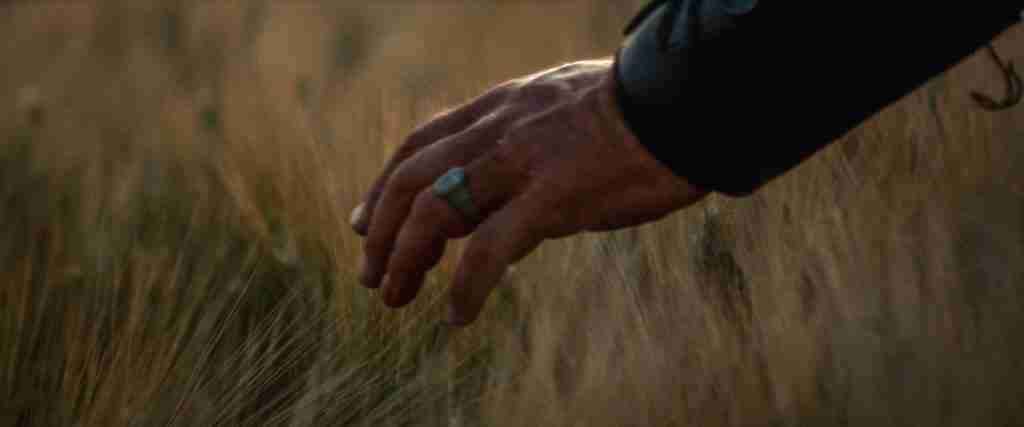
Opening image · m.2
The hand in the wheat
Before a single Roman appears, a soldier’s fingers glide across the tops of a wheat field. We learn later this is Maximus, and later still that the field is the afterlife. The film opens inside its own ending. Everything between this frame and its return at m.146 is a 144-minute detour through hell.
Prologue, also m.2: four title cards place us in the winter of 180 A.D., at the end of Marcus Aurelius’ twelve-year Germanic campaign, one stronghold from peace.
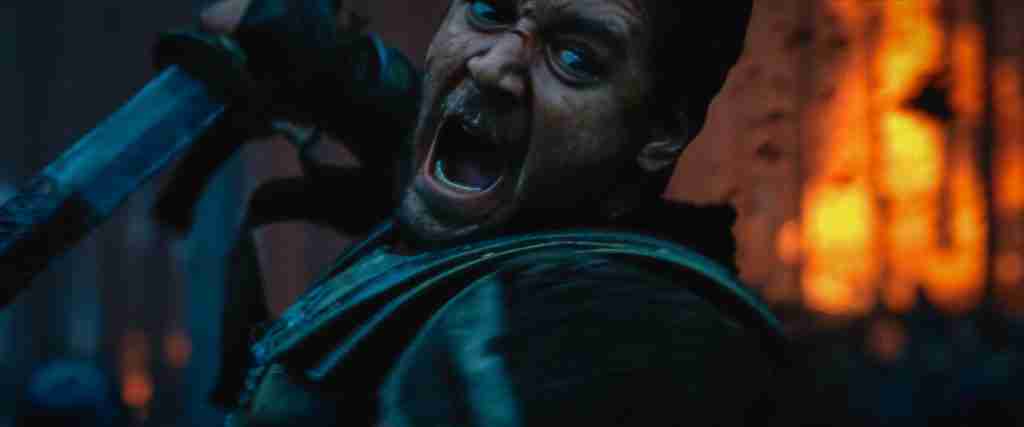
Act One · m.2-41
Germania to the Praetorian Road
Leading the Roman army, Maximus wipes out the last Germanic tribe. As his reward he asks the emperor for one thing: to go home. Marcus Aurelius instead offers him Rome itself, then dies at the hands of his own son. Maximus refuses to kneel to Commodus. Then Quintus arrests him before he can act, tells him his family will die, and sends him off to execution, which Maximus survives by cutting his way out and racing for Spain.
m.3-6 Maximus surveys a scorched battlefield. The legions assemble and wait on a negotiator; a tribal chieftain walks out of the woods carrying the negotiator’s head. Quintus jokes that conquered people should know it. Maximus asks whether Quintus would, then whether he would himself. The line is the whole character: a man who finishes other men’s wars and has never once lost.
m.7 · Theme spoken
Echoes in eternity
In the trees, waiting to flank the tribes, Maximus talks to his cavalry about the harvest three weeks away, and tells them that if they find themselves alone in green fields with the sun on their faces, they are already dead and in Elysium. Then the thesis: what we do in life echoes in eternity. The speech plants the wheat field, the afterlife, and the film’s standard for a life well spent, all in one breath, before the first arrow flies.
m.8-13 The signal goes up. Catapults and archers set the tree line on fire, then Maximus hits the tribes from the rear, and the slaughter is total. Marcus Aurelius watches from a distance. m.14 Commodus and Lucilla ride toward Germania; Commodus expects his dying father to name him Caesar.
m.16 · Inciting incident
“To go home”
After the battle, a proud Marcus Aurelius asks Maximus what reward he wants. Maximus answers that he wants to go home. This is the inciting incident, because it states the want the entire film will deny. Everything Maximus does for the next 130 minutes is an attempt to get home, and the only road there runs through the Colosseum.
m.19-20 Commodus introduces Maximus to Senators Gaius and Falco and laughs at the idea of a republic. Asked whether he stands with emperor or Senate, Maximus answers that a soldier at least gets to look his enemy in the eye. Commodus then asks for his allegiance against the politicians; Maximus says he is going home as soon as the emperor releases him, and the slight lands. m.22 Marcus tells Lucilla he will need her now more than ever. m.25 Father and general speak plainly: Marcus wonders whether history will call him philosopher, warrior, tyrant, or the emperor who gave Rome back her true self.
m.27 · Act One complication
“With all my heart, no”
Marcus asks one last duty: become the protector of Rome after his death, hold power for one purpose only, and hand it back to the people. Maximus refuses with his whole heart. Marcus replies that this is exactly why it must be him. In other words, the offer flips the inciting incident: the reward for going home is now the one job that makes going home impossible, and it makes Maximus the target of a son who has just been passed over.
m.28 Marcus says Commodus must not rule because he is not a moral man, and that Maximus is the son he should have had. m.30 Lucilla catches Maximus leaving the tent; her father favors him, and the subtext says the two of them have history that ended badly. m.31-32 Maximus prays for his family, then tells Cicero they may not be going home after all. m.34 Marcus tells Commodus the throne goes to Maximus and Rome goes back to the Senate. Commodus answers with the four virtues his father once listed and the ones he has instead, and the complaint underneath it: his father never wanted him as a son.
m.36-38 · Act One turn
The embrace and the hand not taken
Marcus blames himself for every one of his son’s faults and reaches for an embrace. Commodus smothers him inside it. Soon after, summoned to the emperor, Maximus finds Marcus dead and Commodus already Caesar. Commodus extends his hand for a pledge of loyalty; Maximus turns and walks away. Lucilla slaps her brother, then kisses the hand Maximus refused. In two minutes the general has lost his emperor, his commission, and his protection, and he does not know it yet.
m.40-41 · Act One decision
Ride until dawn
Maximus sends Cicero to wake the senators; he wants counsel, not a coup. However, Quintus arrests him first and orders the Praetorians to ride until dawn and kill him. Maximus begs Quintus to protect his family, and Quintus tells him his family will meet him in the afterlife. That sentence turns the internal story: for the first time the wheat field is a place he might actually go. The external decision follows in the woods at m.41. He kills his executioners and rides for Spain. Act One ends with a general who has become a fugitive and a father who is already too late.
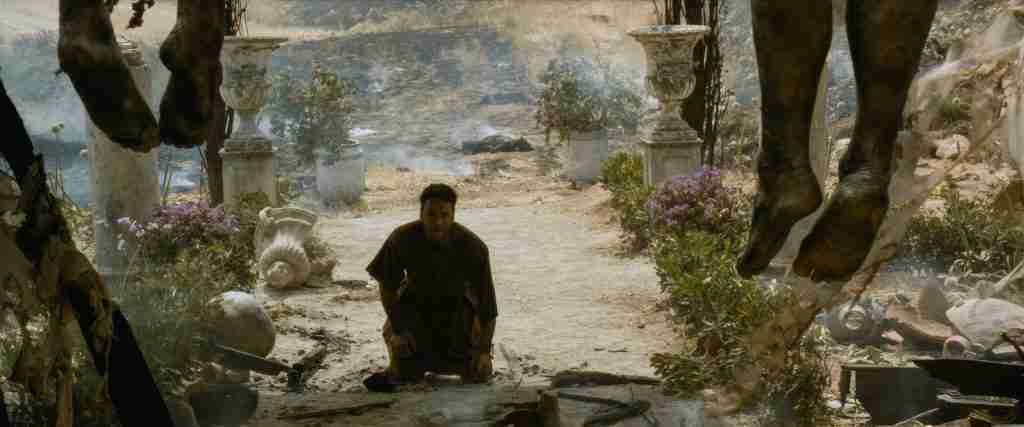
Act Two, first half · m.42-73
Spain to Zucchabar
Maximus reaches his farm too late. Slave traders take him off his family’s graves and sell him to Proximo in the provinces, where he refuses to fight, then fights so well the crowds give him a name and Proximo earns a trip to Rome.
m.42-44 The ride to Spain, intercut with the Praetorians who got there first; one shot shows his son run down by their horses. m.45 Maximus finds his wife and boy crucified and burnt, the servants dead, the fields in ash. m.46 He buries them and collapses on the graves, where slavers find him. m.47-48 In a caged cart he wakes to maggots in his wound; Juba, a Numidian, tells him to leave them, they are cleaning it, and later packs the wound with poultice. The slavers roll into Zucchabar. m.50-51 Proximo buys the lot and tells his new property that they are gladiators now and that he has paid for the privilege of profiting from their deaths.
m.53-54 · Refusal of the new world
Scraping off the SPQR
Maximus will not train. So when Juba asks why he won’t fight, Maximus answers by taking a stone to the legion tattoo on his arm and cutting it out. The general is gone; what’s left has no name. Proximo’s pep talk under the arena at m.55 finishes the thought: all of them are dead men, and the only choice left is how men will remember them.
m.56-59 · First test
Chained to Juba
Shackled to Juba for his first match, Maximus fights, and the two of them win. The beat is small on purpose, because he fights to stay alive, not for a cause, and the film is careful to let him discover that he is good at this new life before it gives him a reason to use it.
m.61-66 Rome. Commodus rides in like a conqueror and is immediately buried in paperwork by senators who doubt him on the Senate floor; Lucilla steps in to promise he will do all that Rome requires. In private he tells her his father’s wars won nothing yet the people loved him anyway, and he intends to earn that love too. Gaius and Gracchus watch him announce 150 days of games. Gracchus understands exactly what Commodus knows: Rome is the mob, the Colosseum is its beating heart, and a man who brings the mob death will be adored for it. m.68 Back in the provinces, Maximus kills five opponents at once, turns on the crowd and asks if they are not entertained, spits, and leaves to chants of “Spaniard.”
m.70 · Midpoint
The rudius
Proximo announces they are going to Rome, to the Colosseum. Then he produces a wooden sword, a rudius, and tells a story: Marcus Aurelius once touched him on the shoulder and he was free. Maximus laughs at the idea that Proximo knew the emperor; Proximo corrects him: he never said he knew him, only that the emperor touched him. Maximus steps close and lowers his voice. He too wants to stand in front of the emperor, as Proximo did. As a result, the midpoint converts survival into a plan. Before m.70 Maximus fights to live; after it he lives to reach Commodus.
m.73 Juba talks about his own wife and daughter and the afterlife where he’ll see them again, though not for many years. Maximus says his family is already there, waiting. One man has a future to protect; the other has nothing left to lose and no reason to fear dying. In short, that difference is the engine of the whole second half.
Act Two, second half · m.75-116
The Colosseum
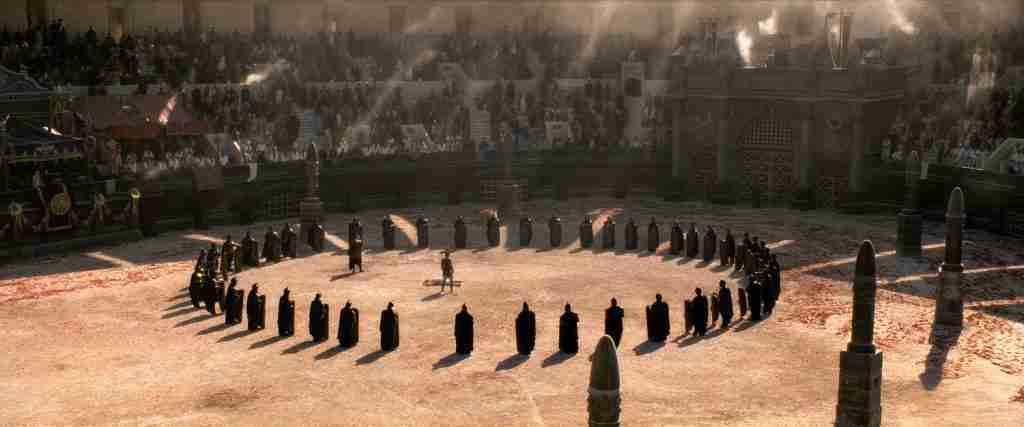
In the Colosseum, Maximus turns a staged massacre into a victory, has to show Commodus his face, and survives only because the mob demands it. Commodus answers by putting him against the one undefeated gladiator in Roman history, and loses again. On his way out of that fight Maximus finds his old servant in the crowd and begins turning a dead man’s popularity into a living army.
m.75 Proximo’s men arrive in Rome. His instruction to Maximus: win the crowd. m.78 Commodus asks Lucilla about dissolving the Senate; she tells him to rest. He asks her to stay the night and she refuses. m.79 Proximo learns that the games have cast his gladiators as the losing side in a re-enactment of Carthage, and he cannot talk his way out of it. m.81 Lucius, Lucilla’s son, comes to meet the Spaniard, and Maximus learns who the boy is. m.84-89 Under the arena Maximus tells his men their only chance is to stay together. Chariots come through the gates; he holds the gladiators in a tight knot at center, overturns a chariot, and the “Carthaginians” win a battle that history says they lost. Commodus, delighted, asks to meet the Spaniard.
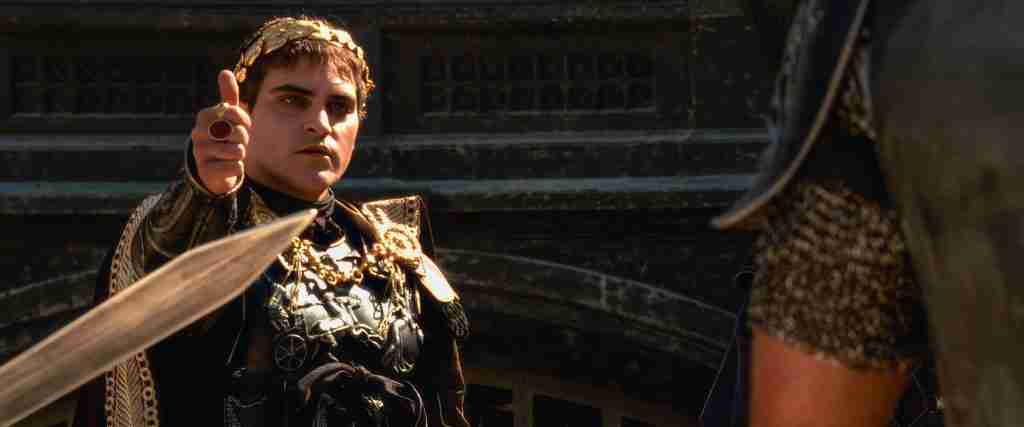
m.91-93 · Reversal
“My name is Maximus Decimus Meridius”
Praetorians ring the gladiators and Commodus walks onto the sand with Lucius to congratulate the Spaniard. Maximus turns his back on him. Ordered to remove his helmet, he does, and gives his full name, his rank, his loyalty to the true emperor, and his status as a husband and father of the murdered. He will have his vengeance, in this life or the next. Commodus goes white. Then the guards raise their weapons and the crowd drowns them out, chanting for him to live. Because he needs the people’s love more than he needs this man dead, Commodus gives the thumbs up. The slave now has something the emperor cannot buy, and both of them know it.
m.96 Commodus tells Lucilla they lied to him in Germania; if they lie, they don’t respect him, and if they don’t respect him, how can they love him. m.98 Lucilla visits Maximus in secret. He suspects her loyalty; she lives in fear for her son. She offers to connect him with the senators and he refuses, a slave who could die any afternoon can’t change Rome. m.101 Dinner with Juba and Hagen. Maximus fears poison; Hagen eats first and fakes dying. Juba’s read is the sharpest line in the act: Commodus has to kill Maximus’ name before he can kill the man.
m.103-110 · The antagonist’s counterattack
Maximus the merciful
Day 64 of the games. Commodus brings Tigris of Gaul out of retirement, the only undefeated gladiator in Roman history, to do what the Praetorians could not. The crowd greets Maximus like one of their own; Lucilla says the mob will forget him in a month, and Commodus says it will be much sooner, it has been arranged. As the fight begins, handlers release chained tigers onto the sand. Maximus kills one, ends up pinned beneath it, grabs Tigris’ own hatchet from the ground, and finishes the match with his opponent flat on his back. The crowd wants the kill; Commodus signals for it; Maximus walks away, and the crowd christens him Maximus the Merciful. On the arena floor afterward Commodus describes, in detail, what his men did to Maximus’ son and wife. Maximus answers only that the time for honoring himself will soon be over.
m.111 · Act Two turn
Cicero’s pouch
Leaving the arena, Maximus spots Cicero in the crowd. He tells his old servant to let the army know he is alive. Cicero passes him a leather pouch. The turn is quiet, yet it changes everything: a man who had no future and no allies now has an army at Ostia and a reason to survive long enough to use it. The fight for vengeance becomes a fight for Rome. At m.112 he opens the pouch in the ludus: the wooden figurines of his wife and son. Juba sits with him.
m.114 Commodus rages at the crowd’s loyalty and plots with Falco: his men will follow every senator. Falco tells a story about a sea snake that lies still as if wounded and lets its enemies take little bites. Lucilla overhears.
m.116 · Act Two decision
The beggar’s message
On Maximus’ orders, Cicero dresses as a beggar and tells Lucilla that Maximus will meet her senator. In other words, the general who distrusted politics at m.19 has just gone into politics. Act Two ends with the choice he refused at m.98: he will try to change Rome after all.
Act Three · m.117-145
The Conspiracy and the Duel
Lucilla and Gracchus buy Maximus his freedom so he can reach his legions, and Commodus pulls the plan out of his sister by threatening her son. The escape fails at the city gates, Cicero dies, and the Praetorians drag Maximus under the Colosseum, where Commodus stabs him before their duel and then loses it anyway.
m.117-126 · The plan
Two days
Lucilla brings Gracchus to the ludus. Maximus asks him to buy his freedom so he can collect his men and take the city. Gracchus wants to know why a man with all of Rome would hand it back; Maximus answers that it was a dying man’s last wish, he will kill Commodus and leave Rome’s fate to the Senate. Finally, Gracchus gives him two days. Maximus asks Proximo to sell, Proximo refuses, and Maximus reminds him that Commodus killed the man who freed him. Soldiers arrest Gracchus at m.120, and at m.125 Lucilla tells Maximus she has bought him herself and set a rendezvous with Cicero. He says she risks too much; she says she has much to pay for, and that she loves him. At m.126 she kisses him.
m.127-130 · The plan exposed
Busy little bee
Commodus wakes to Lucius play-fighting and announcing that he is Maximus, savior of Rome. Asked who told him that, the boy whispers in his uncle’s ear. That night Lucilla finds her son’s bed empty and finds him with Commodus, who is telling a bedtime story about an emperor betrayed by his own blood, and a busy little bee who told him everything once he threatened the people she loved. Meanwhile, Lucilla’s face breaks. At m.130 an assassin slips a coral snake into Senator Gaius’ bed. The conspiracy is already dead before Maximus has left the ludus, and the audience knows it before he does.
m.131-134 · Point of no return, then the lowest point
Proximo’s keys, Cicero’s rope
Praetorians order Proximo to open the ludus. Instead, he walks past them and hands Maximus the keys. The gladiators agree to hold the gate so he can run, and at m.132 Maximus is through it, sword and shield in hand, with no way back to the slave he was. Meanwhile, Proximo and Hagen die behind him.
At the city gates he finds Cicero on horseback with a rope at his neck; Cicero screams a warning, the horse bolts, and he hangs. Maximus tries to cut him down and Praetorian archers put arrows in Cicero’s chest. Praetorians close in from every side. The army at Ostia, the senator, the trainer, the servant: every ally the second act built is dead or in chains within three minutes. Falco reports to Commodus that the plan worked; Commodus tells Lucilla her son lives only as long as she pleases him, and that she will give him an heir of pure blood.
m.136-139 · The antagonist’s final move
The embrace, repeated
The crowd above is chanting his name while Maximus hangs in chains beneath the floor. Commodus comes down to narrate the story back to him: general to slave, slave to gladiator, gladiator who defied an emperor, and now the people want to see how it ends. Then he proposes to fight Maximus himself. Maximus says Commodus has been afraid all his life, then quotes a man who once said that death smiles at us all and all a man can do is smile back. Commodus wonders whether that friend smiled at his own death; Maximus tells him he must know, it was his father. Then Commodus embraces him, as his father once embraced Commodus, and drives a knife into his back inside the hug. He orders Quintus to strap on the armor and hide the wound. The film’s two murders have the same choreography.
m.140-143 · Climax (external)
Commodus’ own hand
The two men rise through the arena floor on the same lift. Inside a ring of Praetorians they fight, and at m.142 Maximus disarms Commodus but is too weak to finish him. Commodus demands a sword from Quintus; Quintus refuses and orders the guards to sheath theirs. Maximus drops his own blade and drifts, for a few seconds, into the wheat. Commodus pulls a hidden dagger and lunges. Maximus comes back, catches the hand holding it, and turns it into Commodus’ throat. Thus the emperor dies in the sand. The external story closes at m.143, and Maximus is still on his feet with nothing left to do but go home.
m.144-145 He drifts again, this time walking toward the door of his farmhouse. Quintus’ voice pulls him back. With what strength he has, Maximus gives his last orders: free my men, reinstate Gracchus, there was once a dream that was Rome and it shall be realized, these are the wishes of Marcus Aurelius. Quintus has the prisoners released. The external climax killed a tyrant; this beat is the one that keeps the promise from m.27.
Closing image · Climax (internal) · m.146
The same hand, the same wheat
Lucilla reaches him as he falls. He tells her Lucius is safe; she tells him to go to them, he is home. He dies. Then the film cuts to the frame it opened on: fingers brushing the tops of wheat, then the gate, then his wife and his son coming to meet him. The internal goal stated at m.16 and sharpened at m.40 finds its answer here. Two climaxes, three minutes apart, and the second is the one the film was always about.
Epilogue · m.147-149
Gladiator Ending Explained
Maximus kills Commodus at m.143 and dies of the wound Commodus gave him beneath the arena. Before he goes he hands the city back: he frees his men, reinstates Gracchus, and speaks Marcus Aurelius’ dream of a Rome returned to its people aloud as an order. Lucilla asks the Senate whether Rome is worth one good man’s life and tells them to honor a soldier of Rome. Gracchus helps carry the body out and leaves Commodus in the sand. In the empty Colosseum, Juba buries the figurines of Maximus’ wife and son and tells them they are free now, and that he will see them again, but not yet.
The circle closes
First, the closing image is the opening image. The film begins with a hand in the wheat at m.2 and ends with the same hand at m.146, which means the story we watched was the road between a man and a place he was already shown. The arc runs from empty to full: a general who loses family, rank, and freedom, and a dead man who gets all three back at once. Juba’s burial at m.148 is the epilogue’s job: it moves the wheat field out of Maximus’ head and into the arena’s sand, so the afterlife and Rome share the same ground.
Why Maximus had to die
Earlier drafts let Maximus survive. The version Scott and his writers shot kills him, and the beat sheet shows why that choice is structural rather than sentimental. The internal goal set at m.16 and sharpened at m.40 is a reunion that only death can deliver. A surviving Maximus would win the external story and lose the internal one, and the film would end as a revenge picture with a vacancy on the throne. A dead Maximus, however, wins both. His last act is the thing he promised at m.27 and refused at m.98, and the wheat field is the reward he named on the tree line at m.7.
What we do in life echoes in eternity.
Maximus to the Felix cavalry, Germania, m.7
Pattern recognition
What the Gladiator Beat Sheet Teaches
Give the hero two goals that can only both be met by dying
The external goal (kill Commodus) and the internal goal (reach his family) point in opposite directions for most of the film: one needs him alive, the other needs him dead. Therefore, the script resolves the contradiction by sequencing them three minutes apart. Every beat from m.40 onward moves at least one of the two lines, which is why a two-and-a-half-hour epic never idles.
Make the midpoint a change of purpose, not a change of luck
Maximus wins nothing at m.70; instead, Proximo tells a story about a wooden sword, and Maximus decides he wants to stand in front of the emperor. The scene is small, yet the film pivots on it: before the rudius he fights to survive, after it survival is a means. A midpoint that changes what the hero wants outlasts one that only changes what he has.
Let the crowd be a character with a vote
Gracchus names the rule at m.66: Rome is the mob. The film then lets the mob cast three decisive votes, at m.92 (live), m.108 (mercy), and m.136 (his name through the floor). Commodus bought the crowd with 150 days of games and the crowd was never for sale; that is the political argument, and the beat sheet carries it without a single speech from a senator.
Rhyme the murders
Commodus kills his father inside an embrace at m.36 and stabs Maximus inside an embrace at m.139. The second killing is the first one’s echo, and above all it is what finally earns Quintus’ refusal at m.142. When a villain’s defining act repeats, the audience experiences the climax as a verdict instead of a fight.
Questions readers bring here
Gladiator Beat Sheet FAQ
The speech and the structure
What does “what we do in life echoes in eternity” mean in Gladiator?
Maximus says it to his cavalry at m.7, right after telling them that a man who finds himself alone in green fields is already dead and in Elysium. The line sets the film’s standard: what outlasts a life is the measure of it. Structurally, it is the theme spoken aloud, and the ending answers it literally. Maximus’ last act restores the Republic and he walks into the green fields he described.
What is the midpoint of Gladiator?
Minute 70. Proximo tells Maximus they are going to Rome and shows him the rudius, the wooden sword Marcus Aurelius gave him for his freedom. Maximus says he too wants to stand before the emperor. As a result, the goal changes from surviving the arena to using it.
Where the acts turn
What is the inciting incident of Gladiator?
Minute 16, after the Germania battle, when Marcus Aurelius asks Maximus what reward he wants and Maximus says he wants to go home. The film then spends 130 minutes refusing him that, and grants it only in death. Some readers place the inciting incident later, at the offer of Rome (m.27) or the murder of Marcus (m.36); on this beat sheet those are the Act One complication and the Act One turn.
Does Gladiator follow the Save the Cat beat sheet?
Loosely. The 15-beat template fits in broad strokes (an opening and final image that mirror, a theme stated early, a midpoint shift, a dark night beneath the arena), but the film’s second act turns on two events rather than one (the reveal at m.91 and Cicero’s pouch at m.111), and its climax is split into an external kill at m.143 and an internal reunion at m.146. The generic act-and-turn labels used here hold the film’s actual shape better than any single branded template.
Places, names, and the ending
Where was Zucchabar, and how did Maximus get there?
In the film, Zucchabar is a Roman province in North Africa where the slavers sell Maximus to Proximo (m.48-50). Historically, Zucchabar was a town in the province of Mauretania Caesariensis, in what is now northern Algeria. In practice, Maximus gets there the way the second act needs him to: slavers find him unconscious on his family’s graves in Spain at m.46 and cart him across the Mediterranean.
What does the name Maximus Decimus Meridius mean?
It is a constructed Roman name: Maximus (“greatest”), Decimus (a common given name meaning “tenth”), and Meridius (“of the south” or “of midday”). The character is fictional, assembled from several real figures of the period. In the script, moreover, the name matters as a weapon: at m.91 Maximus says it to Commodus in front of 50,000 people, and from then on, as Juba says, the emperor has to kill the name before he can kill the man.
The ending
How does Commodus die in Gladiator?
Maximus kills him at m.143 with Commodus’ own hidden dagger, forcing the emperor’s hand and the blade into his throat during their duel in the Colosseum. Commodus had already stabbed Maximus in the back beneath the arena at m.139, so the fight is between a dying man and the man who is killing him.
How does Gladiator end?
Maximus kills Commodus, orders his men freed and Gracchus reinstated, and dies in the arena. He reunites with his wife and son in the wheat field. Gracchus and the gladiators carry his body out; Juba buries the figurines of Maximus’ family in the sand and promises to see them again, but not yet.
Go deeper
More on Gladiator and the Series
Screenplay analysis
Gladiator Analysis: The Two-Climax Structure
Theme, character, and why a revenge story had to end in sacrifice.
Deep SHT hub
A detective who solves the case completely, and what solving it costs.




While you do a really good job at everything else in your analysis, I think you really need to get a better handle on what an inciting incident is. What is it about…
“After the battle has ended, Marcus Aurelius approaches Maximus, proud of his victory. He asks Maximus what reward he wishes to have and Maximus relies, “to go home.”
… that incites Maximus to do anything? It doesn’t.
Inciting Incident is when Maximus learns that Commodus has become Emperor.
Act 2 starts when Maximus is being carried away by the slave caravan.
Analysis in screenwriting is subjective. What is more important (you’ll find these in my latest beat sheets) are the sequences. Beats are just another way of saying “these types of scenes happen here.” This is very helpful for folks trying to learn the craft — I know it sure was for me. Notice the intervals are almost always the same. Back to the Future is a great example. It’s not a coincidence that failing the band audition happens right around minute 10, but I wouldn’t label it an inciting incident. The point is, if you were watching it for the first time, it would sure feel like it.
Now, with Gladiator, the disruption to his ordinary world is what he believes was his final victory. Really, it’s all lumped together. I like citing the scene with Marcus Aurelius because it’s like a climax of the battle sequence, anchored to all the major beats that follow and the climax (giving back Rome to the people by killing Commodus, as MA wished).
Hi William, are you going all “Save the Cat” on us? :) I find STC a very valuable tool, but it isn’t the bible. As well, a plot point doesn’t happen because of page count or how many minutes into a movie you are… it’s a specific point in a movie that accomplishes a specific purpose.
For instance, where you say the inciting incident at Gladiator occurs… if Commodus hadn’t slain his father, there is no movie. End of story. Maybe the emperor would let Maximus return home, maybe not… we don’t know. We will never know because Commodus killed his father, thus inciting the entire premise of the story.
Personally, I would push folks in the direction of Story Maps over STC any day of the week. And I firmly believe in form over formula; any of their rules are meant to be broken. You can find examples of this in a good amount of my analysis. If you feel that the Inciting Incident of Gladiator happens nearly 40 minutes into the film, once again, you’re confusing the II w/ a plot point (the real 1st plot point is when Maximus discovers MA is dead).
Ok. You know what… you’re right. Gladiator isn’t about Maximus wanting to kill Commodus; it’s about him wanting to go home. Although it is very much the action that dominates the movie, it’s the internal goal that is at the heart of this one.
My VERY BAD and I apologize; however, this is not the case on the Die Hard analysis.
No need to apologize — everyone sees things different. This is a great movie; makes me want to tackle it for an upcoming podcast.