

Thematic Blueprint for a Broken Fixer
Michael Clayton isn’t just a legal thriller; it’s a meticulously constructed character study disguised as one. The film’s entire thematic architecture hinges on two seemingly minor elements: a children’s fantasy game, Realm & Conquest (R&C), and a brief, silent encounter with three horses in a field. If you need the full structural roadmap, see our definitive Michael Clayton Beat Sheet here.
Crucially, the R&C narrative is not a traditional subplot; it is a thematic mirror and metaphor. For example, this motif provides the strategic map for Michael’s entire character arc. Furthermore, the R&C functions as the moral oracle of the film, guiding the cynical fixer from professional complicity to total redemption.
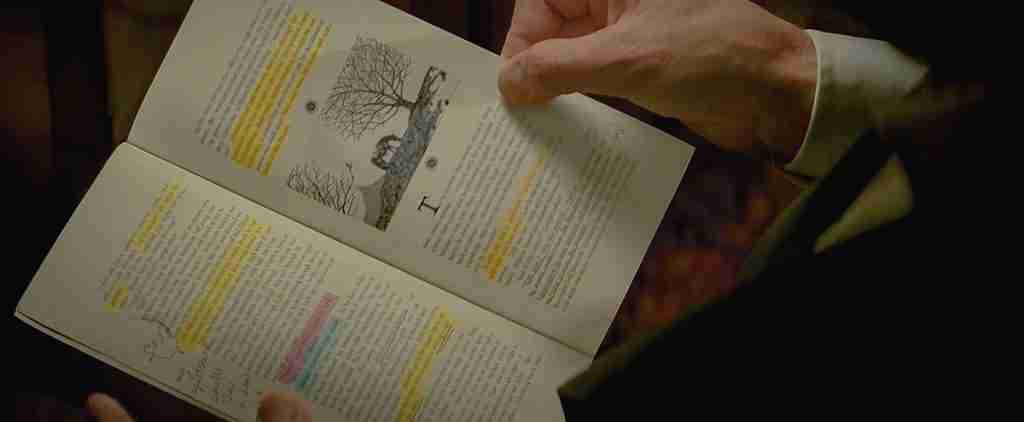
The Realm & Conquest Setup: The Prophetic Language
The Realm & Conquest motif establishes the moral and strategic roadmap for Michael’s final act, creating dramatic irony that hangs over the first two acts. The full 15-Point structural breakdown is available in the Beat Sheet.
- The World of No Alliances: Initially, Michael’s son, Henry, describes the R&C world as one of deserters forced into hiding. He states that “nobody has any alliances” and it is “everybody for themselves.” Michael, who is cynical and financially indebted, dismisses this concept as a child’s fantasy, ultimately failing to see the metaphor for his own life.
- The Prophetic Madness: Conversely, Arthur Edens seizes the concept. While Michael sees the R&C motif as trivial, Arthur—in his manic state—insists his “madness” is actually a sign of “something larger than themselves.” This is a genuine moral quest explained by the R&C chapter “Summons to Conquest.” Arthur, the supposed “crazy” one, attempts to follow this path, though his journey is tragically cut short because he couldn’t “finish the game.”
- The Irony of Dismissal: Michael, the jaded fixer, attempts to manage Arthur’s breakdown by dismissing the prophecy as purely pathological. Thus, he sedates Arthur with bipolar meds. Consequently, Michael’s entire worldview requires Arthur’s moral truth—that the corporate evil is real—to be false.
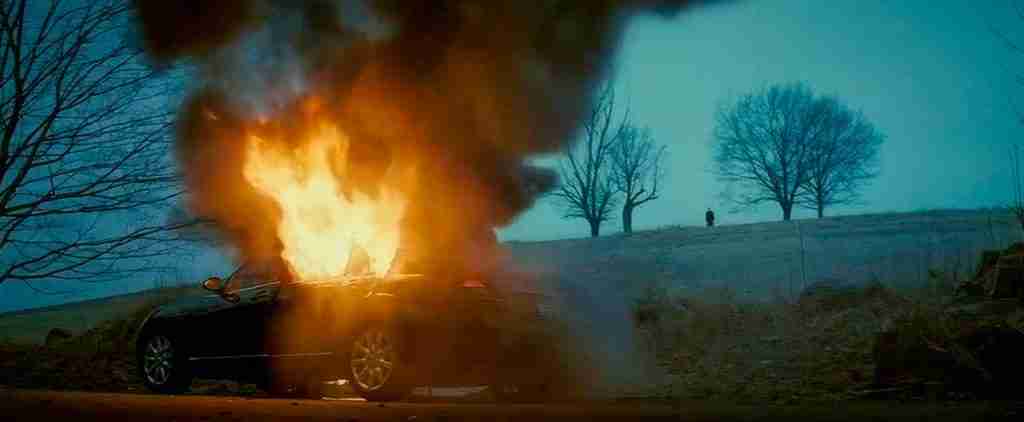
The Horses: The Structural Frame and Symbolic Death
The appearance of the horses (m. 14, m. 103) is the point where the thematic metaphor of R&C collides violently with Michael’s reality, forcing his irreversible transformation.
The Thematic Frame and Spiritual Low Point
The horses serve as a powerful structural frame for the film. They are shown once in the non-chronological opening (m. 14) and again just before the explosion (m. 103). This technique underscores the gravity of the game Michael is unknowingly playing and signals the approach of his greatest crisis.
First, Michael accepts the dirty money from his firm—the price for his renewed loyalty and complicity in covering up the U/North crisis. Consequently, he is profoundly demoralized, knowing he chose his career and debt over the moral one. He drives aimlessly until he sees the horses, visually echoing an illustration he saw in Arthur’s R&C book. This moment captures his spiritual lowest point.
The Irony of Irrationality and Survival
Michael’s choice to stop his car and walk toward the horses is a highly irrational, emotional act for a corporate lawyer. However, it proves to be the start of the sane path. It is an act of vulnerability that contrasts sharply with the calculation of the corporate world.
Michael’s vulnerable, uncalculated action pushes him toward redemption, yet his survival remains a matter of luck. Arthur’s tragedy lies in his arrogance: he believed his intellect and stature (“the last place you wanna see me is in court”) would serve as sufficient armor in the game. Indeed, it was Arthur’s failure to shed his intellectual arrogance, not his lack of moral conviction, that led to his death. Michael’s uncalculated vulnerability saves him where Arthur’s sharpest calculation failed.
Symbolic Self-Immolation
Emerging from the shock, Michael throws his Rolex, ID, and personal items into the flaming wreck. This is a profound act of symbolic self-immolation, signifying the death of the “old Michael”—the cynical fixer—and the birth of the lone warrior who will adopt the “no alliances” strategy to wage war against U-North and the firm.
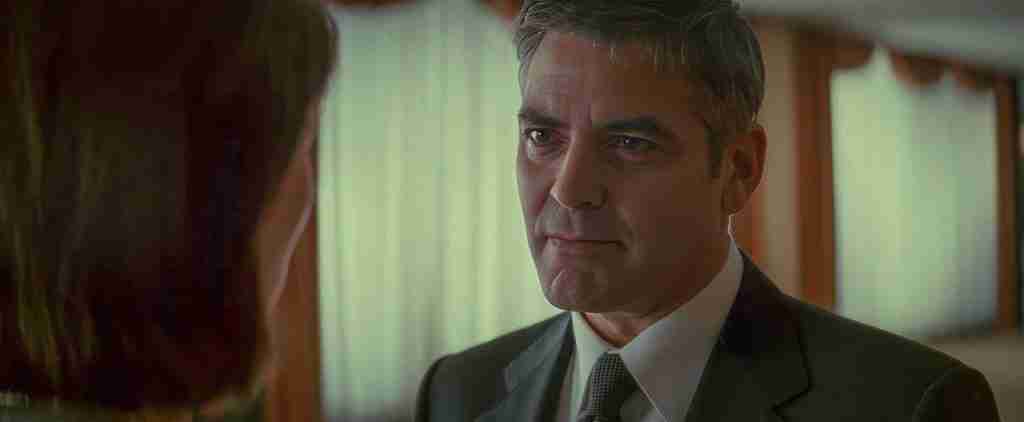
The Final Prophecy: Becoming Shiva
Michael’s journey is complete when he fully claims the role Arthur initiated. He transforms from a janitor who covers up destruction into the necessary instrument of destruction itself.
In the final climax, Michael, having destroyed his own former identity, confronts Karen Crowder. When challenged about his authority, Michael claims the destructive, cleansing role foretold in Act I: “I’m Shiva the God of Death.”
This final line resolves the film’s greatest irony. Arthur’s call to moral clarity, once dismissed as a symptom of his illness, is fully accepted by Michael. Ultimately, Michael proves that Arthur was not just mad; he was prophetic. Michael is no longer the “janitor,” cleaning up messes; rather, he is the force of necessary destruction, finally confirming Arthur’s frantic scribble on the wall: “make believe it’s not just madness.”
The Final Act of Appropriation:
DON JEFFRIES
Who are you?
MICHAEL
I’m Shiva the God of Death.
For the complete scene-by-scene structural guide, check out our Michael Clayton Beat Sheet.

I love how you highlighted the horses scene as the key to Michael’s redemption. It’s such a subtle moment, yet it encapsulates his whole journey. The connection to the Realm & Conquest game adds an interesting layer to the film’s themes, showing how even the smallest moments can hold immense symbolic weight.
Fantastic observation! You hit on a key point: the subtlety of that scene is its strength. It shows how the smallest moments can hold immense symbolic weight in great screenwriting. Thanks for reading and for the great comment!
Thank you for this insight. I thought he stopped to see the 3 horses as a representation of him and his brothers. A longing when they were together, perhaps younger and unbridled.
Thanks for reading and for this thoughtful take!
I love your interpretation—the three horses as Michael and his brothers, longing for that freer, younger time together. It really captures his regret and disconnection beautifully.
The piece focuses more on the horses as a symbol of freedom/vulnerability (and the direct tie to the “Realm & Conquest” book that saves his life), but your family angle adds such a poignant layer. Great insight—thanks for sharing!