William Robert Rich

William Robert Rich

William Robert Rich is the editor of ScreenplayHowTo.com (SHT) and co-author of Story Maps: The Films of Christopher Nolan. Based in Brooklyn, New York, William's unique approach to narrative analysis fuses his background as a former teacher and a software engineer. He realized that the efficient logic of code and the clear pedagogy of the classroom could be applied directly to screenwriting. This data-driven approach allows him to rigorously analyze a screenplay's logic and identify structural inconsistencies, forming the foundation of all the high-authority beat sheets and structural insights featured on SHT. He makes the engineering of a great story easy to learn.

No Country for Old Men Ending Explained: The Coin, the Dream, and Why It All Matters
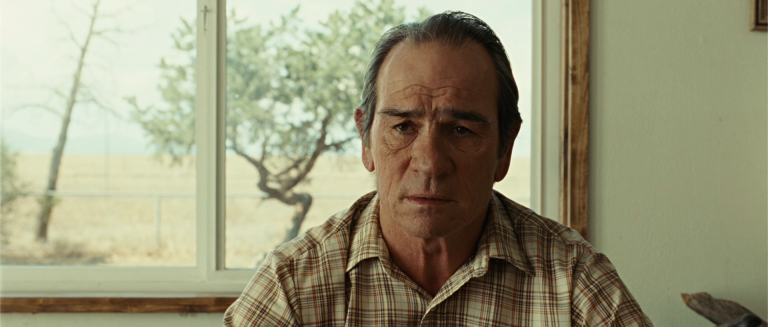
Sheriff Ed Tom Bell in the final scene of No Country for Old Men, explained — Tommy Lee Jones delivering the breakfast-table monologue

This No Country for Old Men ending explained breakdown works through every piece of the Coens' refusal of catharsis: why Carla Jean's coin toss refusal changes the novel in the most important way, what Chigurh's car accident undoes about his worldview, why the boot-check on Carla Jean's porch proves she's dead, what Moss never understood at the Rio Grande bridge, why Bell's fire-in-the-horn dream was never visualized, and why the film refuses to tell us who killed Llewelyn at the Desert Sands. The ending isn't a puzzle with a solution — it's a set of questions the film requires you to answer yourself.
Spider-Man: Into the Spider-Verse Analysis: Five Origin Stories, One Question

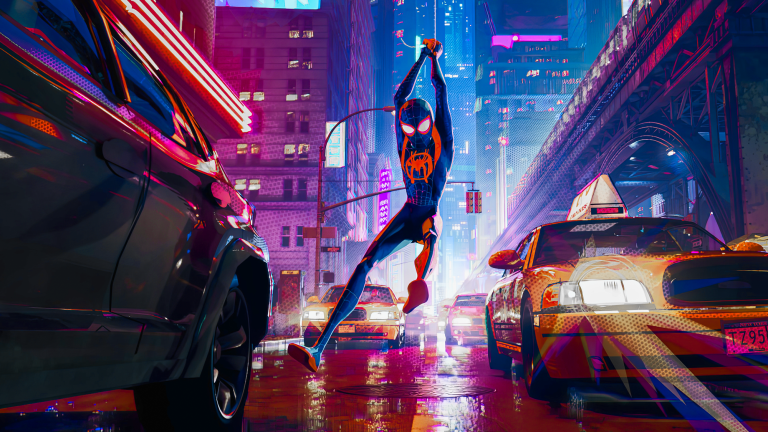
Miles Morales as Spider-Man swinging through a neon-lit Manhattan street between yellow cabs in Spider-Man: Into the Spider-Verse

Spider-Man: Into the Spider-Verse (2018) rewrites the superhero origin story by running five of them in parallel. Phil Lord and Rodney Rothman's screenplay — ranked #71 on the WGA's 101 Greatest Screenplays of the 21st Century — asks one question underneath all the multiversal noise: is heroism something you inherit, or something you choose? This analysis works from the December 2018 production draft and the directors' commentary — every quote page-cited or timestamped — to map the structural parallelism, the leap-of-faith keystone, and the full beat sheet.

One Battle After Another vs Terminator 2: Same DNA, Opposite Conclusions

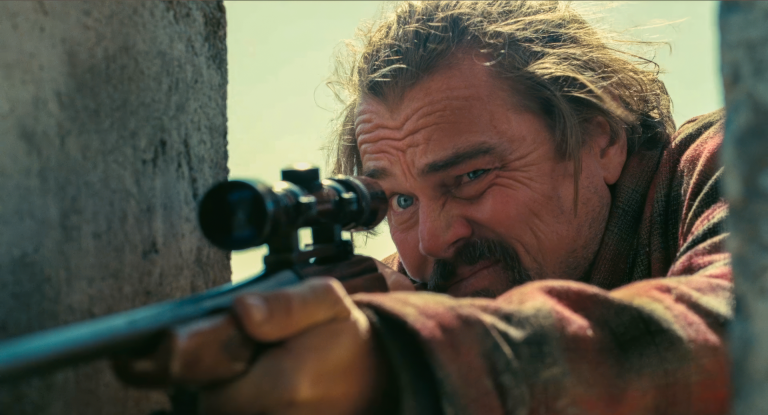
Bob Ferguson (Leonardo DiCaprio) aims through a rifle scope in One Battle After Another — the exhausted revolutionary at the center of the One Battle After Another Terminator 2 comparison

Leonardo DiCaprio told Paul Thomas Anderson to his face: there are themes of Terminator 2 in this. The comparison isn't a viral take — it came from the filmmakers. The surface parallels are real: an obsessively suspicious revolutionary protecting a child, a relentless pursuer, a chase architecture built on survival. But One Battle After Another and T2 arrive at opposite conclusions about fate, agency, and what resistance costs. One says the loop can be broken. The other says the loop is the condition. Here's what the difference means — and why it traces back to Joseph Campbell, George Lucas, and the oldest story in the world.

The Banshees of Inisherin Ending Explained

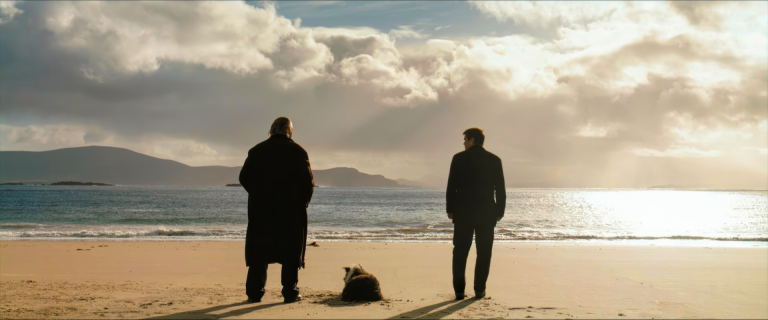
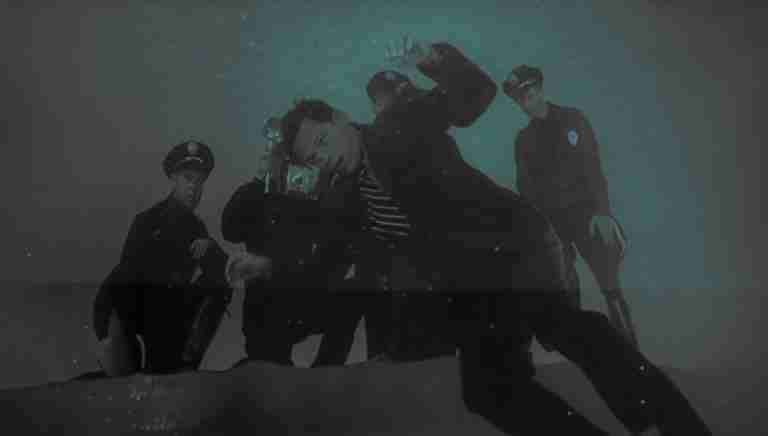
Colm and Pádraic stand apart on the beach with Colm's dog between them in the final scene of The Banshees of Inisherin, the Irish mainland visible across the water

Martin McDonagh didn't make a film about a petty dispute. The Banshees of Inisherin is about what happens when people — and nations — can't let go, and what gets destroyed in the space between pride and peace. Colm wants his life to mean something beyond pub talk. Pádraic can't accept being left behind. A beloved little donkey dies on a severed finger. A house burns with a man still inside. And on a beach at the end of everything, two former friends exchange eight lines that contain the whole film.

Angel Heart Analysis: I Know Who I Am! The Faustian Reveal

Angel Heart analysis and beat sheet — Robert De Niro as Louis Cyphre with silver-topped cane looms behind Mickey Rourke as Harry Angel, with the ceiling fan death motif visible, from the 1987 film poster

Alan Parker's 1987 Angel Heart fuses hardboiled detective conventions with the ancient terror of the Faustian bargain. This Angel Heart analysis and beat sheet chronicles Harry Angel's missing-person case as it descends through occult New Orleans into the depths of his own damned soul — a brutal deconstruction of the detective archetype, where the investigator discovers he is the monster he seeks. Drawing on Parker's audio commentary, production diary, and primary interviews, this is the most detailed screenplay breakdown of the film available anywhere.

Who is Noah Cross Based On? The Robber Baron Connection

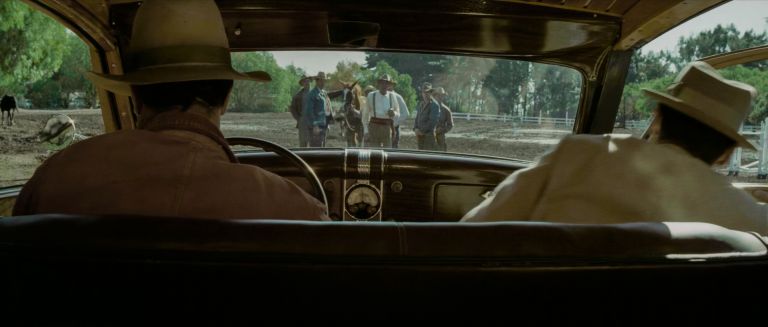
Jake Gittes's point of view through the windshield arriving at Noah Cross's Catalina ranch — Cross flanked by riders in western hats beside a horse in Chinatown 1974

Noah Cross is roughly seventy years old in 1937. He came of age with Rockefeller, Stanford, Frick, and Morgan — the men who conquered the American West by controlling its resources, exploiting labor, and buying the law. Costume designer Anthea Sylbert dressed him accordingly: embroidered guayabera, grey suspenders, red sash, silverbelly hat. The costume of a plantation owner. Jake Gittes sees all of it through his windshield arriving at the ranch and doesn't understand what he's looking at. This article breaks down the robber baron DNA encoded in every piece of Noah Cross's wardrobe.

How Old Is Katherine in Chinatown? The Answer Lies in the Mirror

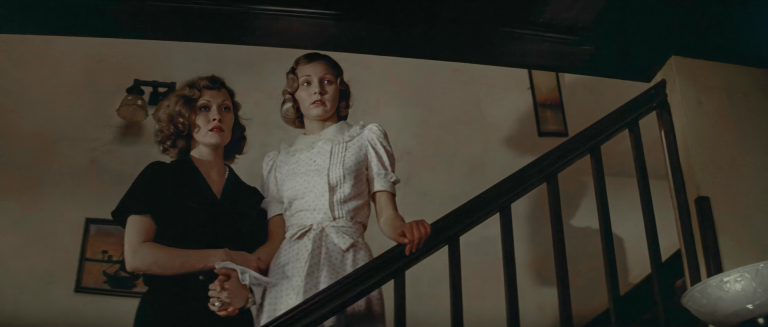
Evelyn Mulwray in black and Katherine in white standing together on a staircase in Chinatown 1974

Katherine is approximately fifteen years old in Chinatown — the same age Evelyn was when Noah Cross raped her. The film never states it directly, but the timeline, the dialogue, and Polanski's visual design all point to the same conclusion. The age isn't a coincidence. It's the design of the crime. This post traces the evidence through the film's flawed twins motif — the recurring pairs where one side is whole and the other is broken — and argues that Katherine's age unlocks the darkest layer of Towne's screenplay: the horror isn't just what happened. It's that it's engineered to happen again.

The Oscars Are a Marketing Machine — And the Data Proves It

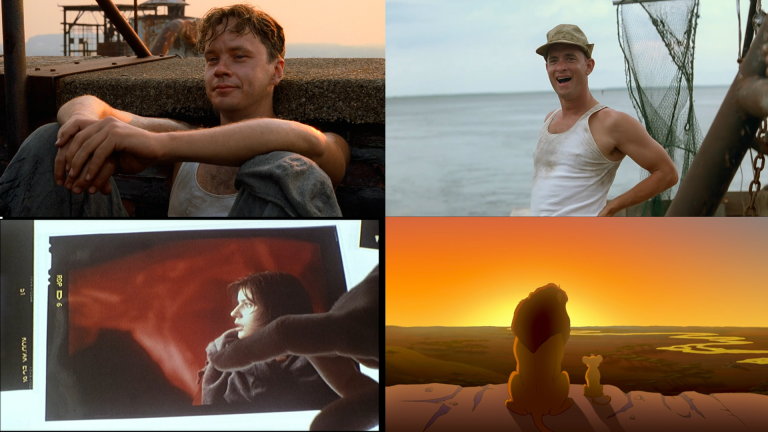
1994 Best Picture comparison: Forrest Gump (Academy winner), The Shawshank Redemption (IMDb #1 all time), Three Colors Red (Metacritic top rated), and The Lion King (box office #1) — Oscars best picture data showing four systems chose four different films

In 56% of the last 61 years, the Best Picture winner matched none of the other four measures — not the audience favorite on IMDb, not the critics' pick on Metacritic, not the Rotten Tomatoes consensus, and not the box office champion. This article compares Oscars best picture data decade by decade against the best movies of all time ranked by four independent systems. The pattern is consistent: the Academy measures something fundamentally different from what audiences, critics, and the marketplace measure.

Sinners Analysis: “Keep Dancing With The Devil, He’ll Follow You Home”

Sinners analysis – twins Smoke and Stack silhouette at sunset in Ryan Coogler’s vampire horror film

Ryan Coogler wrote Sinners while grieving his uncle — a Mississippi blues lover whose records felt like a door back to the dead. That feeling became the film's engine. This Sinners analysis breaks down how Coogler built a vampire horror film around one central argument: the blues gives and takes simultaneously. It connects you to what you've lost and exposes you to what wants to consume it. Four Oscars, including Best Original Screenplay. Here's why the script earned them.

Screenwriting Industry Truths: What a Reddit Post About Desperation Reveals

Scene from Sunset Boulevard showing the aftermath of a screenwriter destroyed by the industry — featured image for screenwriting industry analysis

A post titled "Getting Desperate" appeared on r/Screenwriting this week. The writer has an MFA, competition placements at Nicholl, AFF, and PAGE, and five years of effort with nothing to show for it. The 140 responses from produced screenwriters, industry reps, and fellow grinders tell a consistent story: the screenwriting industry isn't built to find you. MFA programs cost $120K-$200K. Nicholl's win rate is 0.09%. Competition fees run $4,500 a season. Every commenter who actually broke through said the same thing — stop querying and start building something you own.